
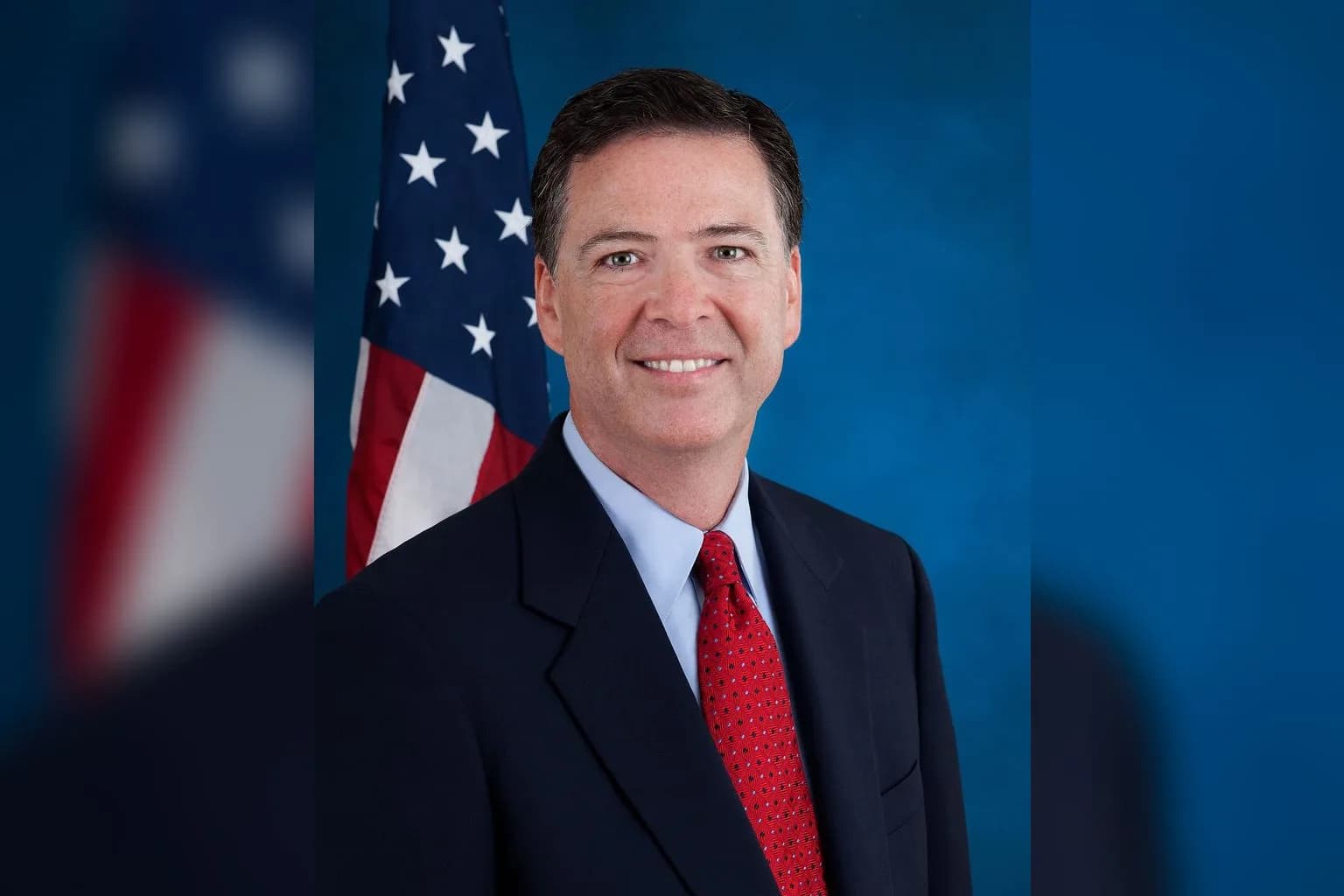
James Comey responded to the latest case against him in a video posted on his Substack on Monday. “It would almost be funny if it weren't such an appalling abuse of the Department of Justice, one that we cannot become numb to. Nothing's changed with me. I'm still innocent. I'm still not afraid of these people, and I still believe in the independent federal judiciary,” he said.
The former FBI director has been charged for a third time with federal crimes, according to a filing unsealed Monday in US District Court in Washington, D.C. The case accuses Comey of knowingly communicating national defence information to someone unauthorised to receive it, and of conspiring with others to breach the law governing such information.
Prosecutors say Comey used one or more co-conspirators to direct an unnamed person to disclose national defence information to a reporter at a national news publication. The alleged disclosure concerns classified information published in The New York Times on 5 October 2016, in Charlie Savage's article, ‘Yahoo Said to Have Aided U.S. Email Surveillance by Adapting Spam Filter.’
Comey was leading the FBI at the time. Prosecutors say he wanted to correct misinformation in a Reuters article published the previous day and told staff to speak to Savage about particular accuracy concerns, resulting in what they allege was an unlawful transfer of classified information.
Comey's lawyers say two separate US Attorneys investigated the alleged disclosure during the past ten years and each declined to bring charges. Pat Fitzgerald is representing Comey in the case.
The Justice Department filed the criminal information against Comey on 5 October and asked Judge Trevor McFadden to keep it sealed. McFadden granted that request the same day. The department said it had filed “a waiverless criminal information to toll the statute of limitations as it relates to allegations concerning former FBI Director Comey.”
Comey's lawyers moved to dismiss the case on 9 October. They argue that the 10-year period for bringing a grand jury indictment over events of 5 October 2016 had run out, and accused the department of filing “a faulty information under seal” to hold the deadline in place.
McFadden, a Trump appointee on the US District Court in Washington, D.C., is overseeing the case. The filing remained under seal until Monday, when Comey's lawyers sought its release and the charges became public.
Comey led the FBI from 2013 until President Donald Trump fired him in May 2017 during Trump's first term. Trump returned to office in January 2025. In September 2025, he appeared to ask then-Attorney General Pam Bondi to look into Comey and other people he regarded as political adversaries.
In September 2025, a federal grand jury in Virginia first indicted Comey on charges of making a false statement and obstruction connected to testimony before the Senate Judiciary Committee on 30 September 2020. A judge dismissed that case on 24 November 2025 after finding that Lindsey Halligan, then an interim US attorney who obtained the indictments, had been invalidly appointed.
Comey also faces a pending case in North Carolina. He was indicted in late April on an allegation that he threatened Trump's life by posting an Instagram photograph of seashells arranged on a beach to form the numbers ‘86 47.’
Separately, a federal judge in New York ruled that the Justice Department had unlawfully fired Comey's daughter, Maurene Comey, last year from her job as an assistant US attorney for the Southern District of New York.





Comments (0)