

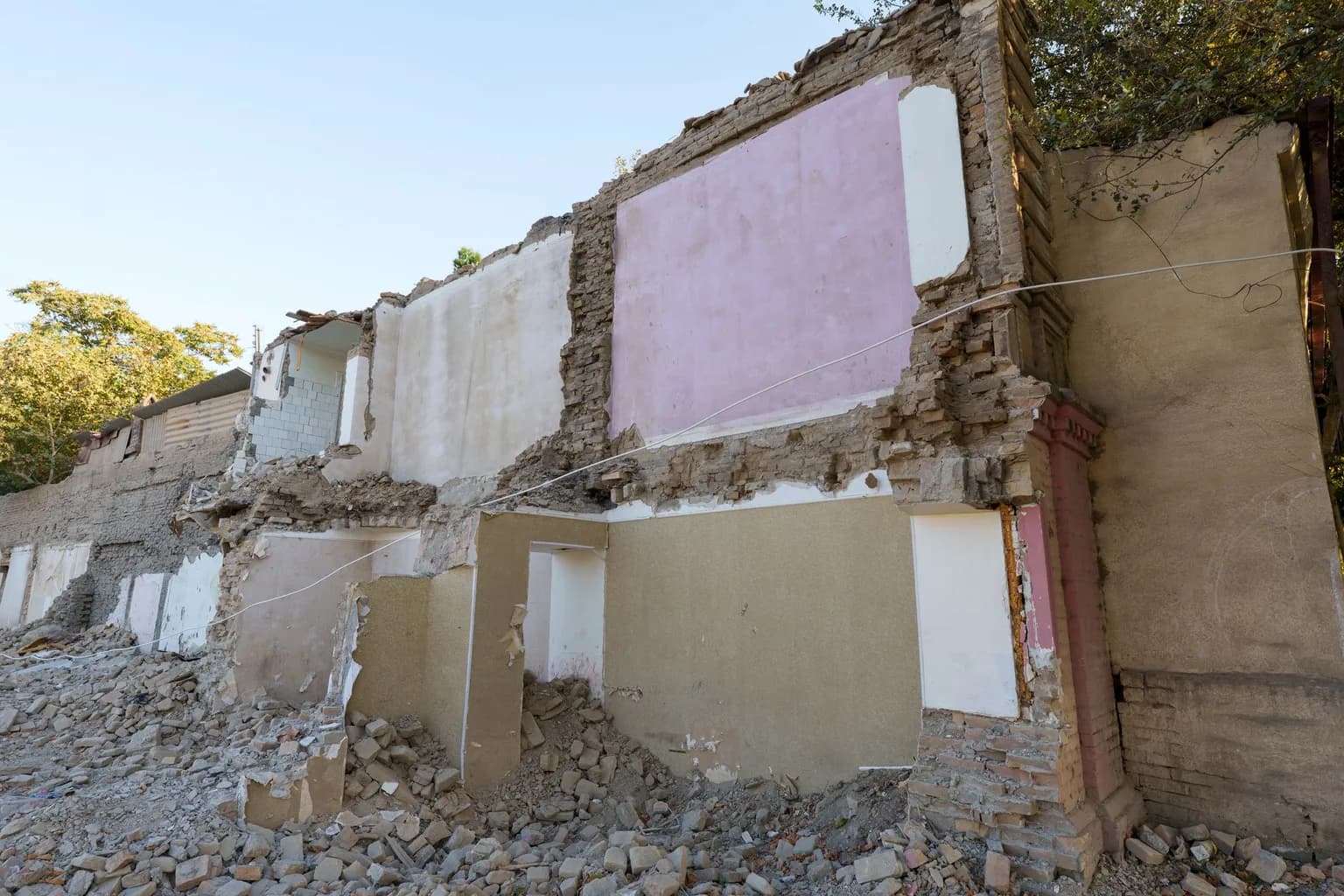
Joseph Kaula, a plasterer working on the fifth floor of the building, said he was the last person to walk out before it collapsed.
The multi-storey structure stood on 9th Street in Eastleigh, Nairobi, a densely packed residential and market area known as a hub for the Somali community. It had been registered with the National Construction Authority on July 30, 2025, and approved for construction, yet it had never received a certificate of occupation.
Despite that absence of a certificate, its basement and ground floor had been rented to an electronics shop, a butchery and a grocery. Eleven shops were occupied when the building came down.
There were 67 construction workers at the site, where more than 10 floors were under construction. Estimates of the building's intended height differed: it was thought to have been around 18 storeys, while Nairobi police chief Issa Mohamud said it had more than 10 floors under construction and other accounts put it at between 12 and 18 stories.
At around 1:40 p.m. on Friday, the building collapsed. Videos showed the structure crashing down through huge clouds of dust before it was reduced to a pile of rubble.
Abdi Aziz, a 25-year-old local resident, said there were businesses in the basement as well as construction workers in the building, though many workers were at a mosque for Friday prayers.
Sixty-six of the workers escaped unharmed and one was injured. About 11 people who had been in the basement and ground-floor shops were yet to be accounted for, while Interior Minister Kipchumba Murkomen said authorities were searching for seven missing people.
Some relatives said people trapped beneath the debris had called for help shortly after the collapse, before their phones could no longer be reached.
Rescue teams reached the site as large crowds gathered, but high-rise buildings on either side limited access to the rubble-filled area. Teams made contact with some survivors still trapped inside, Murkomen said.
Police had pulled one woman from the rubble and could hear another person's voice, according to Mohamud. The Kenya Red Cross said it had rescued two injured people and taken them to Kenyatta National Hospital.
Mohamud also warned that there could be a second collapse because the building was leaning on its neighbour.
Local media reported looting in the immediate aftermath, with police firing tear gas to disperse people gathered near the site.
The presence of businesses in a building without an occupation certificate is now central to the official account of what was permitted at the site. Nairobi Governor Johnson Sakaja said opening the ground-floor shops had been illegal, adding: 'This building has no occupation certificate...this has potentially cost lives'.
The collapse comes against a record of serious failures in the country's building sector. A Kenya Institute for Public Policy Research and Analysis report recorded 86 building collapses between 2009 and 2019, with an estimated 200 deaths.
Kenya's National Building Inspectorate found that 87 percent of buildings it audited nationwide last year either failed standards or lacked required approvals. Its audit of almost 15,000 buildings classified 4.8 percent as very dangerous and 72.3 percent as unsafe.
John Ogallo, vice-president of the Institution of Engineers of Kenya, said people had reported signs of distress, including cracks, before the building collapsed. He said that when the wrong materials are used, 'it becomes a time bomb'.





Comments (0)