
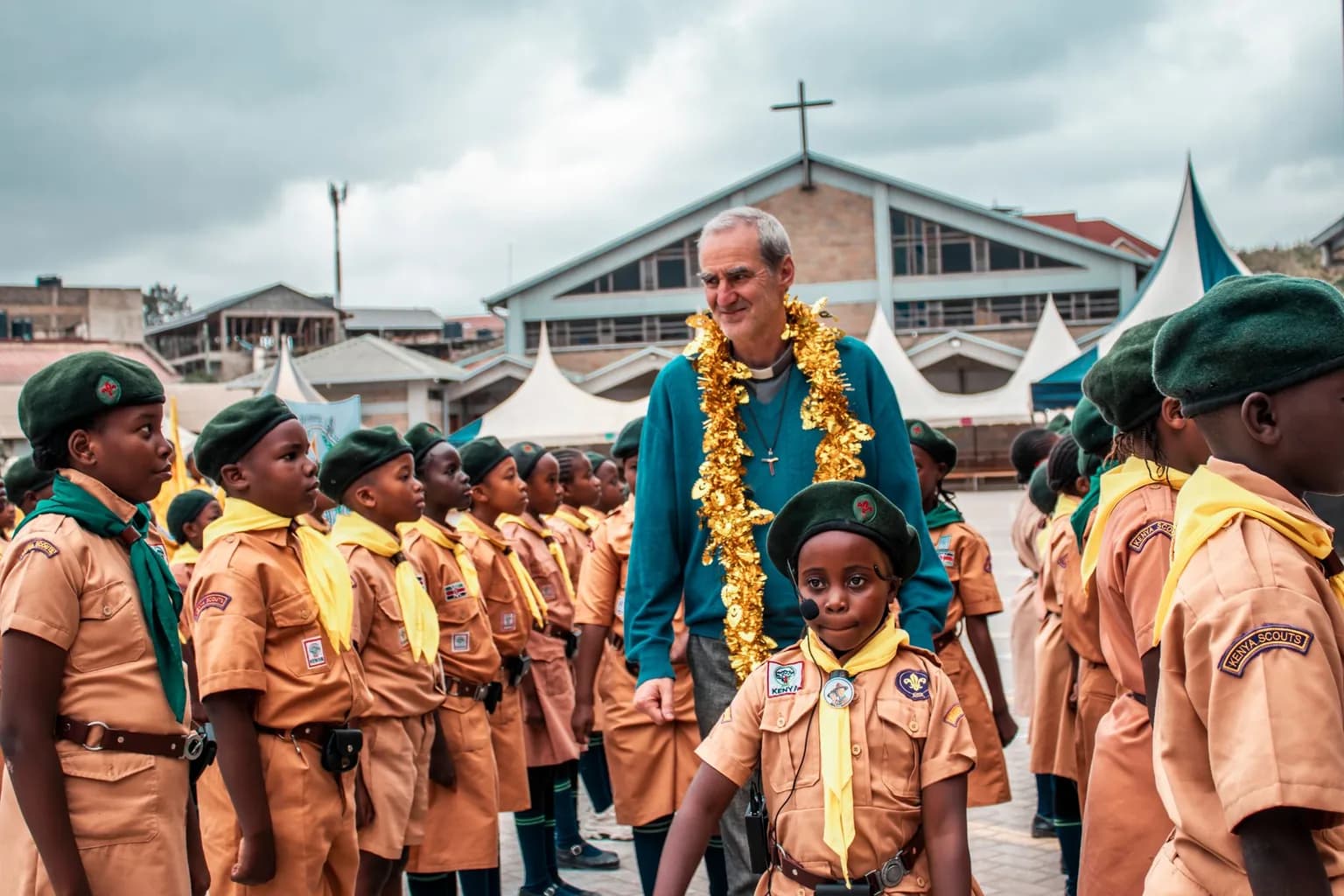
Francis Wanje, 62, lost eight relatives, including two grandchildren, to the sect led by Paul Mackenzie. “It has been really a heavy thing (for) us as a family, and it has really taken us very far in terms of psychological problems.”
On Monday, after a hearing lasting more than eight hours in Mombasa, Justice Diana Kavedza Mochache convicted Mackenzie and 28 associates of murdering 190 children and one adult. “I am satisfied that the prosecution has proved the case against all the 29 accused persons for the murder of 190 children and one adult,” Mochache said.
The verdict followed the prosecution of Mackenzie, a former taxi driver who founded the Good News International Church in 2003. Prosecutors said he and the church organised a Christian doomsday sect whose followers were ordered to starve themselves and their children to death so they could go to heaven before the world ended.
The group operated from an 800-acre ranch in Shakahola Forest, near the coast in southeastern Kenya and close to the beach resort of Malindi. Mackenzie had barred members from sending their children to school or seeking hospital treatment when ill, calling those institutions satanic.
The prosecution alleged that the deaths were planned through a “structured hierarchy of death”, with children first, followed by teenagers, women and then men. Mochache said that, in some cases, children were isolated and denied food while their parents watched. Post-mortems and police reports found that most of the children died from starvation, while other deaths involved asphyxia, neck compression and traumatic head injury.
Mackenzie denied the murder charges, arguing that he had not forced victims to starve. The court rejected that argument.
Authorities had encountered Mackenzie before the events that led to the case. Police searched his premises in 2017, when he was arrested on charges of “radicalization” and later acquitted. Authorities shut down his church in 2019, after which he moved to Shakahola Forest. He was also arrested in 2019 in connection with two child deaths at Shakahola and released on bail.
The investigation began in mid-March 2023, when a local man told police that his brother and wife had starved their children to death in the forest on Mackenzie’s orders. Mackenzie was arrested following the tip-off and later released on bail. Relatives said he then brought forward the date on which he had told followers the world would end.
Police arrested him again in April 2023. Authorities then began finding bodies in shallow graves in Shakahola Forest. More than 400 bodies have since been recovered, although only 26 have been identified.
Prosecutors also say that, while in detention, Mackenzie directed the deaths of 52 people in Kwa Binzaro village, about 18 miles from Shakahola. Monday’s judgment covered 191 deaths, while investigations into the other deaths continue.
Mackenzie and the others convicted in the case are due to be sentenced on November 6. The Shakahola tragedy is one of Kenya’s deadliest cult-related disasters.





Comments (0)