

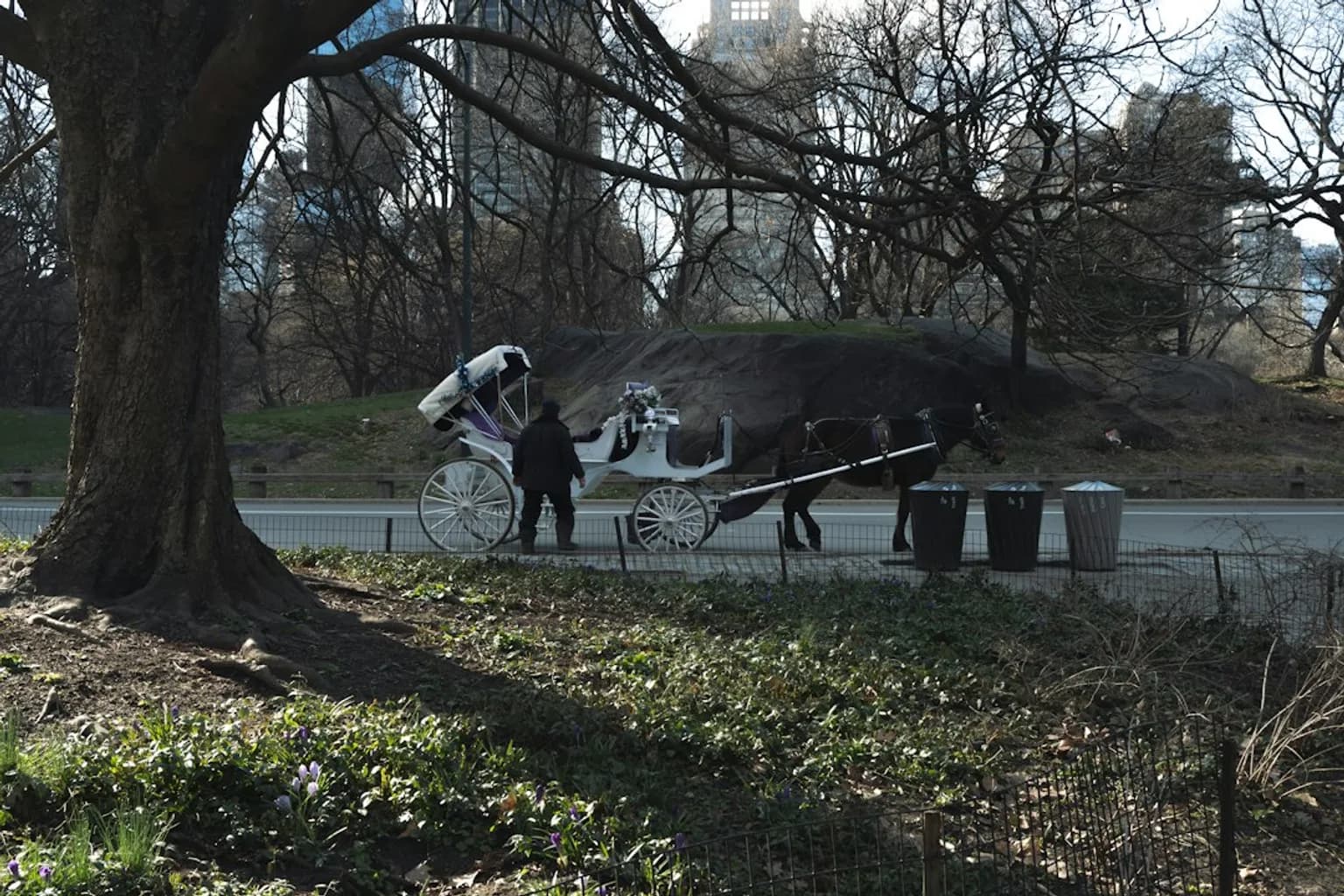
In the New York City Council chambers on Thursday, councillors voted to end the horse-drawn carriage trade that has long operated in Central Park. The veto-proof 40-7 vote, with two abstentions, passed Romanch’s Law, named for Romanch Mahajan, the 18-year-old tourist from India who died in June after a carriage horse bolted and he fell from the vehicle.
The law takes effect on June 1, 2028 and prohibits horse-drawn carriages across all five boroughs.
Romanch’s death brought a personal loss into a longstanding dispute over the trade. At a July City Council hearing, his father, Deepak Mahajan, said: “If [the prior legislation] had passed, the carriages would have stopped on June 1, 2026 — Romanch died on June 17. This was not an unpredictable accident. Let his death not be in vain.”
Mayor Zohran Mamdani and Council Speaker Julie Menin reached an agreement earlier in October to end the business, with safety their stated reason.
Menin said the measure would ensure Romanch was “the last soul that we lose to this industry.”
For more than 160 years, carriages have carried visitors around Central Park. Roughly 200 drivers have earned around $60,000 to $70,000 a year, according to drivers who addressed the council hearing, and tourists have paid $72.22 for a 20-minute ride.
The work can require horses to pull 1,000-pound carriages for up to nine hours a day.
Supporters of the ban point to a record of incidents and horse deaths. The Manhattan Borough President’s office says 40 horses working in Central Park have died since 1982, with overheating and collisions among the issues blamed. The Central Park Conservancy recorded seven “horse-related incidents” over the past 13 months.
In January, a horse called Destiny ran into traffic near the park, causing a multi-car collision. A carriage horse named Deniz died this year after eating a toxic plant in Central Park.
Animal welfare concerns have also followed individual horses beyond their working years. A carriage horse that spent 20 years as a Big Apple carriage horse and on an Amish farm was rescued by a sanctuary, which found the animal malnourished and nearly blind.
Nearly 160 horses are expected to move into retirement under a plan by the Carriage Horse Retirement Coalition, a network of equine rescues working to place the city’s roughly 160 carriage horses in retirement homes as the industry phases out in June 2028.
Red Feather Equine Sanctuary in North Carolina is a coalition member. It holds 45 equines and belongs to the Global Federation of Animal Sanctuaries.
For the workers, however, the vote opens a period of uncertainty. The Transport Workers Union represents roughly 200 carriage drivers and owners and has pledged to sue over the ban.
John Samuelsen, the union’s international president, said: “This bill is a train wreck of constitutional and due process violations. It offers nothing concrete for blue-collar drivers and carriage owners who will be financially crushed, stripped of their jobs, their licenses, expensive city-issued medallions, small businesses, and way of life.”
The bill contains what workers describe as vague promises of job training for “new economic opportunities”, without monetary compensation. Carriage owners may receive no payment for their horses, although the city is considering a programme that could include cash payouts for the animals.
Atakan Aktay, a longtime carriage driver, addressed Mamdani directly: “Before you became mayor, you participated in a 15-day hunger strike to support yellow taxi medallion owners facing financial ruin. Now you are mayor, and we face the prospect of losing our businesses without guaranteed compensation.”



Comments (0)