

The Map Before the Court
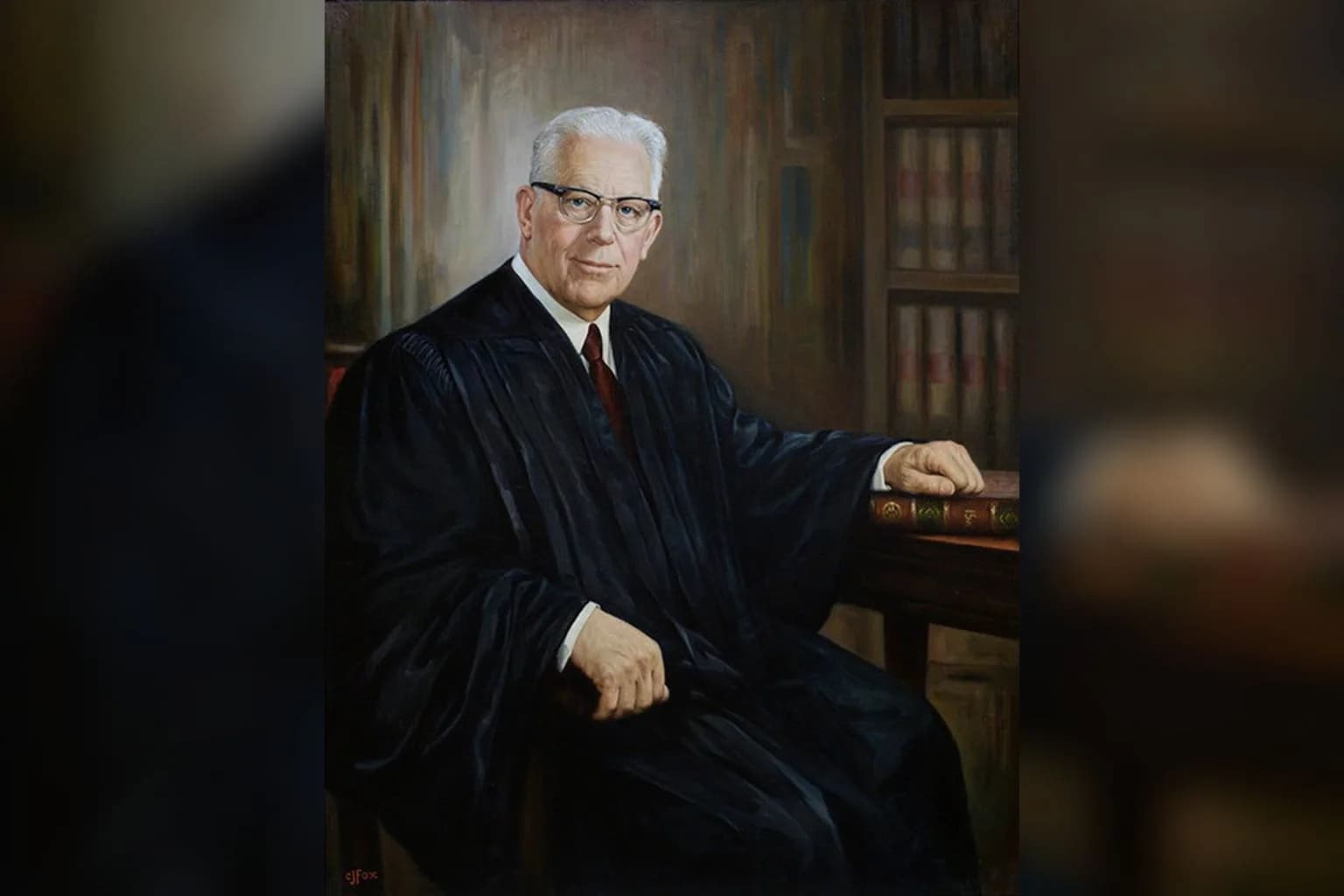
On June 15, 1964, Chief Justice Earl Warren delivered the Supreme Court’s decision in Reynolds v. Sims, a case built around the way Alabama counted people for political power. The justices had heard argument the previous November, after Alabama voters challenged a legislative arrangement whose seats still rested on the 1900 census. Warren’s Court sided with the voters, and the ruling reached every state legislature with two houses.
Alabama’s arithmetic made the dispute vivid. Jefferson County received one representative for roughly 90,000 people, while Bullock County received one for roughly 6,750 people. Jefferson’s more than 600,000 residents had one senator and seven representatives, while Bullock and Henry counties, each with fewer than 16,000 people, had two House seats apiece.
The Senate carried the same imbalance. Thirty-four counties with fewer people combined than Jefferson County held a majority of Senate seats, giving a collection of smaller counties control of that chamber. Rural representatives, from areas where fewer than a quarter of Alabamians lived, formed a majority of the legislature. A ballot in Jefferson County and a ballot in Bullock County both selected state lawmakers, yet the number of voters behind each lawmaker differed sharply.
Warren had to decide whether the Fourteenth Amendment allowed that arrangement. The Court held that citizens were entitled to substantially equal legislative representation regardless of where they lived.
How did M. O. Sims make Alabama’s county map yield equal votes?
A Promise Left on Paper
Alabama’s 1901 constitution supplied the framework that Sims and the other Jefferson County voters would challenge. It created a legislature with 106 representatives and 35 senators for the state’s 67 counties and senatorial districts. Each county was entitled to at least one representative, each senate district could have only one member, and no county could be divided between two senate districts.
Population, however, had a place in the same constitutional arrangement. Alabama’s constitution called for legislative representation based on population and for decennial reapportionment. The state nevertheless continued to use an apportionment based on the 1900 census. Apart from one county created in 1903 and minor statutory changes, Alabama retained essentially the same House and Senate apportionment in 1961 that it had used in 1903.
People had moved within a state whose population rose from 1.8 million in 1901 to 3.2 million in 1961. Mobile County, with more than 300,000 people, had three seats in the lower house. Jefferson County had more than 600,000 people and seven representatives. Bullock and Henry counties, each below 16,000 people, had two House seats.
One comparison showed the scale in a single number: the Jefferson County district near Birmingham contained 41 times as many eligible voters as another Alabama district. For Jefferson County voters, the issue was immediate. Their ballots had far less weight in choosing state legislators than ballots cast elsewhere in Alabama.
The Fourteenth Amendment gave them language for that complaint. Section 1 says that no state may deny any person within its jurisdiction the equal protection of the laws. The voters would ask a federal court to apply that promise to the value of a vote.
Sims Takes the Map to Court
On August 26, 1961, residents, taxpayers, and voters from Jefferson County filed their complaint in the United States District Court for the Middle District of Alabama. M. O. Sims was among the voters leading the challenge, which named state election officials as defendants, including B. A. Reynolds, a Dallas County judge. Their case became Reynolds v. Sims because of the names on opposite sides of the caption.
A group of young Jefferson County lawyers filed the suit against the state officials who supervised elections.
The complaint charged that the legislature’s malapportionment deprived voters of rights under the Equal Protection Clause and the Alabama Constitution. Sims and the other plaintiffs alleged serious discrimination against voters in counties whose populations had grown far more than others since the 1900 census.
Federal courts had long faced arguments that district lines belonged exclusively to politics. The Supreme Court changed the legal ground in Baker v. Carr, decided in 1962, when it held that legislative apportionment was a justiciable question. The Court’s 7, 2 decision recognized that malapportionment could give some voters far greater weight in the political process, giving Sims’s claim a path into federal court.
Alabama’s case moved quickly through that opening. A three-judge federal District Court declined to order the May 1962 primary election held at large. The court then held that the existing apportionment violated the Equal Protection Clause. Two members of the panel, Frank M. Johnson and Richard T. Rives, sided with the Jefferson County plaintiffs in the court’s May 1962 decision.
Johnson and Rives had before them a statewide system that allocated seats through county boundaries even as those boundaries contained radically different populations. The District Court found that a person’s right to vote for state legislators was unconstitutionally impaired when its weight was substantially diluted beside votes cast in other parts of the state.
Lawmakers convened an extraordinary session on July 12, 1962, to take up a new apportionment plan.
Two Plans, the Same Problem
Alabama lawmakers adopted two apportionment plans intended to become effective in 1966.
The judges found that neither of the legislature’s two plans could stand under the Equal Protection Clause. Neither would cure the gross inequality and invidious discrimination of the existing representation. Alabama had produced plans for the future, while the 1962 general election required districts immediately.
The existing map had failed the equal-protection test. The two prospective plans had failed it as well.
The three-judge court assembled a temporary reapportionment plan by combining features of the two legislative proposals. The judges used portions of plans they had rejected as complete solutions, shaping them into an arrangement for the 1962 general election. Their order gave Alabama a working map while the larger constitutional dispute continued.
The state could challenge the judges’ authority to assemble a temporary map, yet the map had emerged from legislative proposals Alabama’s own lawmakers had written. The Supreme Court would therefore confront both the population rule sought by Sims and the power of a federal court to keep an election moving when the legislature had failed to produce a constitutional plan.
Alabama appealed, arguing that geography could play a role in apportionment and that the District Court had overstepped its authority by drafting its own temporary plan. The appeal brought two questions to Washington: whether population had become the constitutional basis for representation, and whether federal judges could act when a state legislature failed to provide an acceptable remedy.
The Election Goes Forward
Justice Hugo Black received a request to stop the District Court’s reapportionment order before the 1962 general election. He declined to block the temporary plan. Alabama’s election proceeded under the court-ordered arrangement, built from elements of the legislature’s own proposals.
That order mattered because it answered a practical problem that legal doctrine alone could not solve. A court had found the standing apportionment unconstitutional, and voters still had to elect representatives and senators. The temporary plan placed a new distribution of political power at the ballot box while Alabama’s appeal remained unresolved.
Alabama’s argument preserved room for counties, geography, and local interests in drawing districts. The Jefferson County voters sought a standard centered on people. Their claim rested on numbers that were difficult to set aside: one representative for roughly 90,000 people in Jefferson County, one for roughly 6,750 in Bullock County, and a Senate majority held by 34 counties with fewer people combined than Jefferson.
The Supreme Court heard oral arguments on November 13, 1963, in the first of six reapportionment cases argued that day. Richmond M. Flowers, Alabama’s attorney general, argued the state’s position himself. His defense carried Alabama’s argument that geography remained a permissible element of legislative apportionment and that the District Court had gone too far when it issued its temporary plan.
Chief Justice Warren and the other justices now had a dispute framed by an actual election, a temporary judicial map, and a legislature that had failed twice to cure the imbalance. The case asked them to give equal protection a rule that lower courts could apply to the seats in every state legislature.
What Equal Protection Required
Justice John Marshall Harlan II argued in dissent that the Equal Protection Clause had never been intended to limit the democratic methods states could choose for apportioning their legislatures. He viewed state legislative apportionment as free from constitutional limits apart from constraints imposed by the Republican Form of Government Clause. His position would have left Alabama broad authority to balance population with its county-based structure.
Harlan therefore read the Fourteenth Amendment as a protection with limits set elsewhere in the Constitution, rather than as a population formula for state legislative maps. His dissent gave Alabama’s defense its fullest constitutional form: states could choose their own democratic method of apportionment, and federal courts would have no population-based standard to impose on the choice.
Warren framed the right at stake in practical terms: “The right to vote freely for the candidate of one’s choice is of the essence of a democratic society, and any restrictions on that right strike at the heart of representative government.”
Warren’s majority began with the voter rather than the county. The Court held that the Equal Protection Clause guarantees the opportunity for equal participation by all voters in elections for state legislators. A state could account for practical considerations in drawing districts, yet both houses of a bicameral legislature had to be apportioned substantially on a population basis.
Chief Justice Warren wrote that “the deviations from a strict population basis are too egregious” to sustain Alabama’s plans. The county-based system had created disparities that the Court treated as incompatible with equal protection.
The Court also recognized that apportionment required recurring attention. States could provide for periodic revision of their schemes, while intervals longer than a decade would be constitutionally suspect. The instruction answered the failure at the center of the Alabama case: a state could not leave legislative seats tied to a census from 1900 while its population changed for decades.
Warren’s reasoning treated a diluted vote as an individual injury. The Court declared that “the Equal Protection Clause demands no less than substantially equal state legislative representation for all citizens, of all places as well as of all races.” The principle applied to a resident of Jefferson County and to a resident of Bullock County because each voted for legislators exercising the same state power.
The majority also approved the District Court’s temporary plan for the 1962 election. Alabama’s existing map violated equal protection, and the legislature’s proposed replacements left the violation in place. The lower court could put a temporary remedy into effect under those circumstances. The Supreme Court’s rule and the District Court’s map thus came from the same conclusion: representation had to track people closely enough to give their votes substantially equal weight.
People, Not Trees or Acres
Warren delivered the Court’s final answer on June 15, 1964, by an 8, 1 vote. The justices sided with Sims and the other Alabama voters. The ruling required substantially equal population in the districts of both houses of a bicameral state legislature, replacing Alabama’s county-centered distribution of seats with a constitutional population standard.
Justices Black, Douglas, Brennan, White, and Goldberg joined Warren’s opinion. Justice Clark concurred, Justice Stewart concurred in part, and Harlan stood alone in dissent.
The decision reached well beyond the Jefferson County complaint. Nearly every state legislature was reapportioned as a result of Reynolds and Baker, and the shift moved political power from rural areas toward urban areas. States altered constitutions and districting systems that had allowed representation to remain detached from population for decades.
Warren had begun with a map where Jefferson County’s 600,000 residents held one senator and seven representatives while smaller counties received far more representation per person. He ended with the measure that map lacked: “Legislators represent people, not trees or acres. Legislators are elected by voters, not farms or cities or economic interests.”


Comments (0)