

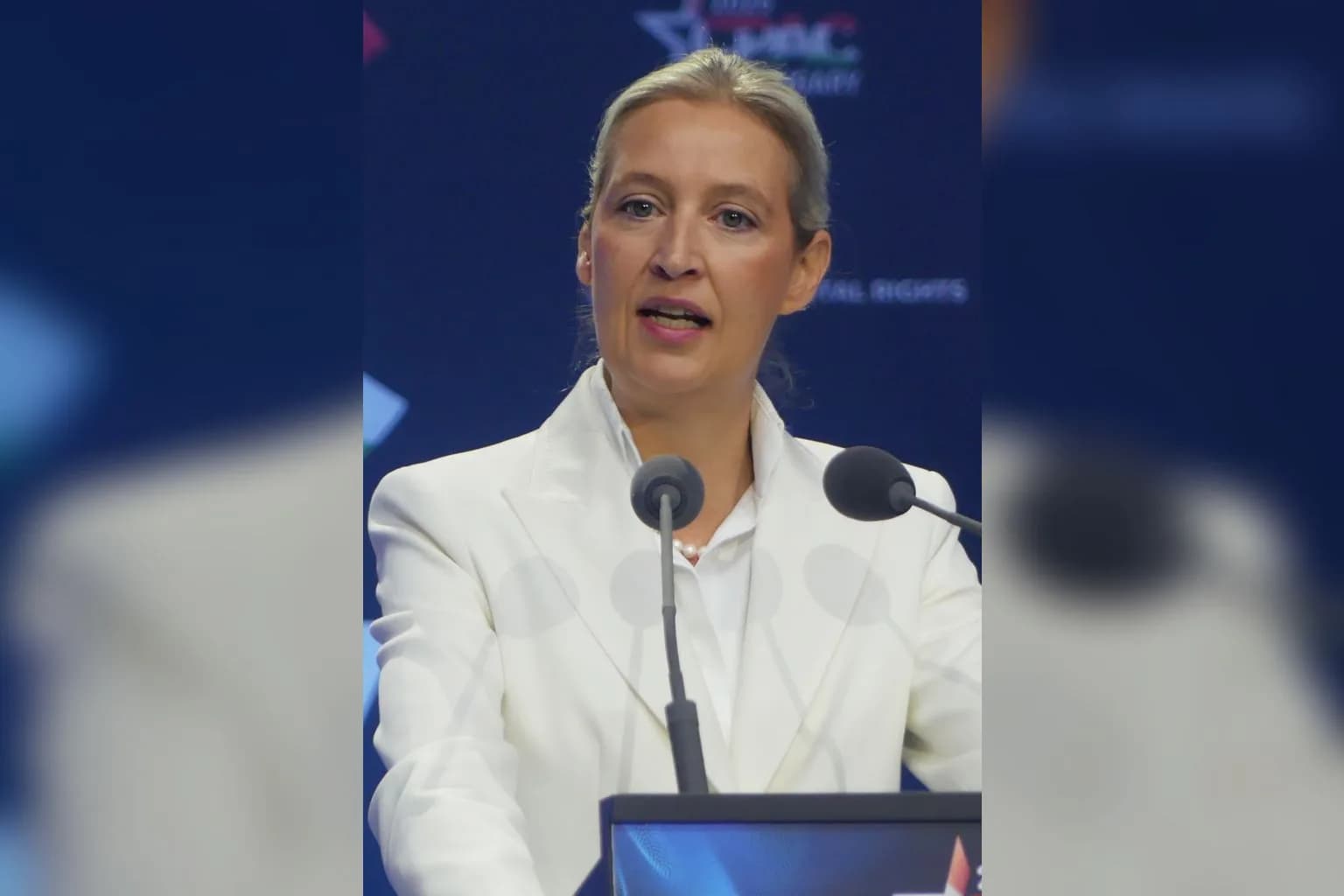
Alice Weidel is due to present the AfD’s programme for reshaping the European Union at the European Parliament in Strasbourg on Wednesday afternoon. The event is titled ‘Our new deal for Europe’.
The plan would dismantle the directly elected European Parliament and replace it with delegates chosen by national parliaments. It would confine the European Commission to administrative work, with political decisions transferred to national capitals.
It would also replace the EU’s top court with an arbitration tribunal. The programme calls for the EU budget to be cut and capped, staffing levels frozen and agencies abolished.
For Germany, the paper envisages the freedom to opt out of common EU policies. Berlin should seek exemptions from rules on migration, taxation, social policy, defence and common borrowing, the party says.
The AfD would use its veto to end EU revenue from VAT and plastics taxes. Its paper says: ‘If Brussels refuses the path of reform, this veto will be used to block future EU financing legislation and drastically reduce Germany’s contributions’.
The programme also calls for larger eurozone economies to receive more voting power at the European Central Bank, and for the digital euro to be rejected. Weidel, the party’s co-leader, described the euro as a ‘soft currency’ in an interview with broadcaster ZDF in August.
The strategy paper was prepared by AfD deputies from the European Parliament, the German Bundestag and state parliaments. It proposes a wholesale renegotiation of the EU treaties to remake the bloc as a looser alliance of sovereign nations.
Peter Boehringer, the AfD’s parliamentary spokesman on European affairs, rejected suggestions that the paper represented a change in policy.
The party was created in 2013 largely in opposition to eurozone bailout policies. It came second in last year’s national election, behind Chancellor Friedrich Merz’s conservatives, and recent state-election victories in Saxony-Anhalt and Mecklenburg-Western Pomerania have given it fresh momentum.
The AfD has identified 2029, when the next European Parliament and German federal elections will take place, as the point at which it wants to begin putting the programme into effect. The paper states: ‘In 2029, something we have scarcely dared to hope for may become reality: a patriotic, right-wing majority in the European Parliament is coming within reach’.
The party says it would initially refrain from seeking to take Germany out of either the EU or the eurozone. If its proposed reforms fail, however, it says Germany’s EU membership would be put to a referendum.




Comments (0)