
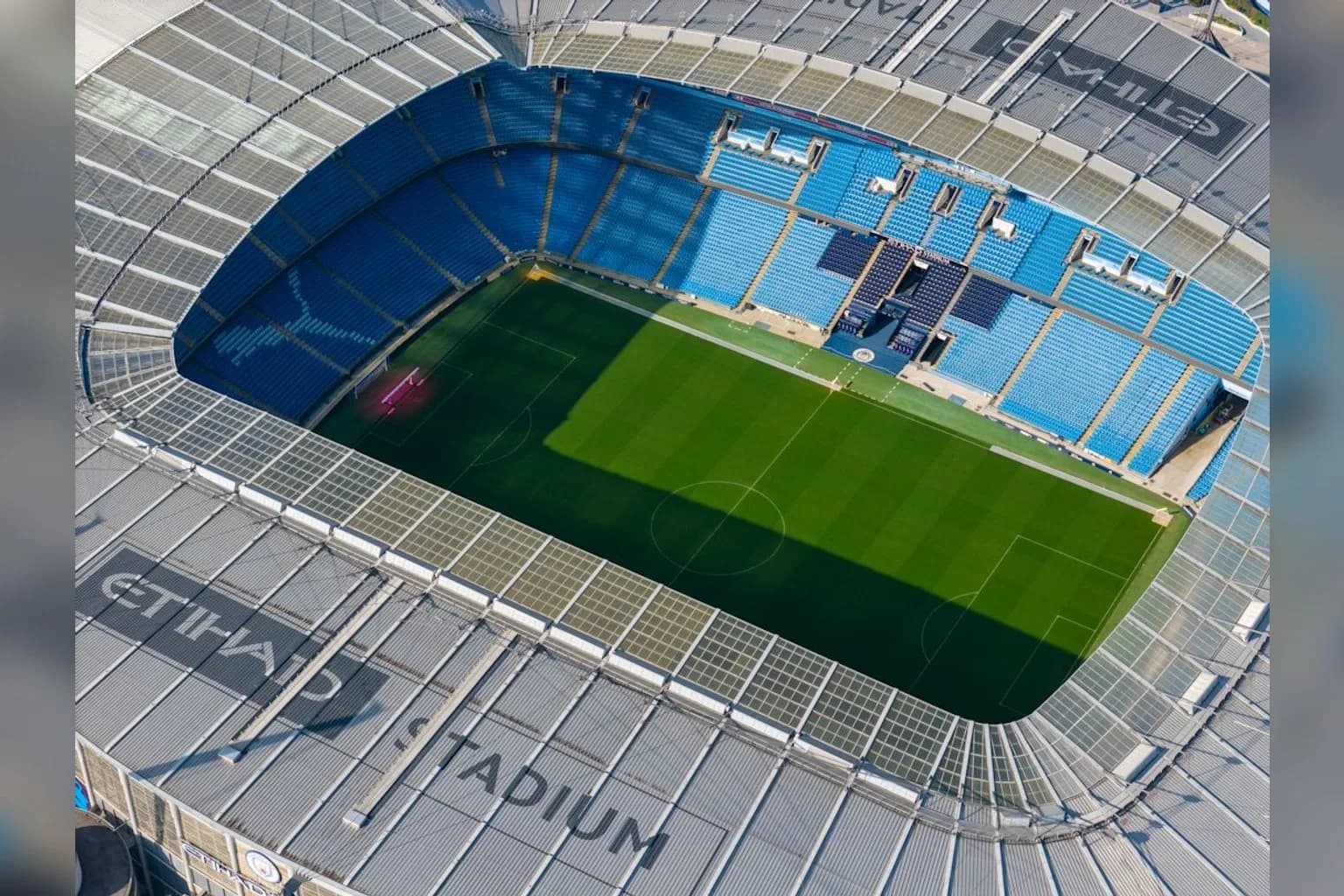
In May 2013, with less than a week left in the 2012-13 financial year, Manchester City knew it was £9.9m short of meeting UEFA’s financial rules. The shortfall exposed the pressure on an accounting structure the club had used to obscure owner funding.
The roots of that structure went back to 2008, when Abu Dhabi investors bought the club. From the 2009-10 season, the owners knew the spending needed to take City to the level they sought would create major overspends.
In early 2010, City devised what became known as the Disguised Funding Scheme. The plan presented shareholder money as revenue from commercial partners through sponsorship agreements with Abu Dhabi-based companies that were priced “well above Fair Market Value”.
Between the 2009-10 and 2017-18 seasons, £830.69m of the £949.94m recorded as Abu Dhabi sponsorship income, or 87.4%, came from Abu Dhabi United Group Investment & Development Ltd, known as ADUG, which owned Manchester City. The sponsors themselves paid £119.3m, while ADUG funded the remainder of fees they were required to pay only in part.
City filed misstated accounts and concealed its true financial position from auditors and football regulators, the findings said. The Premier League said the club artificially increased revenue and understated expenses by roughly the equivalent of $1 billion.
The Premier League’s independent commission heard the case over 42 days from September to December 2024. Its findings on City’s records from 2009-10 to 2017-18 ran to 40 pages.
On 29 September 2026, the commission found City guilty of 114 of 115 financial charges. The panel said the club’s account was “concocted well after the event in an attempt to obscure and conceal the realities of the disguised funding scheme”.
The commission called its 21-month delay “regrettable”. City were Premier League leaders when the Core Decision was published on 30 September 2026.
The commission found that important factual witnesses called for City had given evidence that was false in several key respects. It concluded that the club had deliberately run a scheme that raised reported revenue and reduced recorded costs by more than £900m across 2009/10–2017/18.
The arrangement allowed City to avoid exceeding the record single-season loss of £140m, set by Chelsea in 2006, during 2009/10. Premier League chief executive Richard Masters said City “systematically broke Premier League rules for nearly a decade”.
The case sits alongside recent examinations of financial arrangements involving sports owners or businesses connected to them.
Steve Ballmer, the Clippers’ principal owner, invested $50 million in Aspiration before Kawhi Leonard arrived in Los Angeles, then put in a further $10 million after Leonard’s arrival.
The NBA investigated endorsement arrangements involving Leonard and the Clippers in light of Ballmer’s investments in Aspiration. It fined the Clippers $30 million and ordered Ballmer to have zero contact with the team for a year.
Adam Silver, the NBA commissioner, said: “The NBA’s collectively bargained system for determining player compensation is a fundamental component of the basketball competition that the league oversees for the benefit of the teams and players and ultimately the fans.”
Mark Walter’s dealings around the Los Angeles Lakers have brought a separate set of questions. Walter bought the team from the Buss family in June 2025, then sold it to Josh Kushner and Bob Iger in August 2026 for $12.5 billion. His period as majority owner lasted less than a year.
Disclosures in July 2026 about affiliated investments at insurers linked to Walter drew scrutiny over their connection to his sports ownership. Federal prosecutors are examining whether companies tied to his financial empire improperly handled billions of dollars in loans from insurance companies that he separately controls.
The same problem is now reaching college sport. In an August 2026 memo to campus leaders, the College Sports Commission said its investigations department was “actively conducting multiple, longer-term investigations into potential cap evasion and NIL-related violations by institutions, student-athletes, and certain third parties.”
The commission is examining possible violations at between five and 10 Power Four conference schools over third-party payments to players that may circumvent the $21.5 million per school spending cap. Some schools are reported to be spending up to $50 million on football rosters this year.
Across these cases, the question is whether the bodies running sport can detect arrangements in which ownership, investment and payments overlap, and enforce the rules meant to protect competition.





Comments (0)