

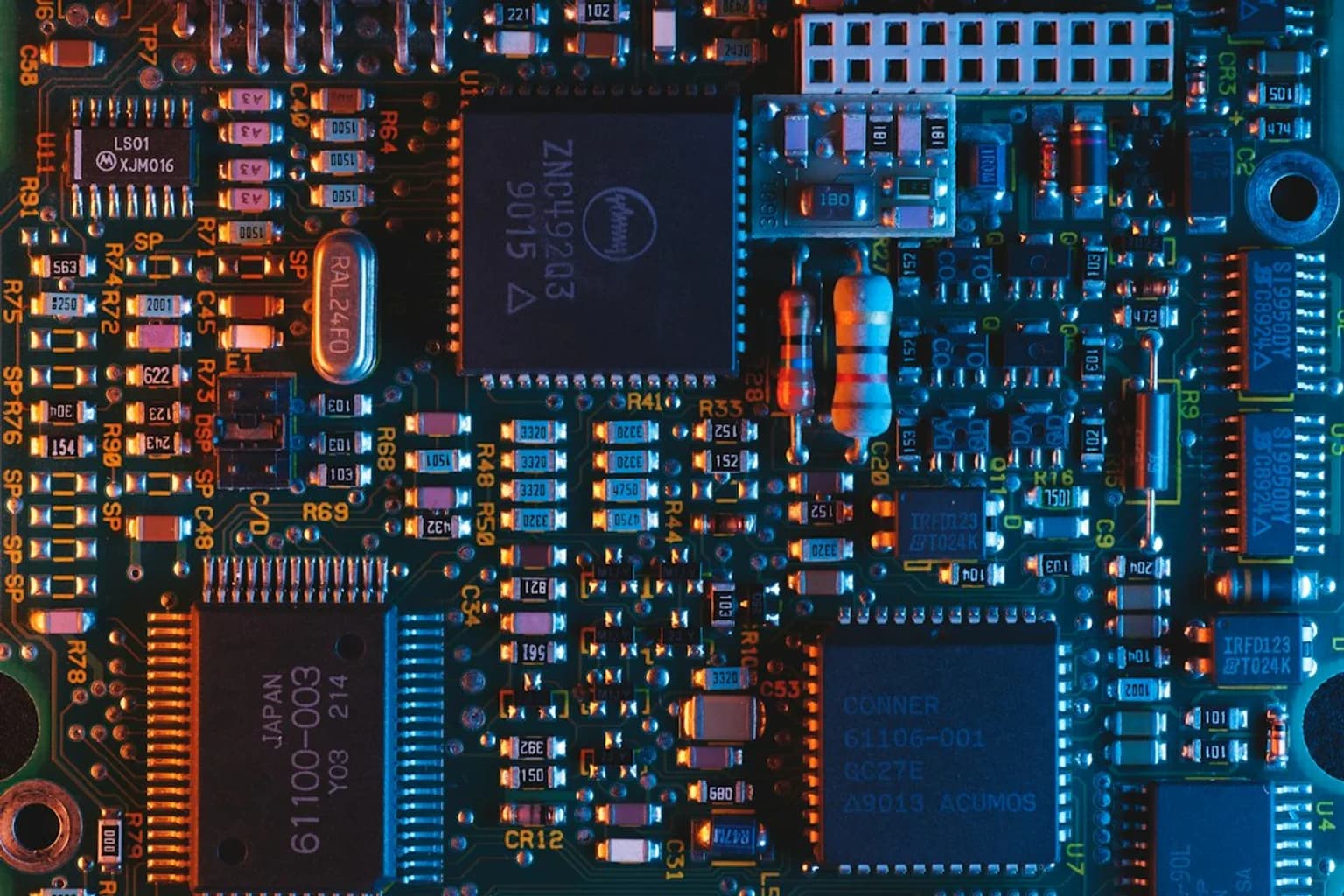
At Semicon Taiwan, S.C. Chien, chairman of the substrate maker Unimicron, described a supply problem that now reaches back to the machinery needed to make the boards beneath AI chips. He said the wait for that equipment had reached up to thirty months.
Chien also set out the delays at the Taiwan Printed Circuit Association show in Taipei. More than 80 percent of the machines Unimicron buys have longer lead times than before, he said, and over 20 percent face delays exceeding double their original schedules.
A substrate is the board on which a chip sits, carrying electrical signals between the chip and its motherboard. As AI chips become larger, their substrates must also become larger, with more layers and more demanding materials.
New-generation graphics processing unit, or GPU, substrates are more than 70% larger than those of the prior generation. Some application-specific integrated circuit, or ASIC, substrates are more than double in size.
That expansion creates a particularly unforgiving piece of manufacturing arithmetic. A 515×515mm panel yields 270 substrates at 830㎟ each, but only 20 at 10,000㎟.
Broadcom has named substrates as a bottleneck. A Taiwanese advisory firm projects ABF substrate area demand will grow 39% a year from 2025 through 2028, with a shortage beginning in 2027 and a gap of nearly 30% by 2028.
Toolmakers are also struggling to deliver the machinery needed to raise output. Lead times for laser drills used on large-body substrates have stretched from six months to ten to twelve months.
The materials going into the boards are tight as well. Low-expansion glass cloth, copper-clad laminate and ABF film are expected to fall about 20 percent short of demand in 2027.
Supply is concentrated among a few producers: T-glass is roughly 90% Nittobo, the resin ABF is more than 95% Ajinomoto, and ultra-thin package copper foil is 99% Mitsui Mining & Smelting.
Demand for Nittobo's T-glass has exceeded capacity since the second half of 2024. Ajinomoto raised prices by roughly 30% from the third quarter, while Doosan's half-year filing showed glass fabric purchase prices up 34% versus 2025 and copper foil up 35%.
The capacity plans show why customers are looking years ahead. CoWoS packaging capacity is set to grow 6.8 times by 2028 from its 2024 level, while substrate capacity is set to merely double. Hyperscaler capital spending is projected to grow 6.3 times while substrate capacity merely doubles.
Samsung Electro-Mechanics says customers are requesting capacity allocations from 2028 out to 2032–33. Backlog visibility at Eternal Precision Mechanics now extends to 2030.
The constraint has already appeared in shipments. Nvidia's NVL72 shipments stalled at about 8,000 a month in June and July.




Comments (0)