

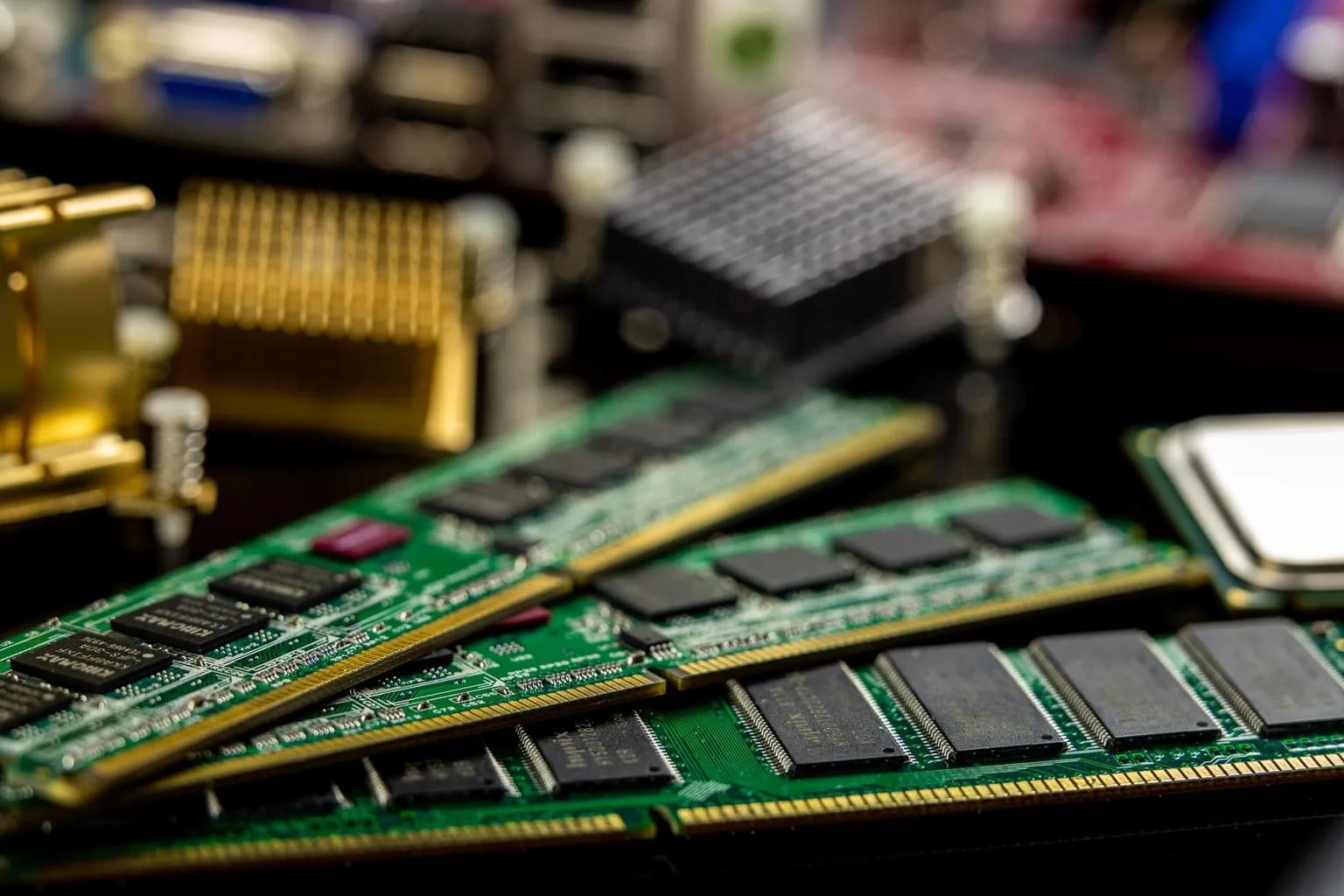
For Huawei’s customers, smuggled high-bandwidth memory has become a route to the advanced components needed to complete artificial intelligence chips when direct supplies are unavailable.
The route relies on export rules that assess a package by the performance of its server processor rather than the memory attached to it, a gap identified by a smuggler with experience in South Korea’s semiconductor industry.
US and South Korean controls bar the direct sale of high-bandwidth memory, or HBM, to China. That has left companies including Huawei unable to buy the advanced memory required for AI systems.
The smuggler, who is in his 40s and speaks Chinese and Korean, owns a chip design firm that makes cheap, low-performing server processors. The processors are designed to sit below US and South Korean export-control thresholds while serving as cover for expensive HBM made by Samsung and SK hynix.
The two South Korean companies together hold more than 80 percent of the global HBM market. SK hynix has not supplied products to Huawei since US export restrictions took effect in 2020.
Specialist packaging firms in Taiwan, South Korea and Southeast Asia bond the HBM stacks to the weak processors. The combined units are declared at export checkpoints under the processor’s classification code, allowing them to be treated as low-performance server processors.
The packages travel from South Korea to Hong Kong through conventional shipping. From there, they are carried into Shenzhen in the luggage of toll couriers and commuters who cross the border each day.
In Shenzhen, technicians heat the boards to soften the solder joining the memory and processor. They then lift out the HBM and discard the remaining components.
The extraction is delicate. Applying heat too fast or too slowly can warp or crack the memory stacks, and the procedure has a high failure rate.
A Shenzhen-based broker in his early 20s had worked at a chip company before moving into the chip black market through his professional contacts, and has spent three years in the trade. He told The Information that he saw smuggling as contributing to his country.
The economics have changed sharply over the past year. A single HBM3E unit that changed hands in China for several hundred dollars a year ago now costs about $4,000.
An AI chip requires six to eight high-end memory chips. A Shenzhen-based chip broker takes in $24,000 to $32,000 for every AI graphics processing unit, or GPU.
The extracted HBM is sold mainly to Huawei customers. Huawei has told customers ordering AI chips that they must find the HBM needed for servers themselves, since it cannot purchase the memory from Samsung and SK hynix.
China’s domestic alternative remains at an earlier stage. Chinese memory manufacturer CXMT has begun risk production of HBM3E and is expected to mass produce the chips by the end of this year, though it is reportedly suffering from low yield.
The smuggler fears South Korean and US authorities will soon tighten enforcement against the operations.
South Korea’s customs authority had uncovered trade violations worth $560 million by May, exceeding the previous full-year record. A third of that total involved strategic goods, including chips exported without proper authorisation or with false declarations.




Comments (0)