
For cloud providers planning more than $700 billion of data centre spending this year, getting computing capacity online increasingly depends on finding electricity before a grid connection arrives.
The pressure comes from artificial intelligence, which is projected to drive data centre electricity demand from 35 GW in 2024 to 125 GW by 2030. Shortages of transformers, switchgear and batteries are among the reasons almost half of US data centres planned for this year were expected, as of April 2026, to be delayed or cancelled.
Blake Scholl, an executive at Boom Supersonic, recalled texting Sam Altman after reading about a power crisis: “Hey, Sam, this stuff I'm reading in the press about there being a power crisis, is that real? If we made a power turbine, would that be of relevance for AI?” Altman replied: “Yes, please, as many as you can, make as fast as you can.”
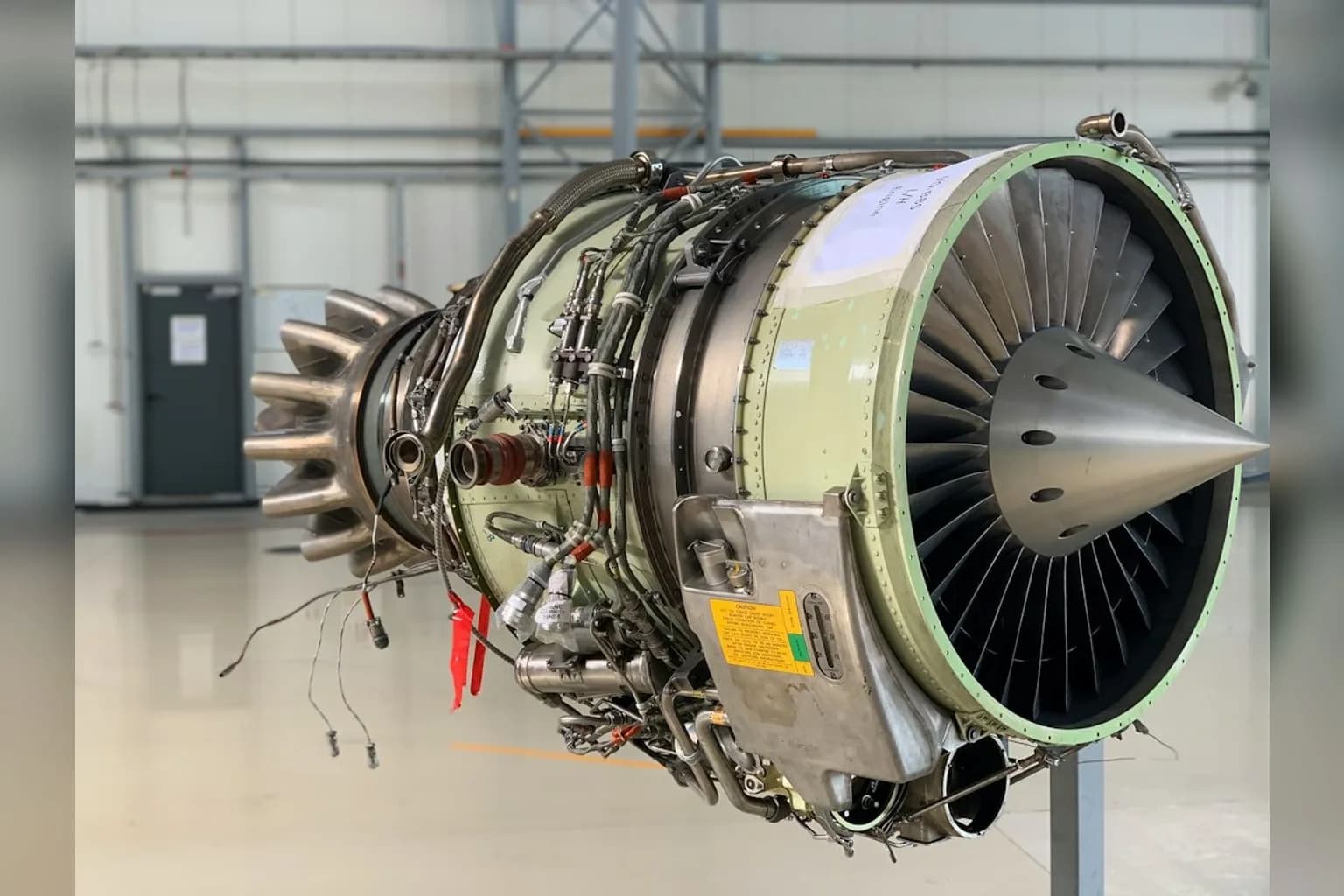
On Thursday, Boom Supersonic unveiled its jet engine core in Centennial. The company ultimately intends the engine for a supersonic airliner, while also exploring its use in supplying power to AI data centres. Scholl said companies can “sometimes, you wait one to five, 10 years to get electricity that you really need right away,” and argued that operating engines for data centres would also give Boom real-world testing that could bring it closer to building its planes.
The appetite for speed is becoming a central part of the business. Bill Kleyman, chief executive of Apolo, which focuses on AI platforms and infrastructure, said developers are preoccupied with “speed to power”, or how quickly energy can be supplied. Kelcy Pegler, chief executive of FlexGen, said the data centre industry is more impatient than the renewable energy sector he previously worked in.
That impatience is colliding with an electricity system whose timetable no longer matches that of a data centre project. High-power transformers typically arrived about two years after an order before 2020. That wait can now run as long as five years. New grid infrastructure can take five to 15 years to build, compared with one to three years for a data centre.
There is little relief from established turbine suppliers. GE Vernova, Mitsubishi Power and Siemens Energy are sold out of larger turbines through 2029, with some orders extending into 2031. Turbine prices have risen from $500/kW to nearly $2,500/kW.
So companies have begun looking to a less conventional reserve of machinery. Decommissioned aircraft sit in lines in Arizona’s Sonoran Desert, in sites commonly called boneyards, and many have not had their engines started for years. Companies are taking engines from retired planes and converting them into power generators to get around grid delays.
Boom plans to run natural gas-powered turbines on flatbed trucks, supplying electricity to data centres, hospitals and other large users. Its first power generator is slated for delivery in 2027.
The approach is part of a broader push for behind-the-meter generation, meaning power produced on site rather than delivered through a grid connection. At least a quarter of incremental data centre demand through 2030 is expected to be served by such solutions, and approximately 2 GW of behind-the-meter capacity was online across four projects as of mid-2026. Developers are also pursuing mobile trailer-mounted generators and hybrid microgrids.
Some are looking further afield. Oklo and Meta have announced an agreement supporting development of a 1.2 GW nuclear power campus in Pike County, Ohio. Amazon has backed X-energy, which raised more than $1 billion in an April 2026 initial public offering and is targeting up to 5 GW of new nuclear capacity by 2039.
The grid pressures are already changing where projects can proceed. More than 500 data centre moratoria are on record across 42 states. Texas has paused new grid interconnections while working through about 200 GW of requests. US planners expected in 2022 that the country would need 24 GW of additional electricity demand within a decade. By 2025, that forecast had risen to 166 GW.
Martina Raveni, a senior analyst on GlobalData’s Strategic Intelligence team, identified access to the grid and public opposition as the main constraints on data centre development. She said local resistance centres on concerns about electricity bills, water use, noise and land use. Luis Fernandes, an IDC senior research manager for cloud and data centres, called grid access the dominant obstacle and said it could stop entire projects, though he found no hard evidence that limits on computing capacity are currently holding back AI development.
The engines waiting in the desert and the turbines being fitted to trucks offer a quicker route to power on paper. Whether they can be deployed at the scale required remains unresolved.




Comments (0)