

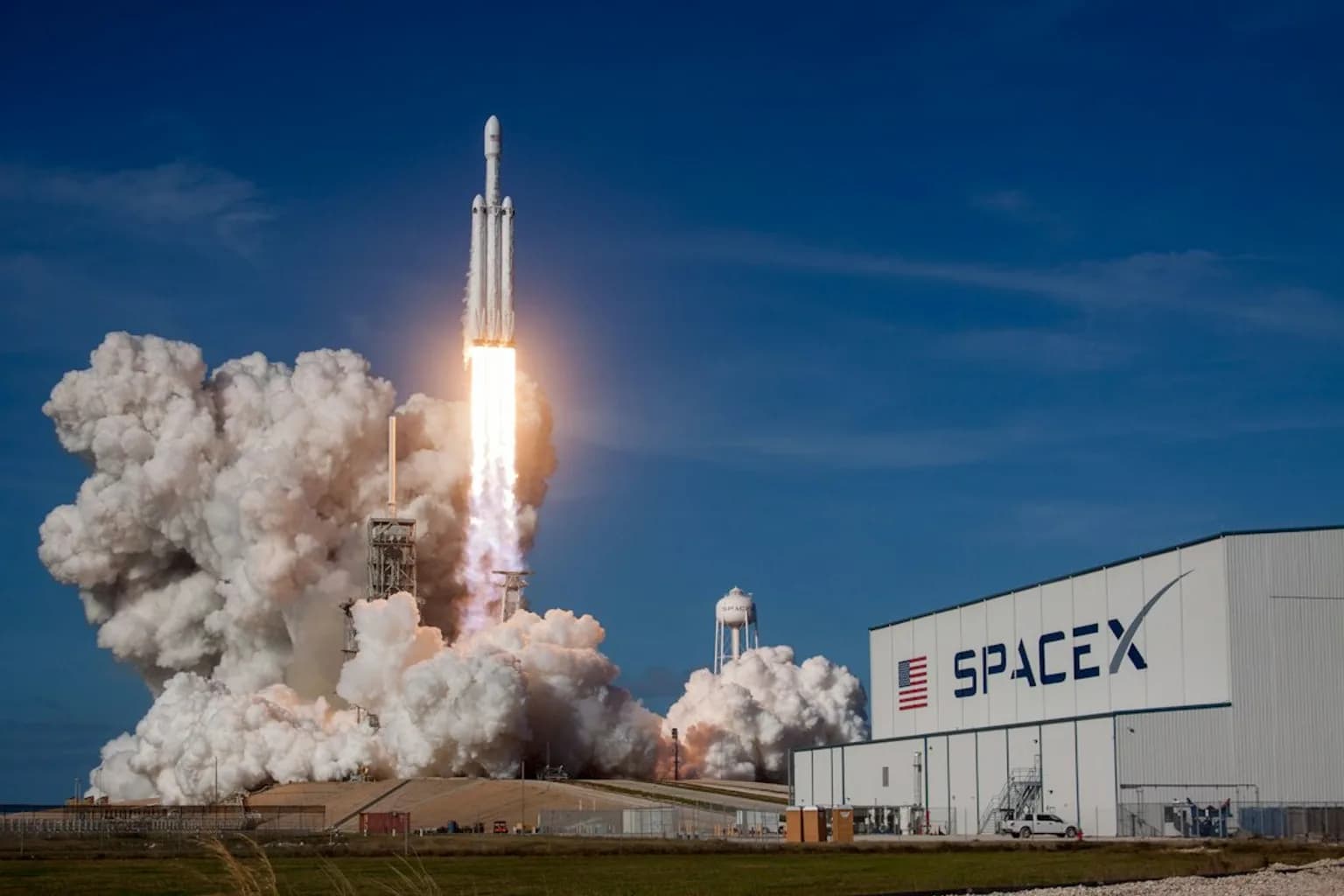
Elon Musk said he was spending four days a week in Memphis, Tennessee, where SpaceX is building Colossus II, its second data-centre project for expanding computing infrastructure.
That build-out sat at the centre of SpaceX’s Q3 results, announced Tuesday in the company’s second earnings report since its June initial public offering.
SpaceX’s Super Intelligence division, which includes cloud computing capacity, Grok and the acquired Cursor coding tool, brought in $7.56 billion in Q3. Revenue rose 830% year over year, taking the unit ahead of Starlink’s $5.2 billion in connectivity revenue for the first time.
The company reported total Q3 revenue of $14.6 billion, up 161% from $5.6 billion a year earlier. Super Intelligence also beat analyst expectations of $6.47 billion.
Connectivity revenue, largely from Starlink, rose 69% to $5.25 billion, above the $4.92 billion analysts had expected. SpaceX said artificial intelligence now makes up 52% of its income.
The shift was rapid even by the standards of a business now built around large machines arriving in large numbers. Super Intelligence revenue had been $2.56 billion in Q2.
SpaceX said new cloud-services agreements, Cursor and greater use of Grok among enterprise customers and consumers drove the division’s revenue. The company completed its Cursor acquisition on 14 August at an implied equity value of $60 billion; Cursor contributed $608 million in revenue from the closing through 30 September.
The company reported Q3 net income of $4.4 billion, its first quarterly profit as a public company. It compared that result with a net loss of $1.1 billion in the prior-year quarter. SpaceX also described Q3 income against net losses of $541 million in Q2 and $5.5 billion a year earlier.
Super Intelligence generated $431 million in operating income, compared with a loss of $1.7 billion a year earlier. SpaceX shares rose 4% in after-hours trading after the results.
The profit came alongside an enormous bill for the equipment behind it. SpaceX spent $16.4 billion on AI-related capital expenditure in Q3, out of total capital expenditure of $19.6 billion.
Bret Johnsen, the chief financial officer, said leasing arrangements with Anthropic, Google and Reflection AI produced $1.6 billion in additional revenue. He said new computing deployments were generating a payback of less than a year at current prices.
SpaceX had 1.7 gigawatts of nameplate computing capacity as of 30 September. Musk said the limiting factors in deploying superintelligence were power, cooling and infrastructure rather than chips.
He said hyperscalers and dozens of smaller companies were pressing SpaceX for more capacity, and that the company aimed to divide its compute roughly 50/50 between internal use and rentals to outside customers.
SpaceX expects capital expenditure of $35-$40 billion in Q4 as new compute comes online. The next quarter will therefore test whether the company can keep turning demand for computing capacity into returns while its infrastructure spending accelerates.





Comments (0)