

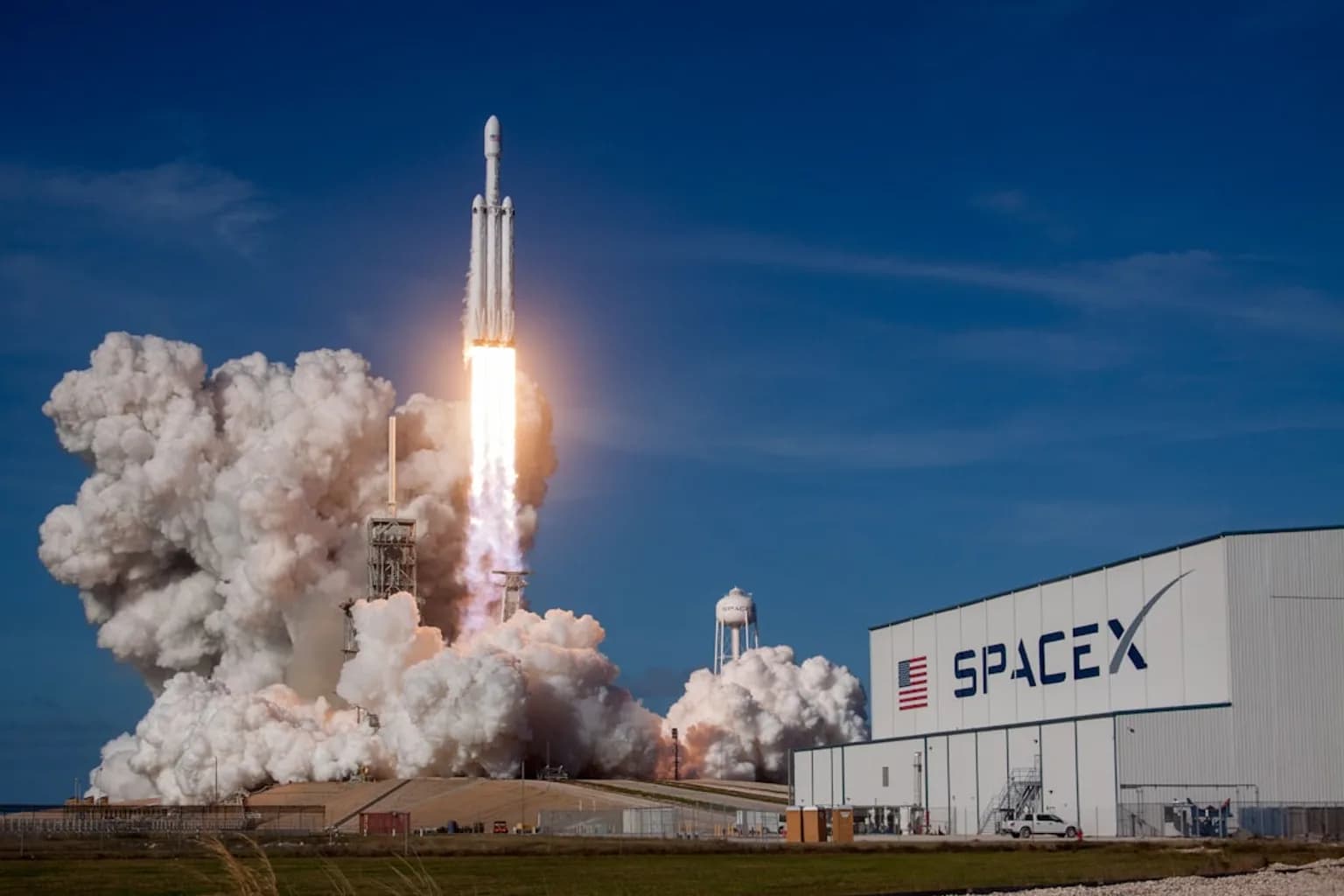
SpaceX is targeting 22 September for a Starship test that could add a new class of satellite to its Starlink broadband network. The company plans to use Starship to deploy 26 Starlink V3 satellites into orbit, the first such satellites to enter a constellation that already has more than 11,000 active spacecraft.
The launch window is scheduled to open at 7:15 a.m. Central Time and run for 75 minutes. The mission, SpaceX’s 14th Starship test flight, is planned from the company’s Starbase facility in Texas and remains subject to regulatory approval.
The flight would be Starship’s first orbital mission, moving the programme beyond its previous suborbital testing. SpaceX describes Starship as its next-generation, fully reusable super-heavy launch system. It has conducted 13 prior test flights since the first test on 20 April 2023, including the 13th flight test on 24 July.
Starship is expected to fly at approximately 275 km above Earth and make roughly six orbits. The mission is expected to last nearly 10 hours before the spacecraft splashes down in the Pacific Ocean, west of Chile.
SpaceX said it had made hardware and software changes after issues during the previous flight. It has not set out the nature of those modifications or provided detailed performance measures for the planned mission beyond its stated test objectives.
The Super Heavy booster is due to undergo a series of tests during the launch. Its primary objectives include a successful launch, ascent, stage separation, boostback burn and landing burn at an offshore landing point in the Gulf of Mexico.
SpaceX does not plan to catch either the Ship or Super Heavy using the “chopstick” arms on Starbase’s launch tower during Flight 14. The mission will instead test the booster’s flight and return sequence at the offshore point.
The 26 satellites are the V3 version of Starlink spacecraft. SpaceX says they are designed to greatly increase the network’s capacity and user speeds. The company has not provided specific figures for those expected improvements.
After deployment, the satellites are expected to unfold their antennas and solar arrays. They will then establish initial contact with ground stations and with the wider Starlink constellation through radio-frequency and laser links. SpaceX has not set out a timetable or sequence for that process.
The satellite deployment is a central part of the planned test because it would be the first occasion on which Starship has been scheduled to place Starlink V3 spacecraft in the constellation. None of the more than 11,000 active Starlink spacecraft currently in service is a V3 satellite.
SpaceX said in its Flight 14 mission description that “By going to orbit, the next phase of developing Starship to be fully and rapidly reusable can begin”. Whether the flight proceeds on 22 September will depend on regulatory approval, as well as conditions that SpaceX has not specified.





Comments (0)