
A Letter in Hsinchu
In 1997, a letter addressed to Morris Chang reached the post office in Hsinchu. Jensen Huang wrote that Nvidia had developed promising chips and needed a foundry to make them. Nvidia had approached TSMC’s San Jose office and received no answer, so Huang sent his appeal across the Pacific to the founder of the company he needed.
Chang was due to travel to the United States the following week, and he called Huang without warning. Huang picked up the phone himself. When Chang introduced himself, Huang shouted at people making noise around him and told them to be quiet because Morris Chang was calling. Chang then made an appointment to visit Nvidia the next day or something like that.
Huang had more than a sales pitch ready for the meeting. Nvidia was in financial difficulty, and Huang said the chip he wanted TSMC to make could save the company. He also told Chang it could make Nvidia a major customer. Chang understood that label in concrete terms: a major customer would have to produce more than $50 million in annual revenue.
TSMC had been built for a designer with a valuable idea and an urgent need for production. Its central promise was that it would never compete with its clients, a pledge that gave customers room to share their designs with a manufacturer. Huang’s request put that promise under pressure, with Nvidia’s future tied to a single chip.
Chang had spent decades arriving at that moment: two failed doctoral exams, a job offer decided by one dollar a month, a long career inside Texas Instruments, and a factory proposal that TI set aside. How did Morris Chang turn TI’s ignored factory idea into a lifeline for Jensen Huang’s Nvidia?
The Dollar That Moved Him
Chang had imagined a different future as a boy moving through war-torn China, when he dreamed of becoming a writer or journalist. He entered Harvard intending to study literature, then transferred to MIT for mechanical engineering.
At MIT, Chang pursued a doctoral degree and met the setback he later called “the greatest stroke of luck of my life.” He failed the qualifying examination, sat it again, and failed again. MIT’s rules ruled out a third attempt. Chang later wrote that passing would have sent him into mechanical-engineering research, leaving transistors and TSMC outside his career.
He later described his career in terms of interest rather than money: “In my career, I have done best by following my interest, rather than going where the big money was supposed to be.” His first semiconductor job gave that instinct somewhere concrete to go.
A salary negotiation supplied the next turn. Ford made Chang an offer, while Sylvania’s semiconductor division offered $480 a month. Ford’s recruiter declined to raise Ford’s offer by a single dollar each month, and Chang took the Sylvania job. A difference of one dollar moved the newly trained mechanical engineer into semiconductor production.
Sylvania assigned Chang to germanium transistors. He learned from William Shockley’s 1950 textbook, “Electrons and Holes in Semiconductors with Applications to Transistor Electronics”, while working inside the division.
Texas Instruments hired Chang in 1958 and placed him in charge of a struggling transistor production line. Chang returned with a doctorate in electrical engineering and a deeper understanding of the factory work that would shape his career.
The work led him from entry-level engineer through 25 years at the company, eventually to group vice president for its worldwide semiconductor business.
The Report TI Ignored
Texas Instruments showed Chang how the established chip business operated. Companies such as TI designed chips, manufactured them in their own factories, and sold their own products through the same organization. Chang rose inside that integrated structure while helping lead TI’s integrated-circuits operations, yet he came to see design and manufacturing as separate skills with separate demands.
In 1976, when Chang was 45 and general manager of TI’s Semiconductor Group, he presented a 16-page report with a preliminary version of the foundry idea. The report proposed a business devoted to making integrated circuits for other companies. Designers could bring their work to a factory built for production, while the factory focused its expertise and capital on manufacturing.
The report’s later discovery in TI’s historical archives gave the proposal a clear place in Chang’s story. Chris Miller, the author of Chip War, found the document and established that Chang had formed the preliminary idea while still working inside TI. The future foundry began as a plan offered by an executive at one of the companies whose structure it would eventually alter.
TI ignored the proposal. The 16 pages remained an unrealized plan as Chang continued through the final years of his TI career.
Chang left TI in 1983 and spent time at General Instrument, where he served as president and chief operating officer.
In 1985, Chang moved to Taiwan to head the Industrial Technology Research Institute, or ITRI. He had spent most of his life in the United States, and Taiwan now had an executive who knew the chip industry from inside one of its leading integrated companies. The government also had a direct question for him: how could Taiwan enter semiconductors?
Fourteen Days Back
Executive Yuan Minister Li Kwo-ting invited Chang to his office on September 4, 1985, the fourteenth day after Chang’s return to Taiwan. Li asked for a plan that could bring Taiwan into the semiconductor industry. Chang answered with an idea he called a “Common Wafer Fab.”
Li’s request came after a group of Taiwanese officials had drawn Chang back to lead ITRI. Former Premier Sun Yun-suan, ITRI Chairman Xu Xiansheng, Premier Yu Guohua and Political Affairs Commissioner Li Guoding were among those who invited him to take the role.
The proposal centered on a factory that would serve companies designing chips. Customers would create the designs they wanted to sell, and the factory would manufacture them. In the mid-1980s, the global chip market was dominated by integrated device manufacturers including Intel, Motorola and Texas Instruments, companies that gathered design, fabrication and product strategies under one roof.
Chang gave his proposal a sharper name while sitting at his desk on Chongqing South Road. During those two weeks, he coined the phrase “specialized foundry.”
Chang’s specialized foundry would make other companies’ chips and keep clear of their markets.
Chang had supplied Li with a route into semiconductors that required capital, technology and customers willing to take a risk on a new company. The Taiwanese government backed the effort, Philips joined as an early investor, and local private investors also came in. The old proposal from TI was about to acquire a name, a factory and money behind it.
A Factory for Other People’s Chips
Taiwan Semiconductor Manufacturing Company was officially registered on February 21, 1987, with $145 million in capital. Backing from the Taiwanese government and Philips gave Chang the support to put the specialized-foundry model into operation.
TSMC established its first wafer fab in Hsinchu Science Park, using 6-inch wafers and a 2-micrometer process. Designers could use their own ideas, while TSMC supplied the manufacturing process they needed to bring those ideas to market.
The new company was a dedicated silicon foundry, an independent factory available to customers producing integrated circuits. TSMC would build chips for companies that wanted to sell the resulting products, while the factory’s own business rested on manufacturing for them.
Chang made the commercial boundary explicit: TSMC would never compete with its clients. That pledge became the company’s core offer. A customer could pursue a product market while relying on a factory whose incentives were tied to producing the customer’s chip well and quickly.
Intel visited late in 1987, supplying the young company with a boost in credibility. Major semiconductor manufacturers including Motorola, Texas Instruments and Philips began outsourcing production to TSMC after the visit. TI had passed over Chang’s 1976 proposal; it now became one of the companies using the kind of manufacturing business he had envisioned.
The model also opened a path for smaller chip designers. James Plummer, then dean of Stanford’s engineering school, said Chang enabled start-ups to begin with “a few million dollars rather than a few hundred million.” The factory lowered the cost of turning a chip design into a product, and it gave companies with little room for error access to sophisticated manufacturing.
Roawen Chen, Marvell Technology Group’s vice president of manufacturing, later captured what that access meant for designers: “Morris’s foundry model unleashed an army of engineers and made people’s dreams come true.” The arrangement gave a young chip company somewhere to take an ambitious design, which was exactly what Huang needed when his letter reached Hsinchu.
The Customer Who Needed to Survive
Chang kept the appointment he made over the phone and visited Nvidia. Huang told him that Nvidia was in financial difficulty, then said the chip he wanted TSMC to manufacture could save the company and make Nvidia a major customer. The conversation placed the specialized-foundry promise in its clearest form: Nvidia supplied the design and the commercial risk, while TSMC would supply the manufacturing.
Chang had built the company around the prospect of this kind of customer. Nvidia came with a promising chip, a financial problem and a prediction that success could turn its order into substantial business. Huang was asking a manufacturing company to bet its production expertise on a design from a customer whose survival depended on the result.
Huang’s prediction proved right. The chip was very successful, Nvidia remained in business, and within two or three years it had become one of TSMC’s five largest customers. A company that had reached the post office after its call to TSMC’s San Jose office went unanswered had become a major part of TSMC’s business.
Chang handed management to Rick Tsai in 2005, then returned to lead TSMC during the global financial crisis. In 2009, he took back the chief executive role while retaining the chairmanship. Chang disagreed with the direction his successor was taking the company, and the leadership change brought him back into day-to-day command.
The return came amid continuing controversy with Nvidia over TSMC’s 40-nanometer node, which had yield and quality problems; Nvidia was perhaps the node’s largest customer at the time. The relationship that had begun with a call about a company in financial difficulty had become large enough that a manufacturing problem carried serious consequences for both sides.
Chang refocused TSMC on the mobile wave as customers sought increasingly sophisticated processors. Apple began designing its own processors and needed a manufacturer able to make them. On September 9, 2014, Apple released the iPhone 6 and 6 Plus with A-series chips manufactured exclusively by TSMC at 20 nanometers, replacing Samsung in that role.
The customer list grew to include Apple, Nvidia, AMD, Qualcomm and other technology companies, while TSMC became the world’s largest foundry. Chang’s early proposition had become a working system: companies could concentrate on chip design, and TSMC could concentrate on making the chips.
The Call That Reached Him
The answer to Huang’s letter lay in the business Chang had spent years preparing to build. The failed MIT exams carried him into semiconductors, the one-dollar decision carried him to Sylvania, and the ignored TI report preserved an idea for a place where a government was prepared to back it. By the time Huang called, TSMC had a factory, a pledge to customers and a reason to take Nvidia seriously.
Chang and Huang’s relationship continued long after the company-threatening meeting in 1997. On January 29, Huang landed in Taiwan and headed straight to Chang’s residence in Taipei’s Dazhi area. The two later dined at a well-known local restaurant in Taipei.
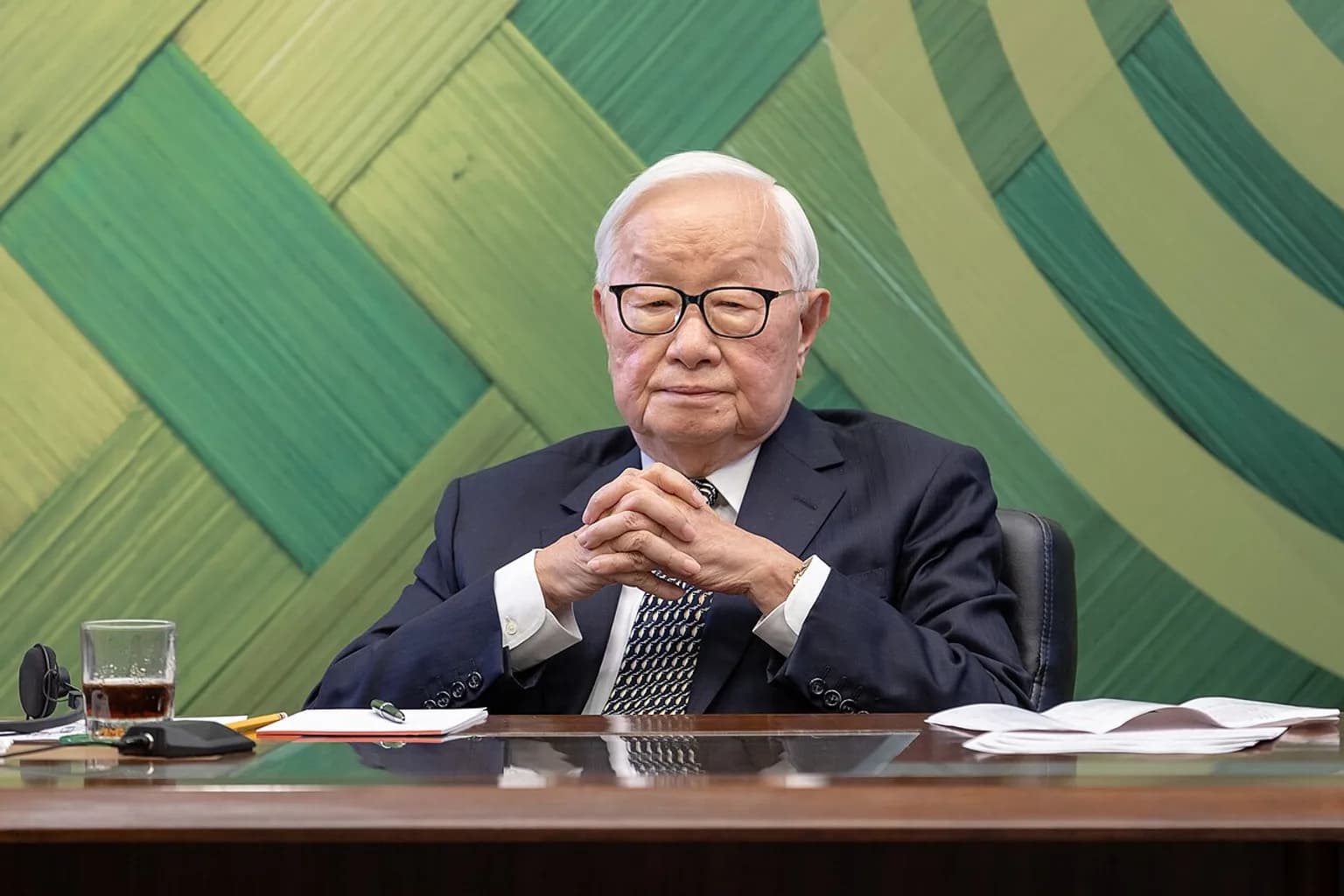
Photos from that evening showed Chang seated in a wheelchair, with white hair and high cheekbones. Huang had once asked him to make a chip that could keep Nvidia alive. Within two or three years, that chip had made Nvidia one of TSMC’s five largest customers.





Comments (0)