
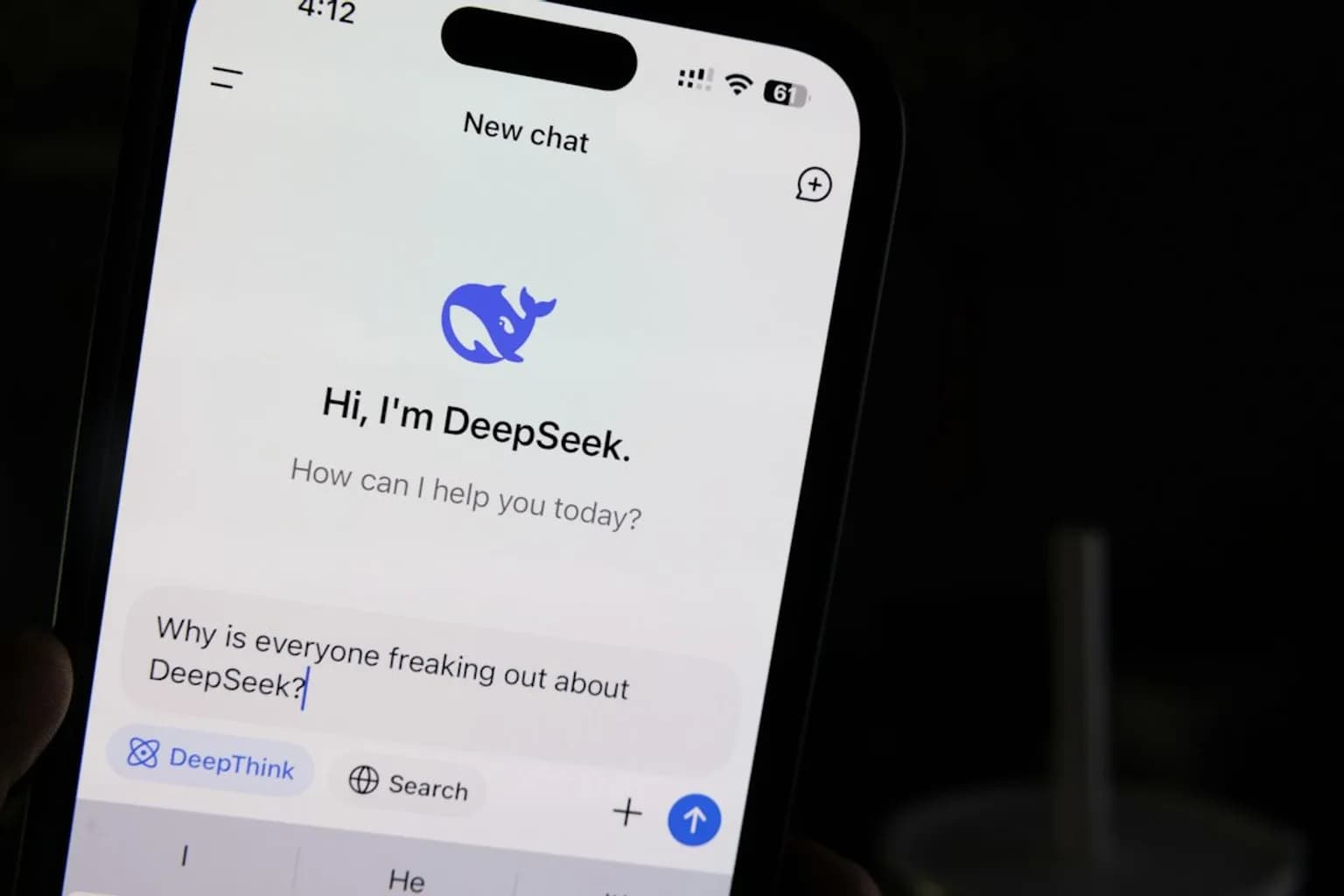
DeepSeek released its latest model, V4.1-Flash-1017, last week and called it “smarter, faster, more efficient.” A couple of days later, the Department of Homeland Security made public a sweeping restriction on the Chinese artificial intelligence service across the US civilian government.
The order had taken effect from the end of July, before its public disclosure on Monday. It bars civilian agencies from using DeepSeek or technology built with the aid of its AI models. The restriction covers bodies including the Department of the Treasury, the Department of State and the Department of Justice. Agencies within the Department of Defense are excluded.
Civilian agencies must remove existing DeepSeek-related products, and the notice also prevents the company from taking part in federal government contracts. A notice on the restriction was published with the Federal Register.
DHS said use of DeepSeek could lead to sensitive data on US government employees and vendors being transferred to the Chinese government. It also said the models could carry malware or other security vulnerabilities.
The order reaches a product that has spread quickly since its public release in 2025. DeepSeek is an open-source AI model, meaning it is free to access and cheaper to use. Its free chatbot app is among the most downloaded apps in the Apple App Store rankings, while Snowflake, Vercel and OpenRouter have incorporated DeepSeek into products offered to customers.
Demand has at times been high enough to bring down the company’s servers. Its lower-cost models are beginning to rival services such as ChatGPT and Gemini. DeepSeek said it spent about $6m (£4.5m) training the first version of its model, compared with roughly $100m associated with OpenAI’s GPT-4.
The administration’s move follows allegations from Anthropic and OpenAI that Chinese AI firms, including DeepSeek, had essentially copied their models. Michael Kratsios, the White House technology lead, wrote in an internal memo earlier this year that “malicious exploitation” of American AI firms had been taking place, mainly by rival companies in China.
Last year, two US Congressmembers proposed legislation that would bar DeepSeek’s chatbot from government devices. President Donald Trump has made clear that he considers China the leading US rival in the development of AI.



Comments (0)