

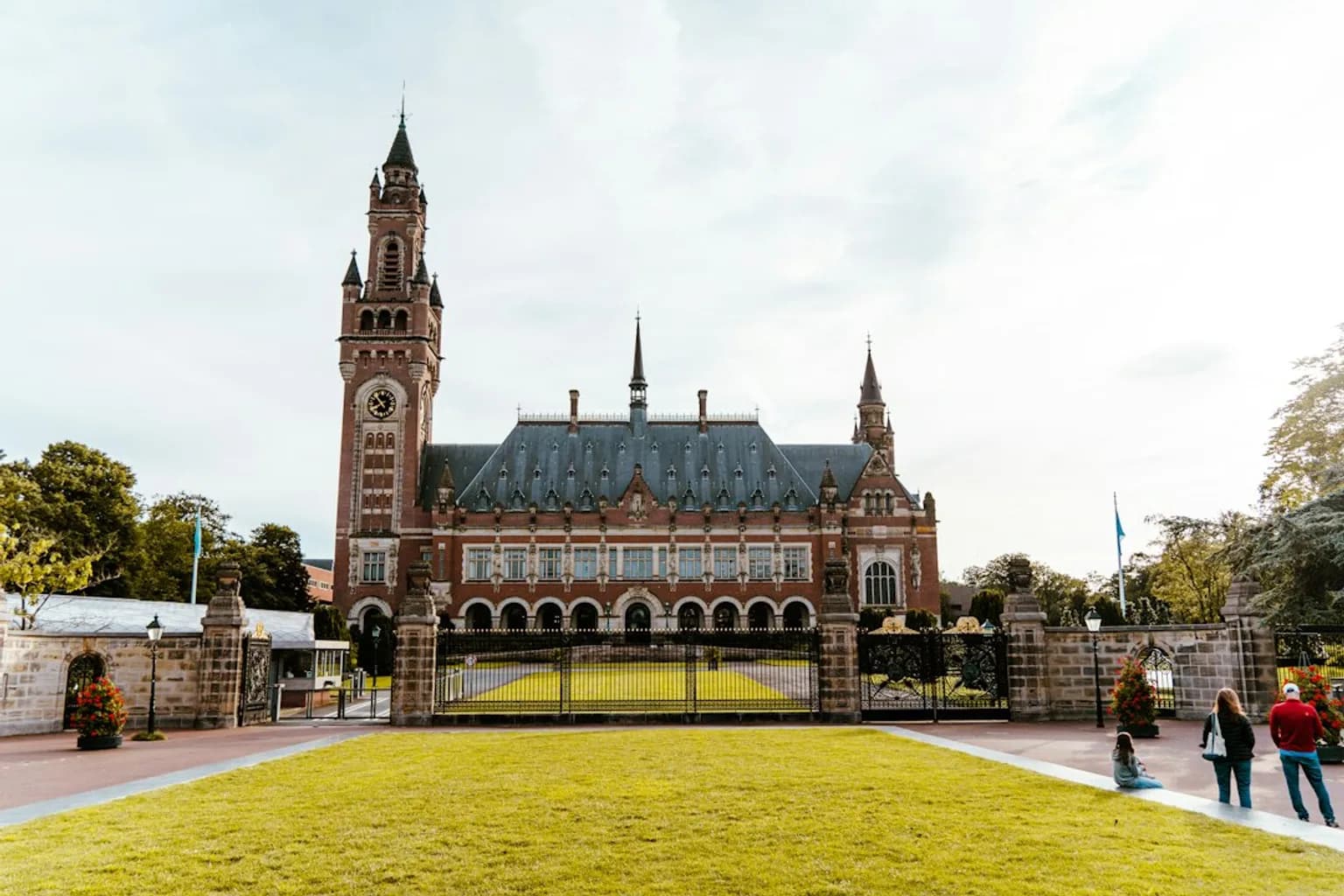
Kaja Kallas has put the European Union’s strongest available response to US sanctions against the International Criminal Court on hold, arguing that Brussels should use the coming months to prepare its legal case and talk to Washington. “We should keep all options on the table. If we use the blocking statute, we have one shot and we should do it well. So, it should be well prepared,” the EU High Representative for Foreign Affairs and Security Policy said.
Her approach left the EU without hard measures after foreign ministers met in Luxembourg on Monday, 12 October. Belgium wanted tougher action, while Kallas and Minister Tom Berendsen pointed to the six-month period available for dialogue.
The dispute follows the Trump administration’s announcement of sanctions against the Hague-based court on Friday, 9 October, when it added the ICC to the SDN list. The administration had already targeted nine judges and the court’s chief prosecutor, cutting them off from US service providers, including banking services.
The US said implementation would follow a 180-day delay starting from Oct. 9.
Separately, NOS reported that the measures start in April 2027.
Nearly 60 members of the European Parliament from across the political spectrum urged the European Commission to act quickly after the White House announced the sanctions. They want the Commission to activate the blocking statute, an EU legislative shield that would stop EU firms from complying with US sanctions.
Kallas said Brussels would use the next months “to analyze the full legal implications, to open dialogue and look for solutions.”
At a press conference, she devoted under five percent of her remarks to the court, according to NRC, and described the period before the measures take effect as a “window for dialogue”. She also said she would be in the Hague that week, signalling direct engagement with the court.
The immediate pressure is financial. Under the transaction ban, banks with US operations may not transfer money to the court’s accounts or its staff.
Kallas called on companies not to overcomply with the sanctions. Belgian minister Prevot said some companies were already withdrawing support from the court as a precaution.
Berendsen said he would ask the Commission to prepare the EU blocking regulation. He also said the Netherlands wanted discussions with companies and was seeking new partners to support the court.
Thomas Byrne, the Irish European Affairs Minister representing Dublin’s presidency of the Council of the EU, said the delay offered “an opportunity for dialogue, which we should take advantage of while remaining ready to take all necessary measures.”
Kallas cast the argument in wider terms. “The ICC is under attack at precisely the moment when we need it the most,” she said, citing its investigations into Russian war crimes in Ukraine.
She also warned that “decisions by Niger, Mali, Burkina Faso, Chad and Venezuela to reject or even withdraw from the ICC risk eroding the foundations of global justice.”




Comments (0)