

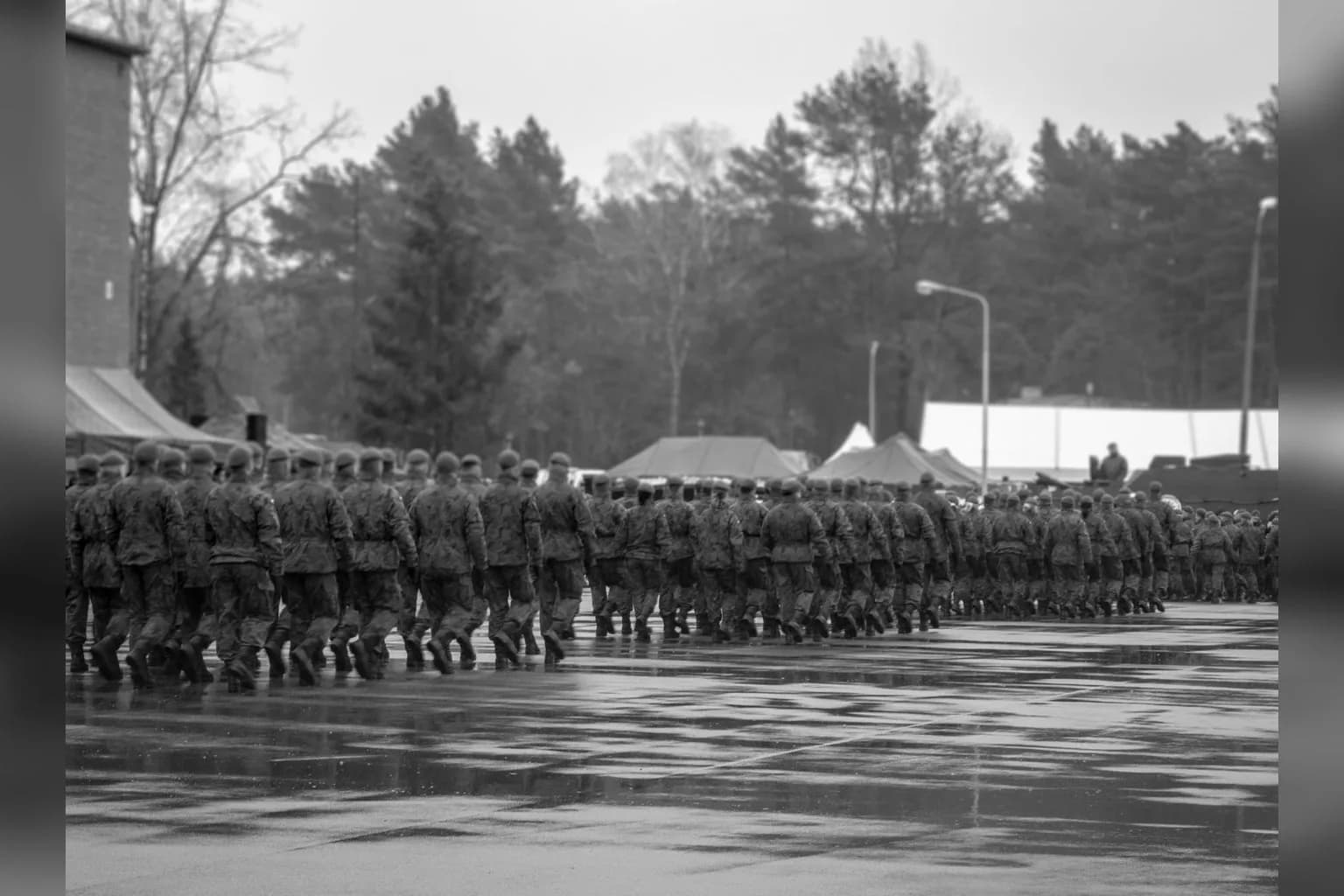
For Ukraine, the prospect of security support after any ceasefire is moving from summit declarations to a test of whether European forces can deploy together and deter Russia from renewed hostilities.
Poland was chosen for the coalition’s first exercise because a significant share of aid for Ukraine passes through its territory. The Coalition of the Willing, led by France and the UK, is seeking to establish response forces for Ukraine after a potential ceasefire.
Its exercise, Koalicja, using the Polish word for “coalition”, will take place at Nowa Dęba in southeastern Poland from 9 to 22 November. The training ground is about 100 kilometres from the Ukrainian border.
The coalition was created in 2025 and brings together 36 countries. After nearly two years of meetings and summits, it is now moving towards practical action.
About 2,800 troops are expected to take part, including personnel from France, the UK, Estonia, Lithuania, Germany, the Netherlands, Spain, Sweden and Belgium. Ukrainian forces will also participate.
The wider exercise roster includes Belgium, Estonia, France, Germany, Lithuania, the Netherlands, Poland, Spain, Sweden, Turkey and the United Kingdom. Britain will contribute approximately 300 troops, Royal Air Force Typhoon fighter jets and a Voyager refueling aircraft, while France is expected to send approximately 1,100 personnel.
Turkey will run the maritime element from Istanbul, concentrating on naval mine clearance and the restoration of safe commercial shipping routes in the Black Sea.
At issue is whether the Multinational Force Ukraine, or MNF-U, can operate as one force. Koalicja will test the compatibility of members’ communications systems, as well as the speed and efficiency of deploying land, sea and air forces. It will also examine the command system and the logistics of moving troops and equipment across Europe.
The MNF-U has its operational headquarters in Paris. British Lieutenant General Tom Bateman commands the force, with France sharing leadership responsibilities.
The force has no offensive mission and would deploy only after a ceasefire had been agreed. Its stated aims are to support the Ukrainian armed forces, help secure Ukrainian skies, allow economic activity to resume in the Black Sea and deter Russia from restarting hostilities.
Wes Streeting, the UK defence minister, said: “This isn't a hypothetical plan, it's a real force, ready to help Ukraine once the fighting stops”.
The French defence ministry said: “The exercise will allow the testing of the speed and efficiency at which several nations can deploy forces on land, sea and air to support Ukraine once hostilities have finished”.
NATO troops will not take part, although the North Atlantic Treaty Organization has been informed of the exercise. The United States is outside the coalition.
Russia’s President Vladimir Putin has previously warned that foreign troops operating on Ukrainian territory could be treated as legitimate military targets.
The coalition is also scheduled to meet in Berlin in mid-November, after an announcement by German Chancellor Friedrich Merz, to coordinate international assistance to Ukraine and strengthen its air defence.




Comments (0)