

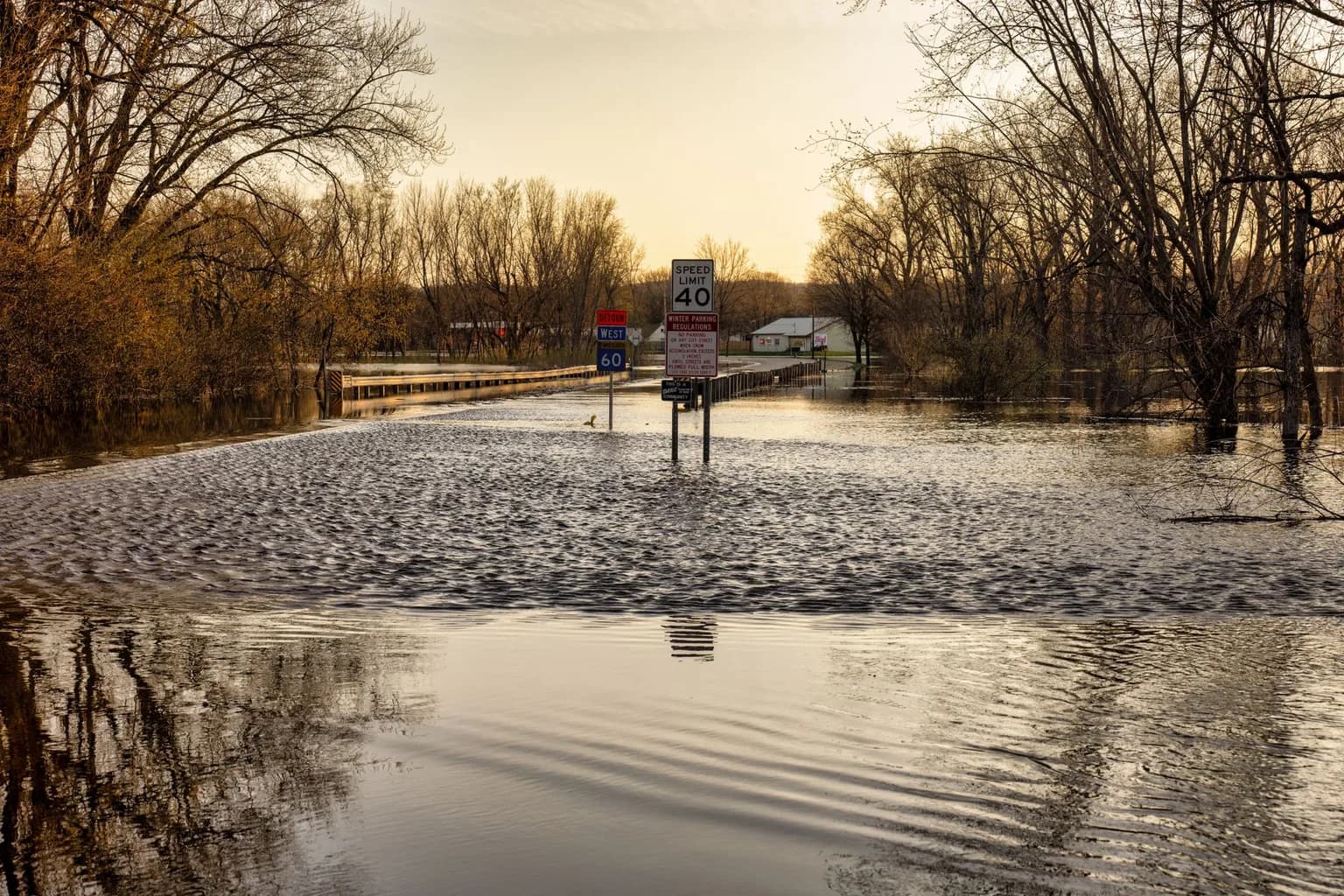
Residents across the Four Corners region faced evacuation orders and life-threatening floodwaters as a renewed surge of rain swept through communities still recovering from earlier devastation.
Meteorologists said a super El Niño and a subtropical jet stream had brought heavier rain, more torrential storms and bigger floods to the region.
The latest soaking rain began on Saturday evening and was expected to continue through Monday, with the weather service estimating that as much as 4 inches could fall across the region.
In Flagstaff, Arizona, rain fell almost without pause on Sunday, flooding roads and overwhelming storm drains. Aaron Hardin, a meteorologist with the National Weather Service in Tucson, said: “We are getting two or three months of rain in a span of a couple of days”.
By Sunday, the rainfall had produced flash flooding and mandatory evacuations across a broad stretch of the Southwest. Pagosa Springs officials warned of potentially “catastrophic flooding” as the San Juan River was forecast to crest at more than 20 feet late on Sunday night.
Pagosa Springs, a Rockies town of more than 2,000 known for its hot springs and located near ski resorts, faced downtown evacuations and street flooding. Katie German, the owner and chef of Bruin Coffee, said downtown had been evacuated and streets were flooding.
The town had lifted an evacuation order after flooding last week, then reinstated it on Saturday as forecasts put the San Juan crest at 21.9 feet on Sunday night. During the flood of 1911, the river crested at approximately 17.8 feet.
In Sedona, Arizona, officials told people living near Oak Creek to leave immediately after floodwater trapped several people inside their homes. Rescue teams carried out dozens of operations, including helicopter rescues. Michelle Grimm, a longtime Sedona resident, said: “I've never seen them rescuing people with helicopters out of neighborhoods”.
Gila County ordered the complete evacuation of Gisela, a community of several hundred residents beside Tonto Creek. In Flagstaff, authorities searched for a man who fell into rapidly moving floodwater and “was not seen resurfacing”.
Flooding also disrupted central Arizona. In the Pinetop-Lakeside area, manhole covers were popping up and residents reported sewage backing up into homes. In Camp Verde, people hurried to safety as water rose around an RV park.
Colorado communities were hit as well. Cars, motorhomes and homes were swept away in Arboles, while the rising Animas River prompted evacuation orders in Durango. Around 200 Durango residents joined clean-up work on Monday, clearing mud and debris from homes and streets.
At least one person died in the flooding, and police suspected that a second death was connected to it.
On Monday, a fresh wave of flooding moved across the Four Corners region. In San Juan County, emergency officials sent evacuation notices to more than 20,000 people living within a half-mile of the Animas, La Plata and San Juan rivers. Devin Neeley, a county spokesperson, said of the floodwater: “It's wide and it's fast”.
Julia Gilbert, a resident affected by the flooding, said: “Last update was (the water) is about a foot from the garage of my brother's house and still rising”.
Aerial images on Monday, 2 November showed submerged roads, neighbourhoods and fields across the southwestern United States after days of severe flash flooding. The immediate danger was expected to continue after the rain eased. Neeley said: “We have not fully seen the crest of the rivers” and “We're looking at Tuesday or Wednesday before we actually see the river back to a normal state”.
Officials expected floodwaters to start receding by midweek. President Donald Trump approved an emergency declaration on Oct. 26 for northwestern New Mexico, allowing FEMA to cover 75% of eligible emergency protective measures.




Comments (0)