

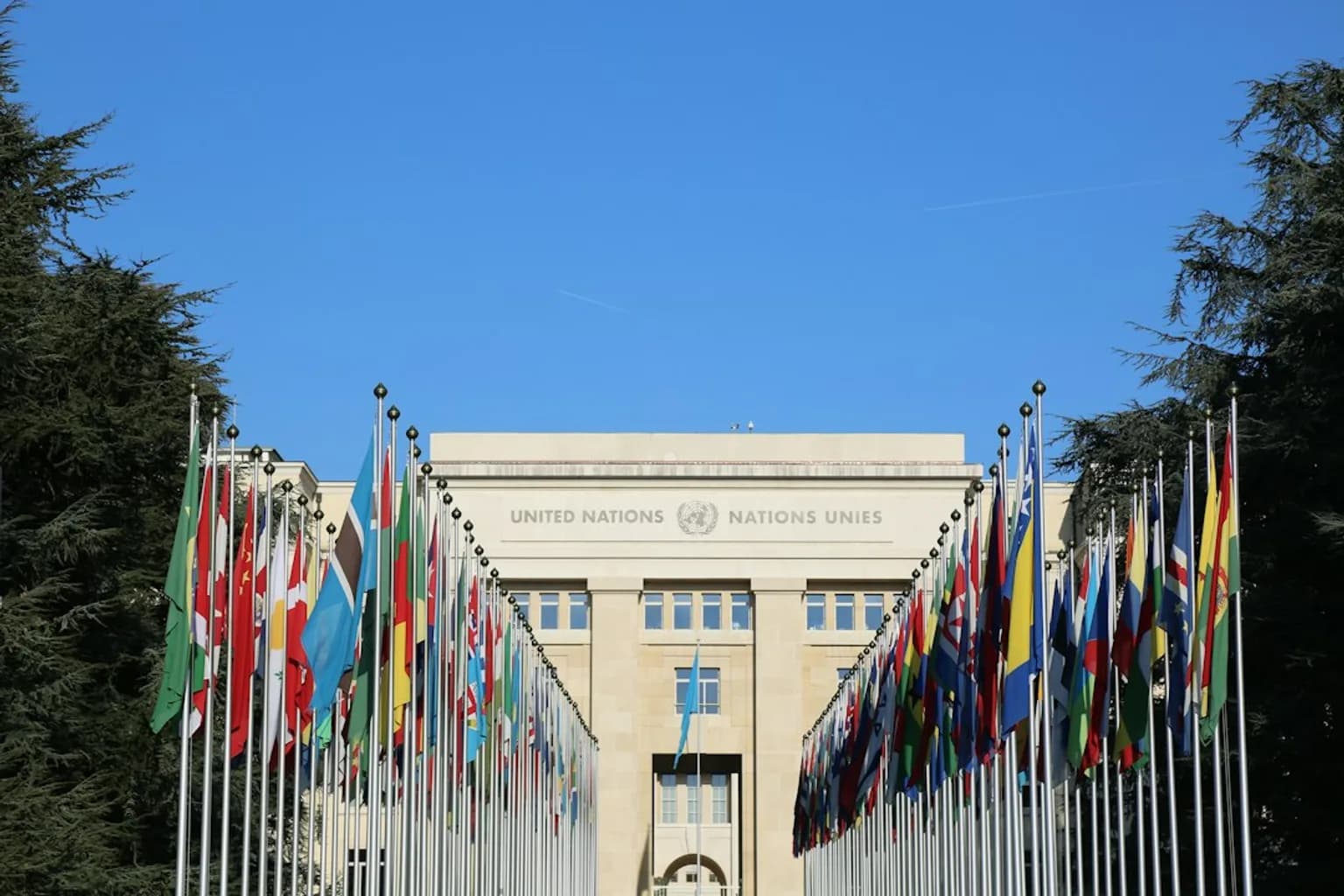
Julien Thoeni, the Swiss diplomat who chaired the UN conference, said on 21 November that 128 countries would spend the next two years elaborating a possible accord on autonomous weapons. The mandate uses the word “elaboration” rather than “negotiation”, leaving open whether it will produce legally binding rules.
The agreement followed a meeting in Geneva from 16–20 November, where nearly 100 countries pressed for swift binding rules. The United States, Russia and Israel were among arms-producing countries that opposed that approach.
Lethal autonomous weapons systems can identify, select and engage targets without a human operator carrying out those tasks. Artificial intelligence-equipped drones can select targets that were not predetermined and adapt to their environment without human involvement.
Such systems have already appeared in conflicts. Russia has used fully autonomous drones with lethal effects in its war against Ukraine, while the United States has deployed autonomous weapons in operations against Iran. North Korea has also recently boasted of developing an artificial intelligence torpedo system.
Russia’s objections over procedure led to some formal sessions being called off. Negotiators then continued discussions on the final wording through the night.
The wording carries weight because decisions under the Convention on Certain Conventional Weapons require the agreement of every member state. Thoeni said the text calls for elaborating an instrument rather than negotiating one.
Nicole van Rooijen, executive director of Stop Killer Robots, a coalition of 300 organisations, said autonomous weapons, including systems using AI to choose targets, are being deployed in combat. She said delaying a legally binding instrument puts civilians and humanity at risk.
The coalition called the mandate watered down and said it offered no clear route to legally binding rules.
There is no legally binding instrument specifically regulating lethal autonomous weapons systems. General international humanitarian law still applies.
Countries also differ over the degree of human control required. The United States calls for “an appropriate level of human judgment” in the use of autonomous weapons. France prohibits lethal autonomous weapons systems while allowing partially autonomous weapons systems.
The International Committee of the Red Cross wants bans on unpredictable autonomous weapons and on weapons designed or used to directly target humans. Laurent Gisel, who leads its Weapons and Conduct of Hostilities Unit, said advances in artificial intelligence had given the need for regulation new urgency.
In October, 163 states at the UN General Assembly adopted a resolution calling for negotiations on autonomous weapons rules. The United States, Russia, Belarus, Israel and North Korea voted against it, while 9 states abstained.
António Guterres, the UN secretary-general, and Mirjana Spoljaric, president of the International Committee of the Red Cross, warned jointly in August: “We are dangerously close to crossing a moral red line: that machines autonomously target humans”.




Comments (0)