

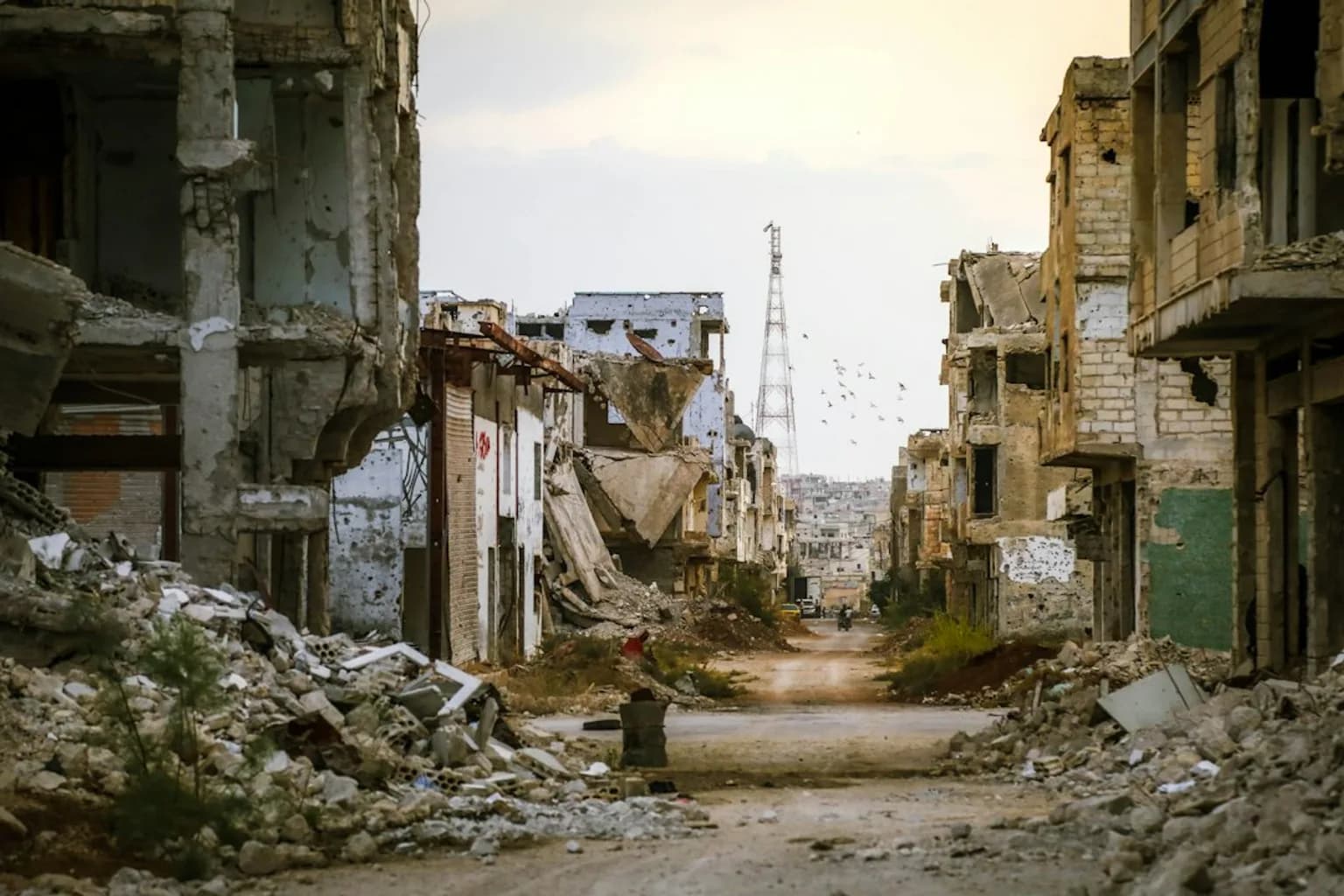
Masoud al-Salim ran towards the ruins of his home in the Syrian border village of Al-Tuff after the strike that killed his wife, son and three grandchildren. “I came running and found there was no house anymore, no tent, nothing. I couldn't find anyone. I started looking under the rubble. I thought they might be buried there,” he told the Associated Press.
Jordan carried out the strikes on Monday night, saying they were retaliation for a gun attack at a Greek Orthodox church funeral in southern Jordan last week. The government said it killed more than 20 Islamic State fighters and destroyed a massive weapons depot. Syrian authorities put the death toll at seven, including three children and a woman.
The opposing accounts have opened the biggest crisis between Jordan and Syria since Islamist authorities took power in Damascus after the ousting of longtime ruler Bashar al-Assad in December 2024.
Gunmen had opened fire during a funeral service at a Greek Orthodox church in Jordan’s Karak governorate, killing nine people and wounding 25 others. No group has claimed responsibility for the attack.
Jordanian security forces later arrested three men, two brothers and their in-law, following a shootout on Monday in connection with the church attack.
The Jordanian air force then struck what it described as terrorist groups in southern Syria. King Abdullah II said: “We vowed the terrorists would not escape punishment, and no proponent of dark ideologies that divide Jordanians will be tolerated.”
Jordan’s government acknowledged on Tuesday that civilians had been killed. Mohammed al-Momani, the communications minister, said Jordan takes precautions to avoid harming civilians and regrets civilian casualties. He said the operations were based on field intelligence intended to neutralise confirmed threats.
In the remote village of Al-Taf in Daraa province, near the Jordanian border, a missile struck the living room of the Salim family home at night. Nassouh al-Salim survived and said his mother, older brother and three nephews were killed while the family slept.
Five members of the same family, including three children, were killed in an airstrike in Al-Tuff in southern Syria’s Daraa province. Two other children, aged four and five, were wounded.
Yassine al-Salim, a 78-year-old elder of the family in Al-Taf, said the dead were innocent and in the flower of their youth. Yasser al-Sardi, a grocer from the village, said a plane arrived at night and bombed randomly, and that residents with no connection to any faction lived there.
At a hospital in Daraa province, Mohammad al-Fadel, the head of nursing, said staff received the bodies of three children aged eight to ten and a woman aged around 60 whom they believed to be their grandmother.
A funeral procession for five family members, including three children, took place on Tuesday, 27 October 2026, in Al-Tuff.
Syria’s Foreign Ministry condemned the raids as an unacceptable violation of and encroachment into Syrian airspace. Jordan’s military said it had coordinated the strikes with Damascus. Syria’s government denied there had been prior coordination and announced an investigation.
Syria closed the main Nassib border crossing with Jordan on Tuesday, suspending passenger and commercial traffic. The two countries also agreed to form a joint committee to investigate the airstrikes that killed civilians in Syria.
Islamic State was territorially defeated in Syria in 2019 after seizing swathes of territory during the country’s more than 13-year civil war.
Comments (0)