

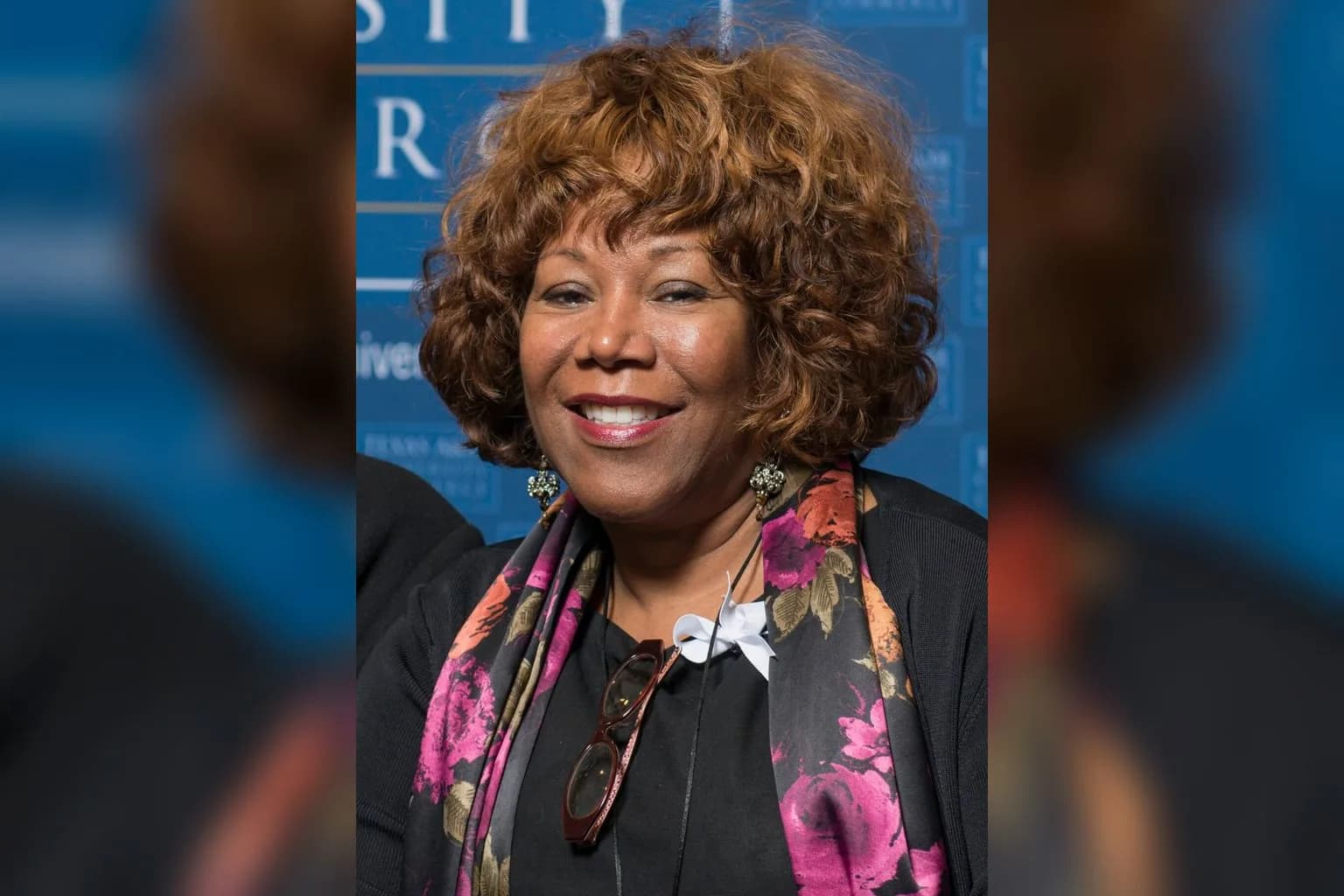
A Child at William Frantz
Ruby Bridges was six when she arrived at William Frantz Elementary School in New Orleans on 14 November 1960, under escort by federal marshals. Her destination was an all-white school, and she became the first Black child to desegregate an all-white elementary school in the city. A federal order had reached the schoolhouse door, and one first-grader had to walk through it.
Three other girls began the same morning at McDonogh 19 Elementary School. Tessie Prevost, Gail Eitenne and Leona Tate entered McDonogh 19 while Bridges began at William Frantz, as New Orleans elementary schools started desegregation under an order from U.S. Circuit Judge J. Skelly Wright. The city’s public-school system had opened a new chapter through four children beginning class.
Fourteen November holds departures, arrivals and decisions on a striking scale, from a spring in Ethiopia to the Moon and beneath the English Channel. Why does Ruby Bridges’ school day still give 14 November its clearest image?
Water at Gish Abay
James Bruce reached Gish Abay in Ethiopia on 14 November 1770 with his guide, Woldo, and found a source of the Blue Nile in the highlands. He marked the occasion with an object he had carried from elsewhere: a coconut-shell cup bought in Arabia, filled with water from the spring. Bruce raised it in a toast to “His Majesty King George III, and a long line of princes.”
The traveller later described the moment in grander personal terms: “Though a mere private Briton, I triumphed here, in my own mind, over kings and their armies.” Bruce argued that the Blue Nile was the Nile of the ancients, while acknowledging that the White Nile was longer. His cup and toast turned a source in the Ethiopian mountains into a claimed discovery, carried outward in his account.
A Whale Reaches America
Harper & Brothers published Herman Melville’s Moby-Dick in the United States on 14 November 1851, almost a month after a London edition appeared under the title The Whale. The New York publication came in a single volume under Melville’s final title, bringing Captain Ahab’s pursuit of the white whale to American readers.
The novel was poorly received at first and later became a classic of American literature. That long route gives the publication date its own form of arrival: a book that struggled at its beginning eventually found the vast audience its subject seemed to demand.
Bly Boards the Augusta Victoria
Nellie Bly stepped onto the Augusta Victoria at 9:40 on the morning of 14 November 1889. The 24-year-old journalist left New York aboard the Hamburg America Line steamer, bound for Europe and a race around the world. Her target was Phileas Fogg, Jules Verne’s fictional traveller in Around the World in Eighty Days, a novel Bly had read during the summer of 1888.
The New York World gave Bly £200 in English pounds for the journey. She already ranked among the best-known journalists in the United States, with her asylum exposé Ten Days in a Mad-House behind her. That earlier work had examined conditions inside a New York asylum; the paper now made her body, timetable and route the subject of a public challenge.
Bly’s train pulled into Jersey City at 3:51 on the afternoon of 25 January 1890. She had completed the journey in 72 days, beating the fictional standard that launched her from New York Harbor. Her departure gave the date one of its most vivid competitions: a journalist racing a character from a novel and winning.
A City Under Attack
The Luftwaffe began a 12-hour overnight bombing raid on Coventry on 14 November 1940. More than 500 people were killed, and three-quarters of Coventry city centre was destroyed, including the historic cathedral. The raid made destruction visible at the scale of a city, leaving streets, homes and a cathedral inside the same count.
Lightning at Cape Kennedy
Apollo 12 launched from Cape Kennedy on 14 November 1969 with Charles Conrad, Jr., Richard F. Gordon, Jr. and Alan L. Bean aboard. During the first minute, lightning struck the rocket twice. The spacecraft endured both strikes and continued toward the Moon, turning a launch emergency into the first test of the mission.
Conrad, Gordon and Bean had left together, and Conrad and Bean reached the Moon’s surface five days later. Their landing site was the Ocean of Storms, where Surveyor 3 had already become a fixed point for the crew’s approach. The mission’s journey therefore carried from two lightning strikes at launch to a precisely identified target on the Moon.
Three years later, another threshold appeared in a closing figure rather than a launch. On 14 November 1972, the Dow Jones Industrial Average closed above 1,000 for the first time. A market index had crossed a round-number boundary by the end of the trading day, giving investors a clean figure for a moment of ascent.
Under the Channel
The first public trains ran through the Channel Tunnel on 14 November 1994, linking England and France beneath the English Channel. The train journey made a route out of a stretch of water that had long stood between the two countries. Passengers could now take the connection themselves.
Sport supplied a different kind of margin on the date in 2010. Sebastian Vettel, a German driver for Red Bull, won the Abu Dhabi Grand Prix at Yas Marina Circuit and secured his first Formula One World Drivers Championship by four points from Fernando Alonso. Red Bull also took its first Constructors title, with the season decided at a finish line rather than a school entrance or tunnel portal.
The Image That Remained
Norman Rockwell gave Bridges’ journey a later public life when he painted her in The Problem We All Live With in 1964. The painting kept one child at the centre of the New Orleans desegregation crisis. Bruce’s cup, Bly’s £200, Apollo 12’s lightning strikes and the Channel Tunnel all mark people meeting a boundary. Bridges made the most consequential crossing of all by beginning class at William Frantz.




Comments (0)