

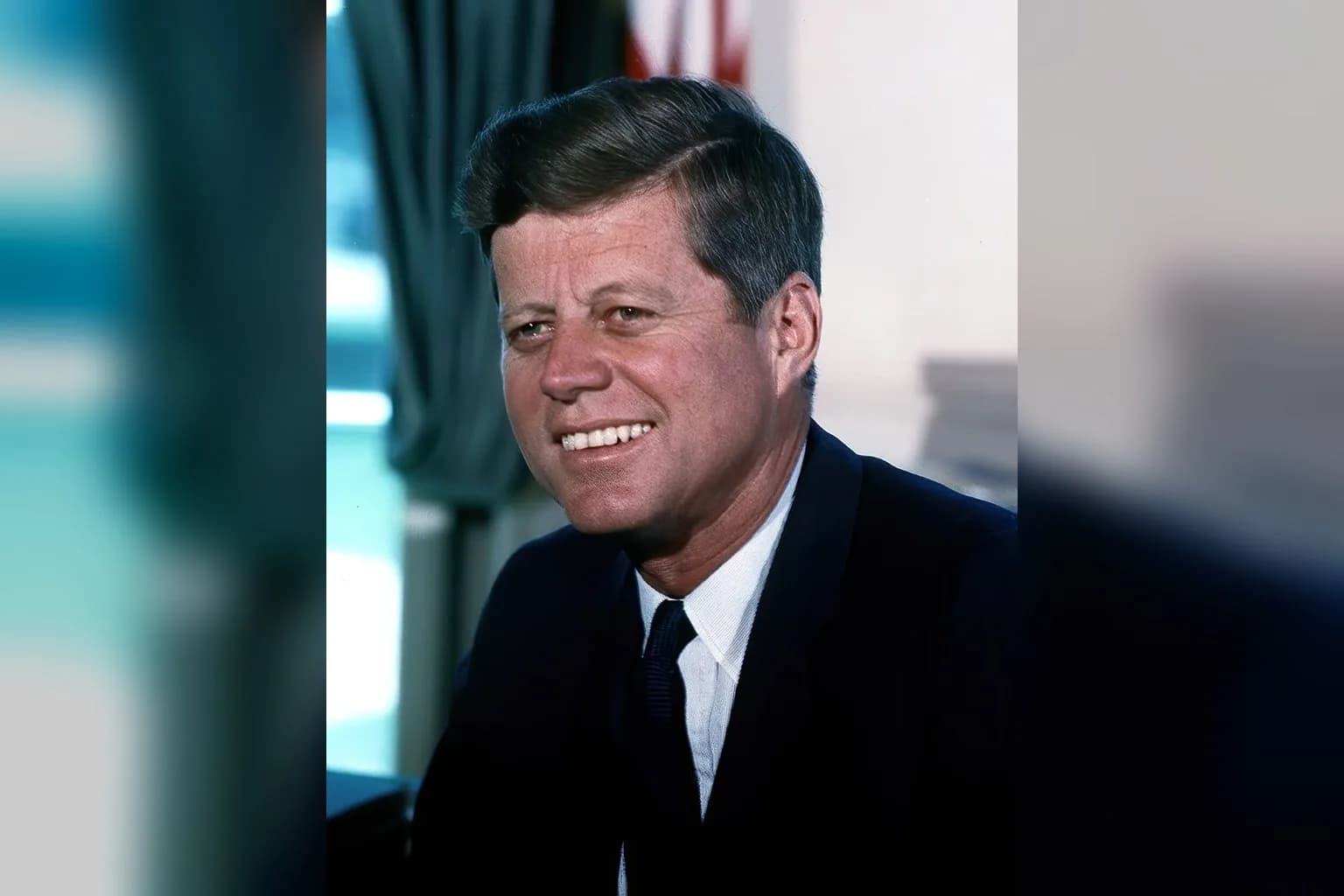
1963: Dallas and the Transfer of Power
On 22 November 1963, John F. Kennedy, the 35th president of the United States, was shot and killed in Dallas, Texas. Kennedy had served as president from 1961 to 1963, and the killing placed an abrupt end beside the ordinary business of a presidential trip through the city, according to Britannica.
The afternoon then delivered an equally consequential act of continuity. Vice President Lyndon B. Johnson took the oath of office aboard Air Force One later that day and became the 36th president of the United States, as Chronicles of History records.
That succession supplies a useful thread for the date’s wider history. Again and again, 22 November records a decisive handover, a public beginning, or an ending that created a different order. The settings range from a fight off North Carolina to an airport in California, from a newly independent Lebanon to a cinema release that showed a new way to make a feature film.
Each event belongs to its own circumstances. Together, they show how one square on the calendar can hold moments when authority, technology, culture and public memory visibly shifted.
1718: The Fight That Killed Blackbeard
The earliest of these shifts came at sea on 22 November 1718. Royal Navy Lieutenant Robert Maynard attacked and boarded vessels belonging to Edward Teach, the British pirate widely known as Blackbeard, off the coast of North Carolina, according to the Persian Calendar account.
The encounter involved casualties on both sides. Teach died in the fighting, as did Maynard’s first officer, Mister Hyde.
Blackbeard’s name has persisted in popular culture, while the documented event itself was a direct confrontation between a Royal Navy officer and a pirate’s vessels. The scene also establishes a contrast that returns throughout this day’s history. Travel over water brought armed conflict in 1718, while a journey across an ocean would later signal a new commercial connection in the air.
1935: The Pacific Becomes a Commercial Route
On 22 November 1935, the China Clipper inaugurated commercial transpacific air service between Alameda, California, and Manila, as the contemporary date record notes. The service made the Pacific a route for a new kind of long-distance commerce.
The China Clipper was a Pan American flying boat. It left San Francisco and reached the Philippines 59 hours later, while commercial passenger service began the following year, according to KidsKonnect.
1943: Lebanon’s Declaration of Independence
On 22 November 1943, Lebanon proclaimed its independence from France. The date remains Lebanon’s Independence Day, and it marks the country’s public claim to national authority, according to Britannica.
The declaration belonged to a longer process. Lebanon became wholly independent in 1946, so the 1943 proclamation stands as a major stage on the way to full independence.
Another account places that stage in still sharper sequence. Lebanon gained independence nearly two years after the Free French government first announced it, according to the Persian Calendar record.
Later 22 Novembers would bring further changes at the top of national governments. These transitions unfolded through different institutions, yet each centred on the public question of who would exercise authority next.
1975, 1990 and 2005: Leaders Change, Offices Endure
On 22 November 1975, Juan Carlos became king of Spain. His accession came two days after the death of Francisco Franco, as Britannica records.
The proclamation restored Spain’s monarchy after 36 years of dictatorship, according to On This Day. The event therefore placed a new monarch at the head of Spain while also marking a change in the country’s form of rule.
It made the date a marker of succession far beyond the United States, where Kennedy’s death and Johnson’s oath had made the same theme vivid 12 years earlier.
On 22 November 1990, Margaret Thatcher announced her resignation as British prime minister. A split within the Conservative Party had preceded the announcement, according to Britannica.
Her statement confirmed the end of a premiership that had lasted 11 years. That term was the longest held by a British prime minister during the 20th century, according to KidsKonnect.
Thatcher’s resignation shows a different kind of transfer. Party politics and a public announcement ended her premiership, where Juan Carlos’s accession followed the death of Franco and Johnson’s presidency began with an oath.
Then, on 22 November 2005, Angela Merkel became Germany’s chancellor. She was the first woman to hold the post, according to Britannica.
Merkel’s arrival added another dimension to the date’s record of leadership. The office remained the chancellorship, while the person entering it changed the history of that office.
Political transitions can appear in ceremonies, resignations and declarations. The same date also carries milestones whose public drama came through a boxing ring and a cinema screen.
1986: Mike Tyson’s Heavyweight Record
On 22 November 1986, Mike Tyson faced Trevor Berbick for the World Boxing Council heavyweight championship at the Las Vegas Hilton. Tyson stopped Berbick in the second round and won the WBC title, according to On This Day.
Tyson was 20 years old. The victory made him the youngest heavyweight champion in boxing history.
A sporting record is a compact kind of turning point. One contest fixes a new standard, which is why Tyson’s victory belongs alongside events that changed governments or opened routes between continents.
1995: Toy Story Opens a New Screen
Nine years after Tyson’s title win, 22 November marked a landmark in filmmaking. Pixar released Toy Story on 22 November 1995, as On This Day records.
The film was the first feature-length production created completely with computer-generated imagery. That technical fact defines why its release holds a place in the day’s history.




Comments (0)