

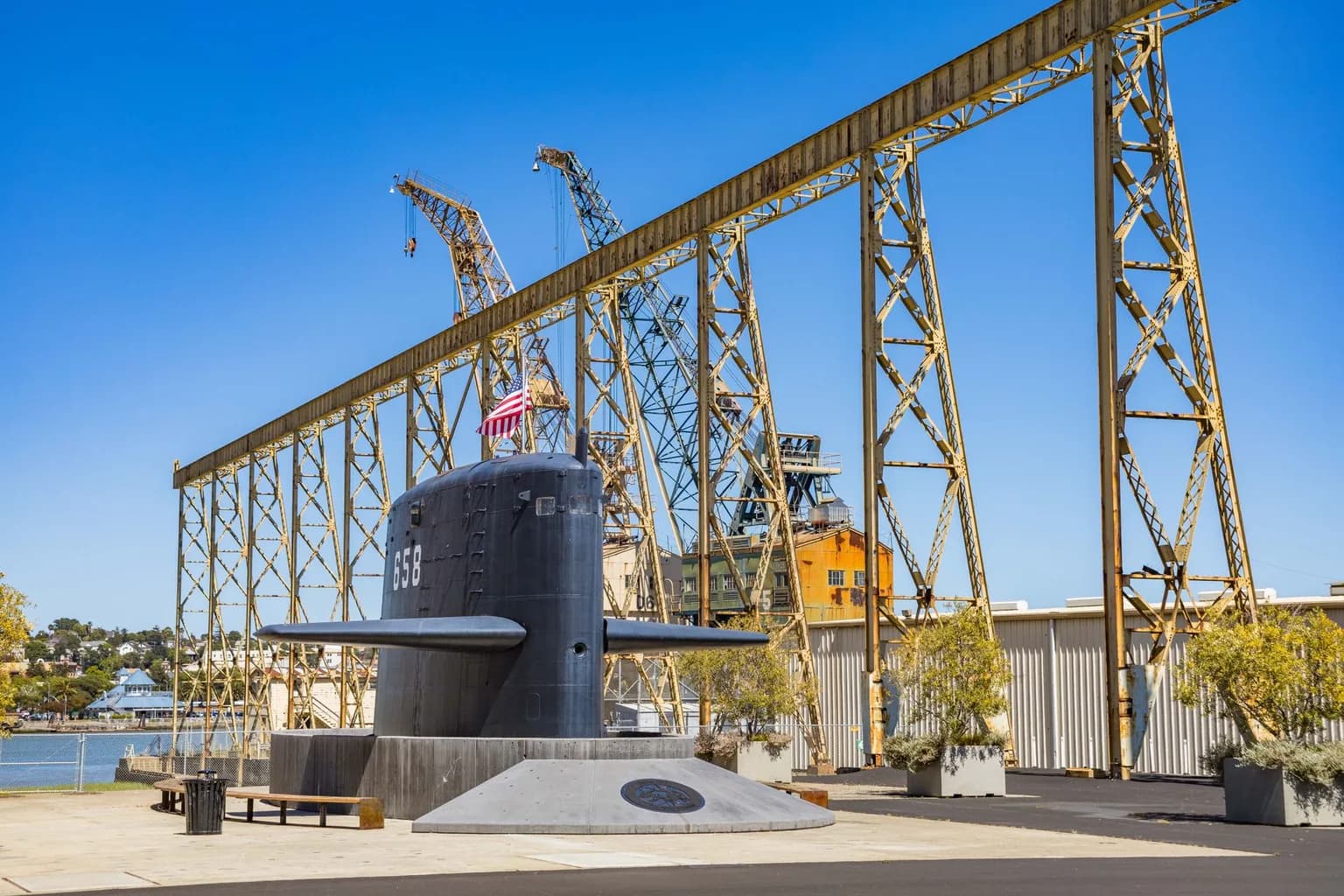
American personnel are already at HMAS Stirling preparing for the submarine force, Australian Deputy Prime Minister and Minister for Defence Richard Marles said. “There are American personnel at HMAS Stirling right now readying the site for this,” he said.
The work at the naval base in Western Australia precedes the arrival in late 2027 of the USS Colorado, which the Pentagon has assigned as the first US nuclear-powered attack submarine for Submarine Rotational Force-West.
The deployment carries the Aukus pact into military operation. Australia, the US and the UK signed the agreement in 2021 in response to China’s military build-up in the region.
On Tuesday, US Secretary of War Pete Hegseth, Marles and UK Secretary of State for Defence Wes Streeting announced the Colorado’s designation in a joint statement. The 115-metre (380-foot) Virginia-class submarine is armed with land-attack missiles and sophisticated torpedoes.
It will begin a rotating presence at HMAS Stirling that is projected to include up to five fast-attack submarines: four from the United States and one from the UK. The deployment has been described as a “significant milestone” in building a joint US-Australia-UK deterrence in the Pacific.
Marles called the force Aukus’s first “really big milestone”. The base is intended to help Australia support allied submarine deployments and maintenance while preparing to own, operate, maintain and regulate its own sovereign, conventionally armed, nuclear-powered submarine capability. Australia’s own nuclear submarines will be conventionally armed.
Nuclear propulsion gives the Colorado a range effectively limited by the crew’s need for food and water. The US maintains ambiguity over whether assets rotating through Australia carry nuclear weapons.
The arrangement will operate from an Australian naval base rather than a foreign military base. Australia does not permit foreign military bases on its soil, though it hosts US Marines for exercises for six months a year in the northern city of Darwin.
The Aukus submarine programme could cost up to US$235 billion over 30 years, according to government forecasts. It also faces domestic controversy after late May revelations that the US would deliver lesser equipment than first promised. Jacqui Lambie, the Tasmanian independent senator and army veteran, described the plan to send second-hand vessels as “trash”.





Comments (0)