
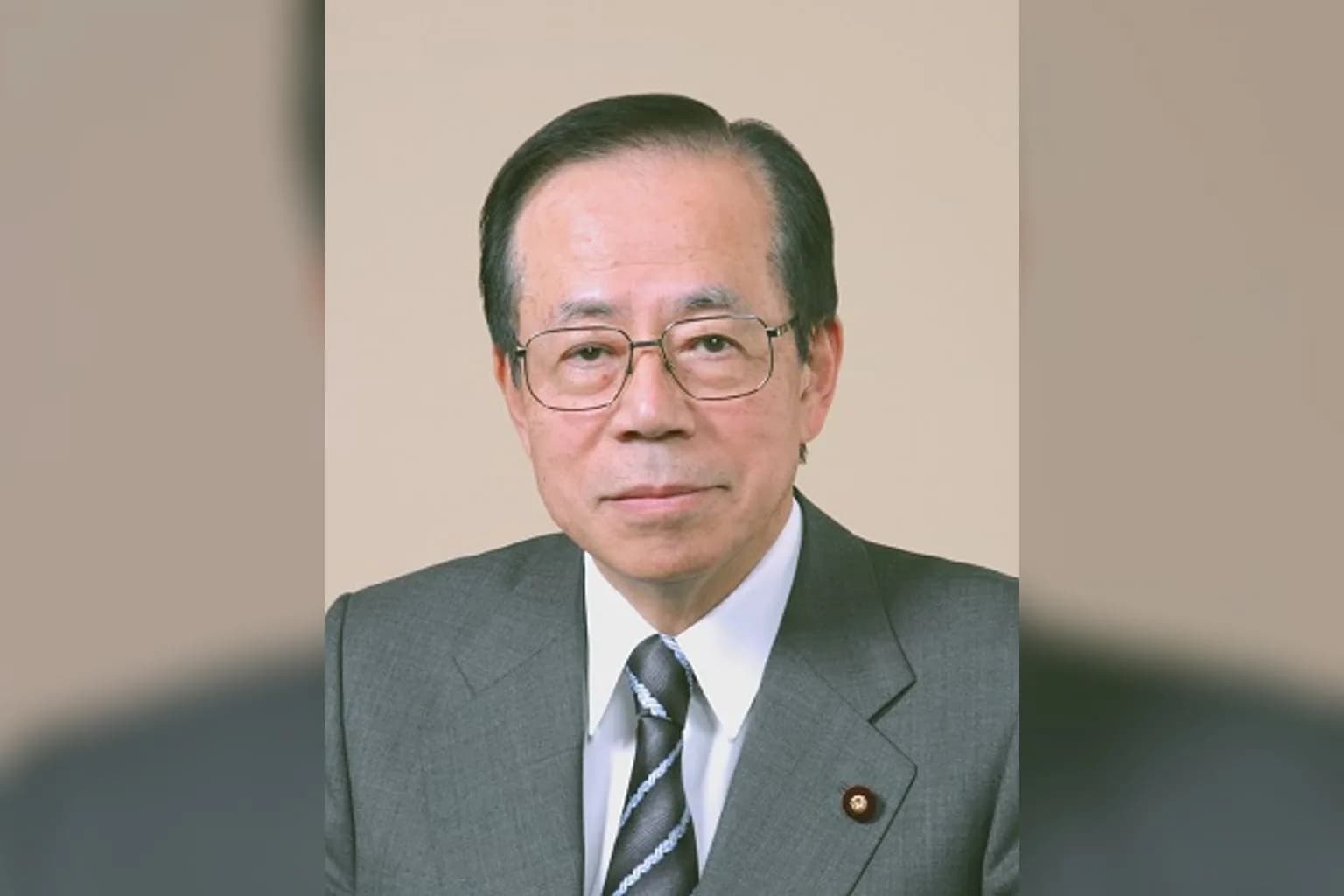
Yasuo Fukuda, Japan’s 91st prime minister and a persistent advocate of better relations with China, has died aged 90. He died from heart failure at a Tokyo hospital on Thursday, and his death was reported on Monday, 26 October 2026.
Fukuda took office in September 2007 after Shinzo Abe resigned suddenly for health reasons, and served until September 2008. His term lasted less than a year, ending when his approval ratings fell.
He was the first son of a Japanese prime minister to hold the office himself. His father, Takeo, had been prime minister from 1976 to 1978.
Fukuda inherited relations with China that had been damaged during Junichiro Koizumi’s premiership. Koizumi made repeated visits between 2001 and 2006 to Tokyo’s Yasukuni Shrine, which honours Class-A war criminals alongside Japan’s 2.5 million war dead.
Three months after entering office, Fukuda travelled to China in December 2007. At Peking University, he gave a speech focused on historical reflection and cooperation.
He then invited Hu Jintao, China’s president at the time, to Japan. Hu arrived in May 2008, the first Chinese head of state to visit Japan in a decade.
During that visit, Fukuda and Hu issued a joint statement committing the two countries to a ‘mutually beneficial relationship based on common strategic interests’.
Fukuda left office in September 2008. He retired as a politician in 2012, though he continued to make several trips to China in efforts to improve relations that remained often fraught.
In 2014, he travelled to China for talks with President Xi Jinping. That visit paved the way for a summit between Xi and Abe during Abe’s second term in power.
China’s foreign ministry spokesman, Guo Jiakun, said Fukuda had ‘made positive contributions to improving and developing China-Japan relations’ and ‘held a correct view of history during his tenure’. Guo said Fukuda’s words ‘carried great weight’.
Wang Guangtao, deputy director of the Centre for Japanese Studies at Fudan University, described Fukuda as ‘modest and gentle’. Wang said Tokyo now lacked figures with comparable credibility in Beijing.
His death comes while relations between China and Japan have faced their gravest test since diplomatic normalisation in 1972. Ties have been strained since November last year, when the current prime minister, Sanae Takaichi, suggested that a conflict in the Taiwan Strait might lead Japan to intervene militarily.




Comments (0)