

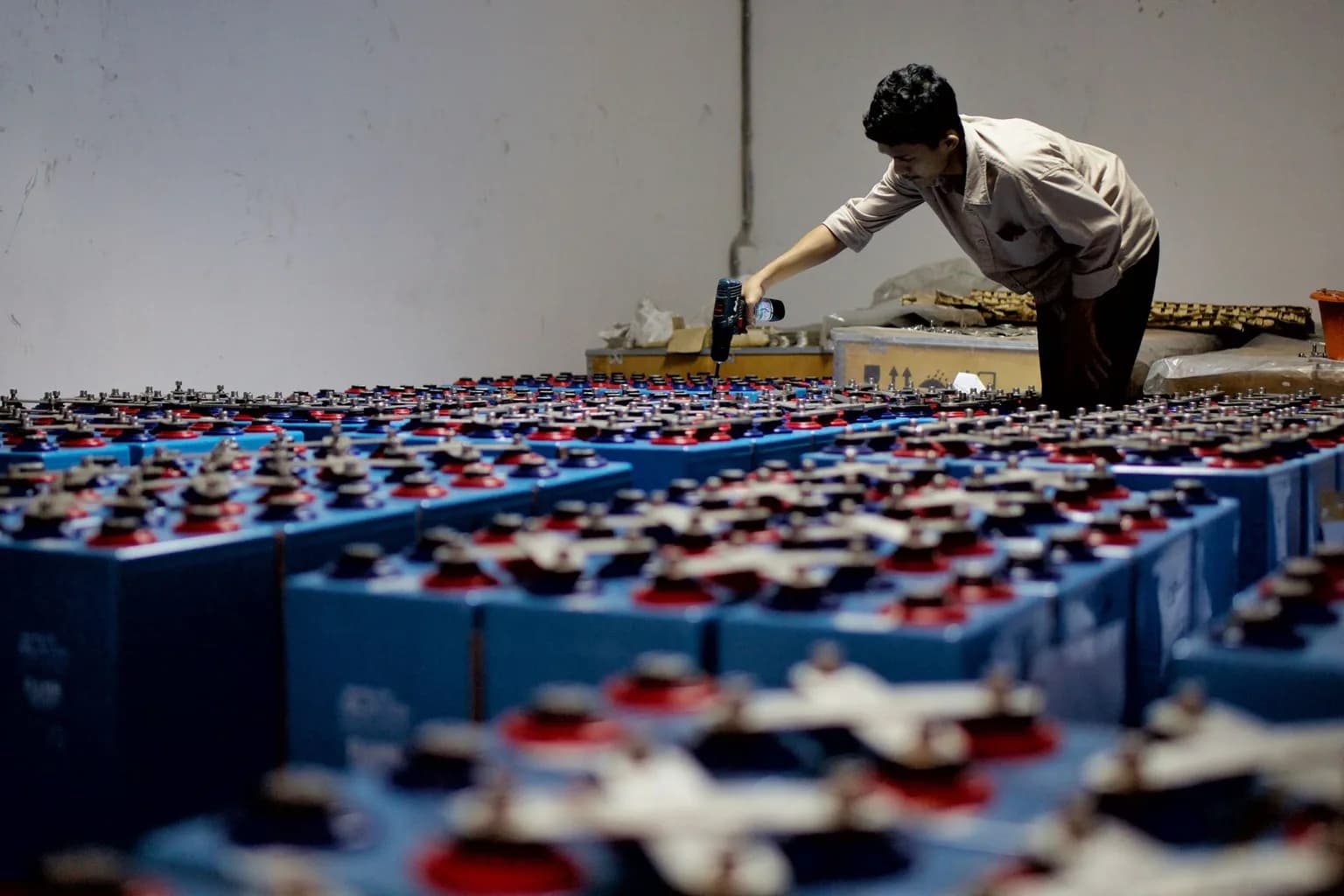
At CATL’s German factory, batteries are made for Porsche and Audi using components sourced in Europe and China. Just under half of those components have European origin. CATL, the world’s largest battery manufacturer, also has production units in Hungary and Spain.
“Regardless of what regulations require, CATL must localize production of main components,” Zhu Lingbo, CATL’s director of technology for the international division, said.
The drive to shift more manufacturing overseas forms part of China’s answer to Western efforts to develop domestic battery industries and lessen their dependence on Chinese supply. China is the world’s largest battery producer, consumer and innovator. Two decades of industrial policy have given it the world’s most vertically integrated battery ecosystem, covering cell production, active materials and the commercialisation of next-generation chemistry.
The State Council has consistently supported the battery and new energy vehicle sectors since the late 2000s. China’s 15th Five-Year Plan for 2026–2030 will add further support for the sector, with solid-state batteries receiving greater political priority.
Western governments have responded with tariffs, localisation requirements and export restrictions. Tariffs targeting Chinese electric vehicles in 2024 reached as high as 45 per cent, while Europe has pursued rules requiring battery supply chains to sit entirely within the bloc by the end of the decade.
Chinese battery manufacturers have announced investments of nearly 90 billion dollars (80 billion euros) abroad since 2023 to bypass protectionist barriers and strengthen their position in global supply chains.
Across the world, 52 billion dollars of the announced investment is intended for battery cell manufacturing and 38 billion dollars for materials production.
CATL, BYD, Gotion, Sungrow and CALB are among companies building production chains beyond China, including in Europe and Southeast Asia.
In late September, Gotion announced an investment exceeding 1 billion euros with Volkswagen to make batteries in Spain, Slovakia and Morocco.
Volkswagen has shelved four planned gigafactories in favour of working with CATL and Gotion High-Tech. It has partnered with Gotion on battery production in Spain, Slovakia and Morocco.
CALB is developing a lithium battery factory in Sines, Portugal, with planned investment of 2.065 billion euros and expected annual production capacity of 15 gigawatt-hours.
China’s overseas expansion has yet to erase its advantages in the industry. Chinese batteries’ local market share in Europe has almost doubled in two years to more than 50 per cent.
Chinese manufacturers can build a battery gigafactory in China for about one-third of the cost and in only one-third of the time required for an equivalent facility in Europe.
They also control more than 80% of global production of the four main battery components, according to Wood Mackenzie consultancy data. Wood Mackenzie forecasts that those shares will remain practically unchanged until 2034, even as some production relocates to other countries.
Beijing is combining expansion overseas with tighter control over technologies and materials used by its battery industry. It has introduced export controls on high-tech manufacturing equipment and high-energy-density batteries.
Between 2023 and 2026, China imposed export controls on gallium, rare earths and at least seven other materials. In April 2025, it squeezed exports of predominantly heavy rare earths and magnets.
China accounts for roughly 70% of rare earth mine production and more than 90% of global refined output. The International Energy Agency says China refines over 90% of global rare earth elements, along with between 60% and 70% of lithium and cobalt.
The agency estimates that China completely blocking rare-earth permanent magnet supplies would cost the United States and Europe combined around $3.5 trillion per year.
For Western governments, the contest is whether domestic investment, tariffs and localisation rules can establish battery supply chains less reliant on China. Chinese manufacturers are using overseas factories to enter markets seeking that independence while retaining a central role in the industry’s growth.





Comments (0)