

Japan’s new content export drive could leave most domestic films outside its support system, even as the government seeks to lift overseas sales to $127 billion by 2033.
Prime Minister Sanae Takaichi announced the IP360 policy last November as part of an economic strategy that named content among 17 key sectors, alongside semiconductors, AI and shipbuilding. The Ministry of Economy, Trade and Industry (METI) will oversee the initiative.
At the Tokyo International Film Festival and its affiliated TIFFCOM market in late October, sales agents and producers returned to a familiar complaint: Japan has announced support schemes before, and the industry has seen little from them.
“There have been a lot of support schemes up to this point and none of them have had much impact,” a sales representative at a major Japanese publisher said.
An overseas sales agent for a mid-sized Japanese film company drew a comparison with a regional competitor. “We had the Cool Japan initiative before but Japan has never put up money to support the industry on the scale that South Korea did,” the agent said.
The immediate concern is eligibility. Domestic live-action films need a budget of at least 800 million yen, currently $5.1 million, to qualify for overseas support, while most Japanese films cost between 1.5 million and 3 million dollars.
Alex Boden, the London-based producer of Tokyo Vice and Cloud Atlas, told the festival’s Motion Picture Association seminar that “There are hardly any producers in Japan who have had production experience well above the $5 million mark”.
Boden said the threshold risked shutting out most independent films and many co-productions. “There are a lot of European projects, including from countries Japan has recently ratified co-production treaties with, that now won't be able to come to Japan,” he said.
Boden was chair of the Production Guild of Great Britain for four years during a period when the UK increased the number of international productions shooting there.
IP360 replaced the JLOX scheme, introduced in 2022, which offered up to 50% cash rebate on qualifying spending. The new programme offers a 50% tax rebate on spending within Japan and uses a two-year application window instead of the earlier single-year financing structure.
For some in the business, the longer window is a real change. Makito Sugiyama, executive director of the Broadcast Program Export Association of Japan and a former international sales executive at TBS, said: “I've been in the industry for over 30 years and I can feel the change in the mentality of industry people over the last decade, and especially the last five years.”
He said past subsidies had been constrained by their annual cycle. “I've been involved in government committees and initiatives in the past and there have been subsidy schemes for years, but they were short-term and based on annual budgets. Now there's longer-term thinking and less bickering between ministries.”
Yet previous subsidy applications “took so much time”, an international sales agent said, with “hearings and other procedures.” Another international sales agent said the government had “tended to choose productions with famous actors and directors rather than the mid-size budget films, which are the ones that need help the most.”
Debra Richards, Netflix Director of APAC Content & Studio Production Affairs, said the Japanese incentive scheme was opaque and would be much better if it were clearer.
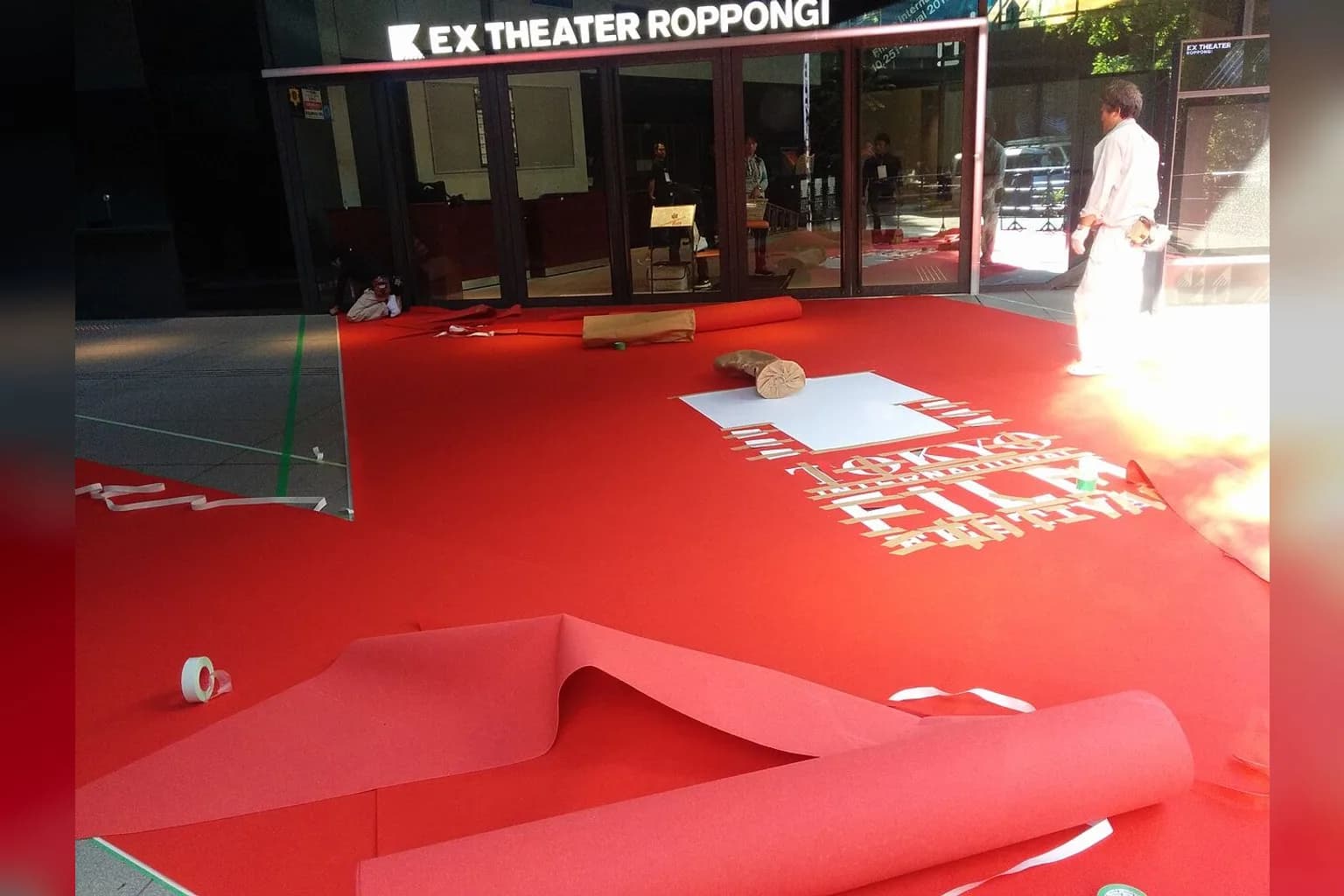
The festival opened its 39th edition on 26 October in Tokyo’s Hibiya district, bringing together around 270 filmmakers, actors and industry professionals from Japan and overseas. Across the 10-day event, which ran until 4 November, 204 films from 112 countries and regions screened in Hibiya, Yurakucho, Marunouchi and Ginza.
TIFFCOM ran from 28–30 October at the Tokyo Metropolitan Industrial Trade Center’s Hamamatsucho building, opening at 9:30am each day. Sales agents and industry representatives there discussed the government strategy alongside its earlier schemes, while producers and Netflix executives examined IP360’s effect on international productions at the annual Motion Picture Association seminar.
Takaichi and cabinet minister Ryosei Akazawa sent video messages to the festival opening ceremony, highlighting Japan’s ambition to increase content exports. Akazawa, whose portfolio includes METI, also spotlighted the export potential of Japanese entertainment and called for $1.6 billion in the fiscal year 2027 budget to support investment in the content industry.
The government has allocated $222 million (35 billion yen) for subsidies to content-related business in the current fiscal year. Akazawa said METI had requested JPY250BN ($1.6BN) in the fiscal year 2027 budget for investment in the content industry.
Japan’s content industry has reached 6.1 trillion yen [$39BN] in overseas sales. Amari Akira, a former Liberal Democratic Party secretary-general and METI minister who chaired the parliamentary league behind Japan’s basic content law 22 years ago, described the 2033 goal as a plan to quadruple the industry in ten years.




Comments (0)