

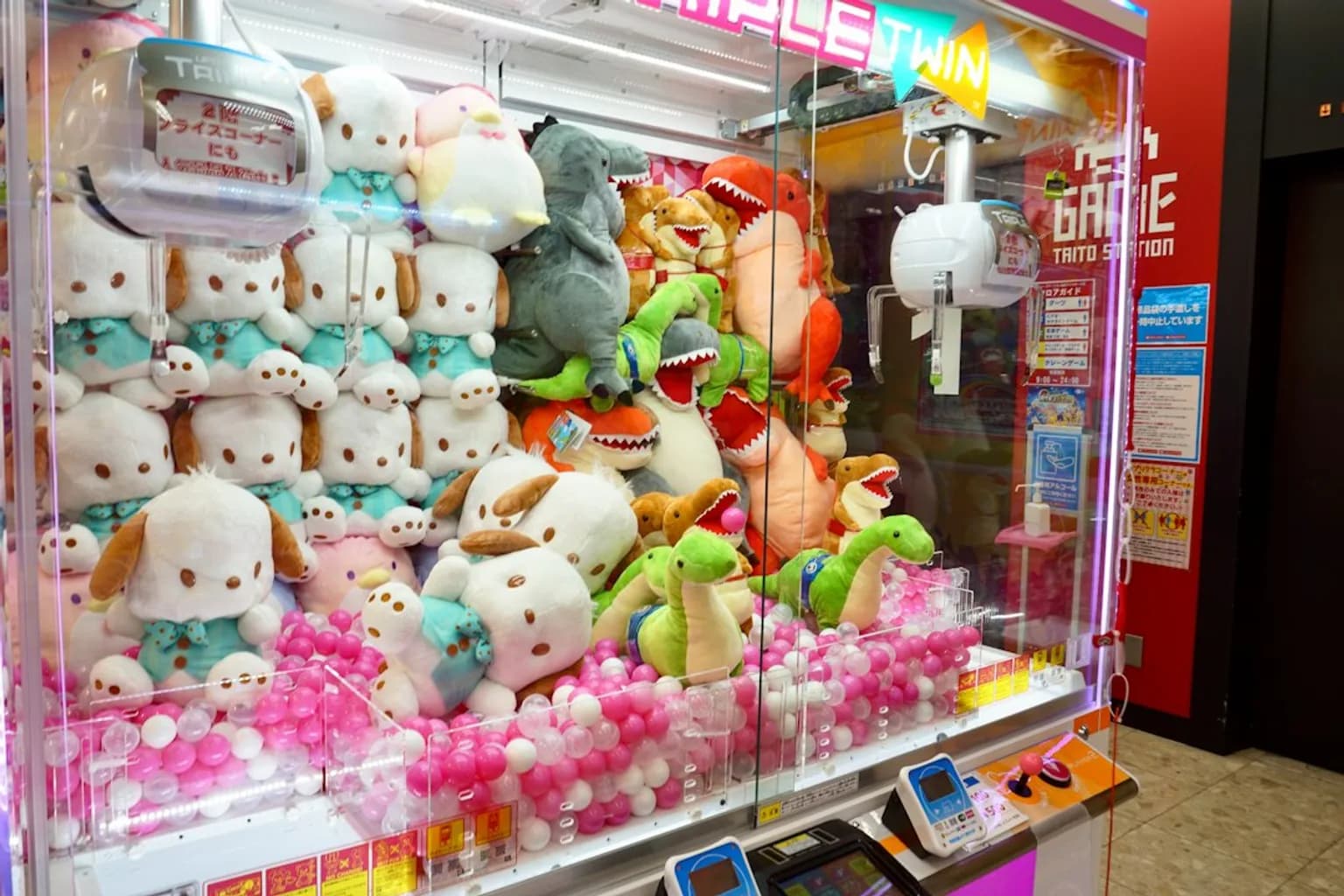
Minae Kamata, a 25-year-old housewife in a Tokyo suburb, played a claw machine while watching her baby in a stroller and won toilet paper after two tries at 100 yen per attempt. “If we have a little luck, it comes to the same as buying at low prices,” she said.
Across Japan’s major-city outskirts, huge arcades are filling hundreds of claw machines with rice, eggs, laundry detergent, soda bottles, candy packets and other household goods. The machines charge 100 yen for each attempt.
The shift comes after a prolonged inflation wave since 2022, during which prices have long risen faster than wages. Core consumer spending on everyday goods has fallen for five consecutive years as domestic wage growth trailed inflation.
Naoko Kuga, a consumer behaviour specialist at the NLI Research Institute, said food and everyday products had become targets for household budget cuts, driving a continuous five-year decline in spending on them. “In this context, merchants are trying to add entertainment to the act of buying to make customers want to consume anyway,” Kuga said.
At Benex, a specialist chain operated by Tisco, a venue in Kawasaki on the southern outskirts of Tokyo has hundreds of claw machines. Photographs taken there on October 5 showed machines stocked with household goods. Benex runs five large-format sites across Greater Tokyo and says they receive more than 1 million visitors a year.
The company scrapped its video games and token machines last year to concentrate on claw machines. Revenue from its household-product sales has risen 2.6-fold in two years.
Teruaki Tsuchiya, an executive at Tisco, said families could leave with goods after a visit. “When a family spends 10,000 yen for a day at karaoke or bowling, it has fun and it's over. Whereas at Benex you come home with toilet paper, bottles and toys,” he said. “With inflation, parents choose the most advantageous entertainment option.”
For some customers, the spending can build over an afternoon. Chiaki Sugai, a 56-year-old sushi restaurant employee, spent nearly 8,000 yen on claw-machine prizes after two or three hours. “Before, I bought a lot of candy at convenience stores, but now I catch them here,” she said.
Sachiko Iyokawa, 49, won two boxes of premium eggs from a claw machine. “Usually I'm careful, but here I treat myself,” she said.
The wider prize-game market more than doubled in 10 years to reach 417.7 billion yen in 2024, according to the Japan Amusement Industry Association. Prize games now account for nearly 70 per cent of arcade revenues in Japan, the association said.
Aeon Fantasy, a subsidiary of Aeon, opened its first area for food and household prizes aimed at mothers in October 2025. It now has seven such spaces and plans to open around 60 by 2030.
Yuya Shiozawa, a manager at Aeon Fantasy, said the spaces gave shopping centres an “entry point” for visitors. “In a context where price increases maintain strong spending sensitivity, we offer an experience combining pleasure and a sense of getting a good deal, which corresponds to current consumer expectations,” he said.




Comments (0)