
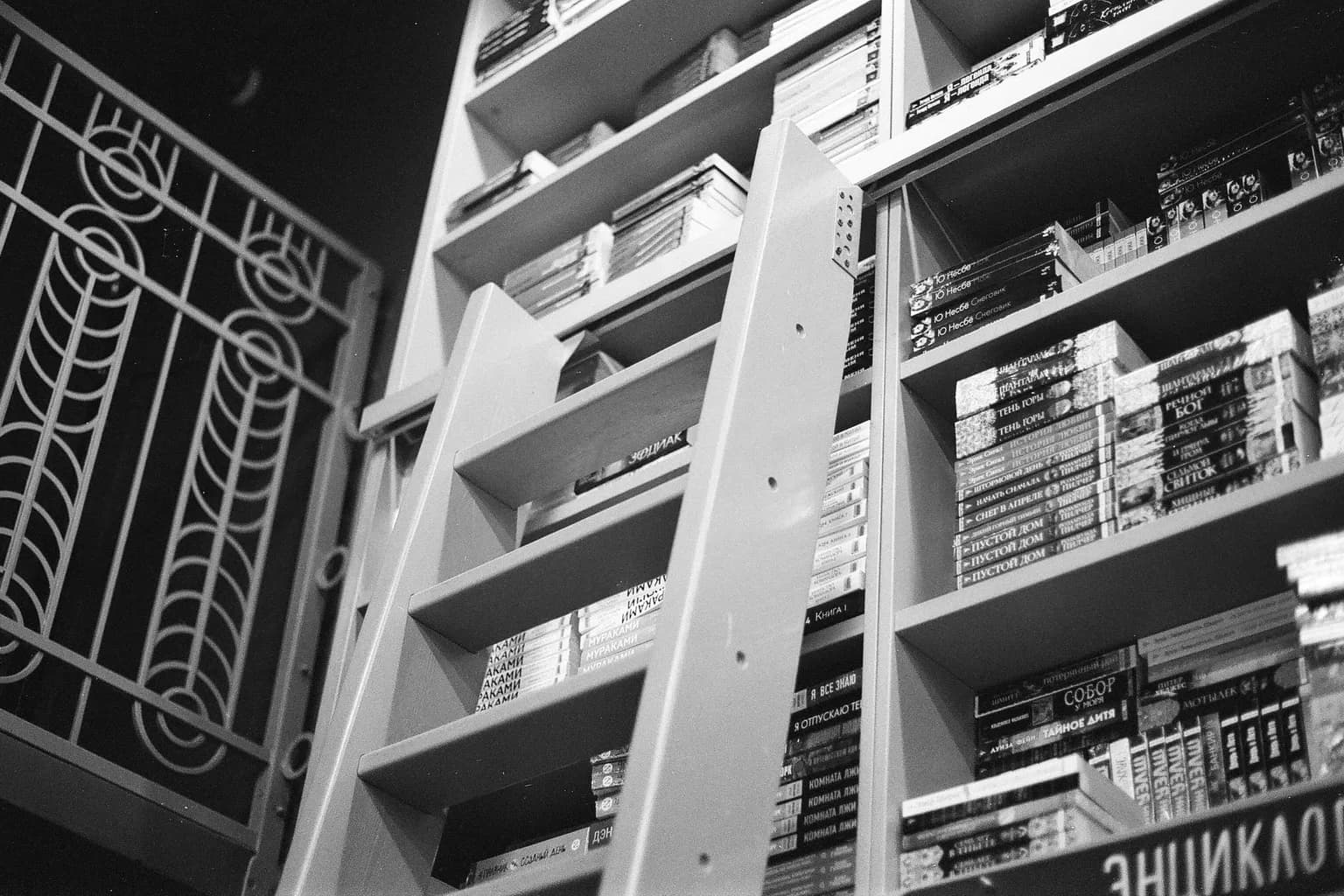
For young readers, an overnight event at the Russian State Library became a route into library membership. For its organisers, the same event brought attacks from pro-war bloggers, state media figures and nationalist activists.
The library, known as the Leninka, and publisher Eksmo-AST developed LitRAVE from the beginning of the year to combine electronic music, multimedia art and literature, with the format agreed in advance.
Doors opened at 18:00 on October 31, with photozones, a fair and partner corners before the main stages began at 19:10. The event ran overnight from October 31 to November 1.
The library’s historic rooms, including Reading Room Number 3 and the Rotunda, became three dance floors. About 3,000 people gathered for techno, electronic pop and ambient music.
Each space was given a distinct sound. The Third Reading Hall hosted techno from Nikita Zabelin, Kovyazin D and Abelle. Ilya Dubrovin, Lavblast and Boris Redwall played dance pop-electronic sets in the Rotunda. In a coworking space, Sofia Rodina, Beznosuk and OID performed ambient and experimental music on modular synthesizers.
The programme also included poetry, performance art, light installations and an exhibition of literary memes. A continuous plastic performance, Writer Behind Glass, ran alongside the music, while influencer Anastasia Pautova’s literary memes were shown on the Wooden Staircase.
Anna Revyakina, a pro-war poet, opened the event. Its central experiment was a “literary collage”, in which readers and DJs combined passages from classic texts with electronic mixes in real time. The texts ranged from Mikhail Lermontov and Yevgeny Zamyatin to Iris Murdoch and Alisa Dukic.
There were rules for the unusual setting. Visitors could not bring food or drink into the venue, alcohol was not sold, and the reading halls prohibited eating, drinking and dancing on tables.
The reaction came quickly. Pro-war bloggers and pro-government activists likened the event to “Satan’s ball”. Yekaterina Mizulina, who heads the Safe Internet League, suggested books might have been removed “while everyone was distracted”. On Telegram, she asked: “Did anyone slip anything out under the radar? What is the Culture Ministry's take on this?”
Andrey Medvedev, a presenter for state broadcaster VGTRK, wrote that “a library is no place for a rave”. Sergey Karnaukhov, a war correspondent and Solovyov.Live host, called for “the library's entire management” to be fired.
Russkaya Obshchina, a far-right group, called LitRAVE “a center of demonic dancing”. It said it was “quite symbolic that modern Satanists threw a Halloween party at the library named after Lenin, the greatest Satanist in Russian history”.
The library said it was “seeing incredible hype” around LitRAVE and “knew exactly what it was doing”. It described the event as “an attempt to speak to a new generation in its own language”, with the aim of bringing readers to the language of Tolstoy, Dostoevsky and Pushkin.
Vadim Duda, the library’s general director, said the project showed that “the book remains the most important cultural code”. The management described the intended audience as “a lively, loud, curious audience that every library in the world secretly dreams of”.
Eksmo-AST said all 3,000 attendees signed up for library cards, and 90% registered for reader tickets for the first time. The publisher asked: “How else can we compete with entertainment formats in the 21st century? How can we offer an alternative to Moscow's spoiled public? How can we divert attention from TikTok? How can we show that reading is trendy and relevant?”
The event ended at midnight on November 1 without physical damage to the library, according to Eksmo-AST. The publisher said the Leninka’s website and app “crashed several times because of the huge volume of requests”. Mizulina’s concern over books being taken was unfounded, the organisers said: the library does not keep books in reading rooms and supplies them to readers on request.




Comments (0)