

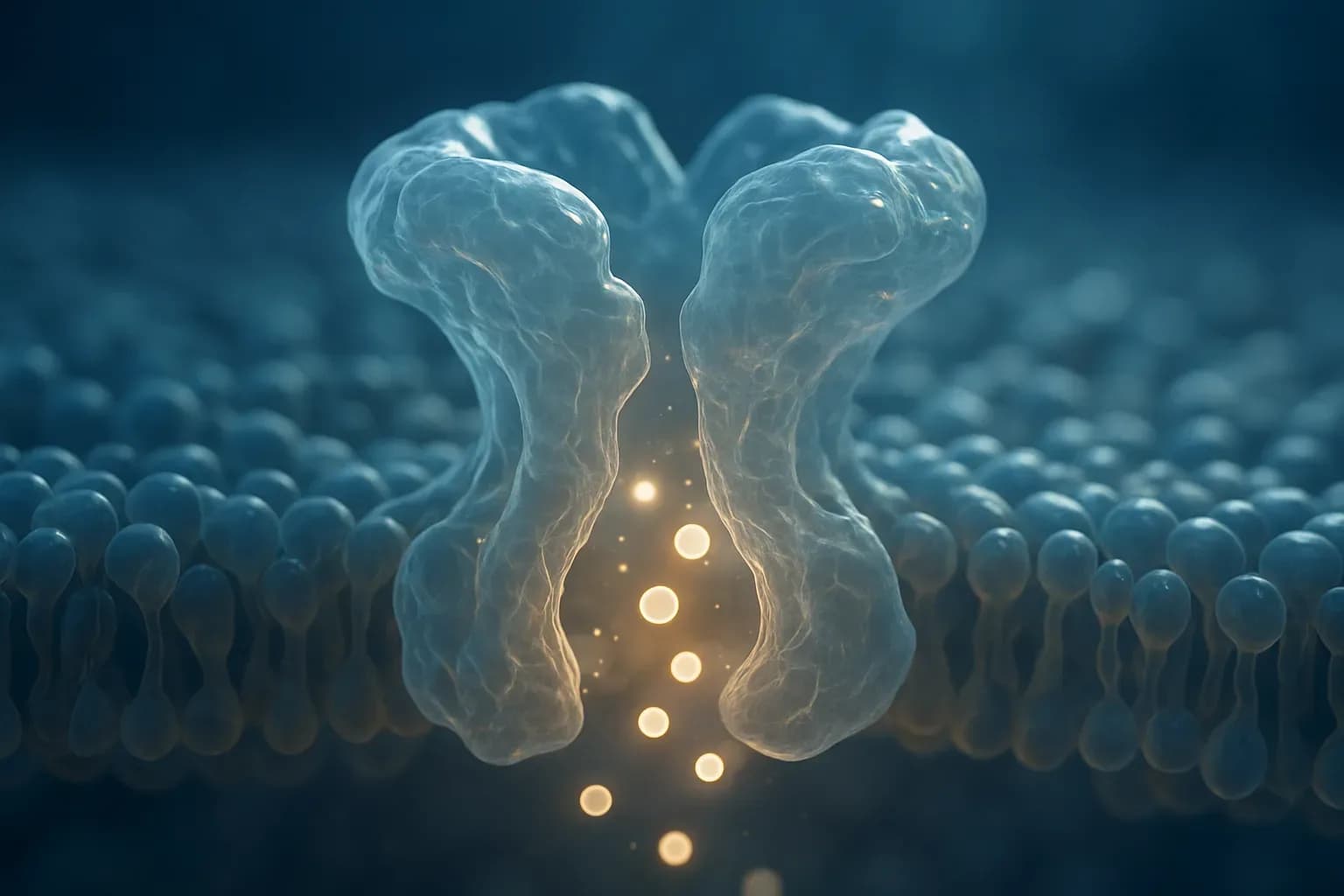
Dr. Steven Molinarolo set out to see how statins attach to a calcium channel in muscle cells. Using cryo-electron microscopy, the University of British Columbia postdoctoral researcher examined the interaction between the medicines and the ryanodine receptor, known as RyR1.
The work, carried out by scientists at the University of British Columbia with colleagues at the University of Wisconsin-Madison, identified a molecular mechanism for statin-related muscle complications. Their findings were published in Nature Communications.
The team focused on atorvastatin, a commonly prescribed medicine used to lower cholesterol. Cryo-electron microscopy freezes biological samples, allowing researchers to inspect extremely small structures in detail.
RyR1 regulates the movement of calcium within muscle cells. The researchers found that three statin molecules can occupy a particular pocket in the protein.
The first molecule binds while the channel is closed and makes it more likely to open. Two further molecules enter the pocket and keep the channel open.
That leaves calcium escaping continuously into parts of the muscle cell where it is normally carefully controlled. Over time, the researchers said, this abnormal leak may put muscle tissue under stress.
“We were able to see, almost atom by atom, how statins latch onto this channel. That leak of calcium explains why some patients experience muscle pain or, in extreme cases, life-threatening complications,” Molinarolo said.
More than 200 million people worldwide use statins. Severe muscle injury affects only a small percentage of patients, while soreness, weakness and fatigue are considerably more widespread.
The evidence on symptoms also includes an important qualification. True pharmacological muscle toxicity, or rhabdomyolysis, from statins is extremely rare at 0.01%.
In the SAMSON Trial, 90% of the muscle symptom burden induced by the statin was replicated during placebo months. The National Lipid Association estimated that around 10% of patients taking statins present muscle symptoms, with a range of 5-25%.
Dr. Filip Van Petegem, the senior author and a professor at the University of British Columbia’s Life Sciences Institute, led the collaborative team, whose aim was to make statins safer while retaining their cardiovascular benefits.
The researchers said the result is not a reason for people taking statins to stop their medication. Severe muscle damage remains rare, and the medicines’ cardiovascular benefits remain substantial.
Similar interactions may occur with some other statins, although further research is needed to confirm that. The team said future work may explore altering the parts of a statin molecule that bind to the muscle channel while preserving its cholesterol-lowering ability.




Comments (0)