

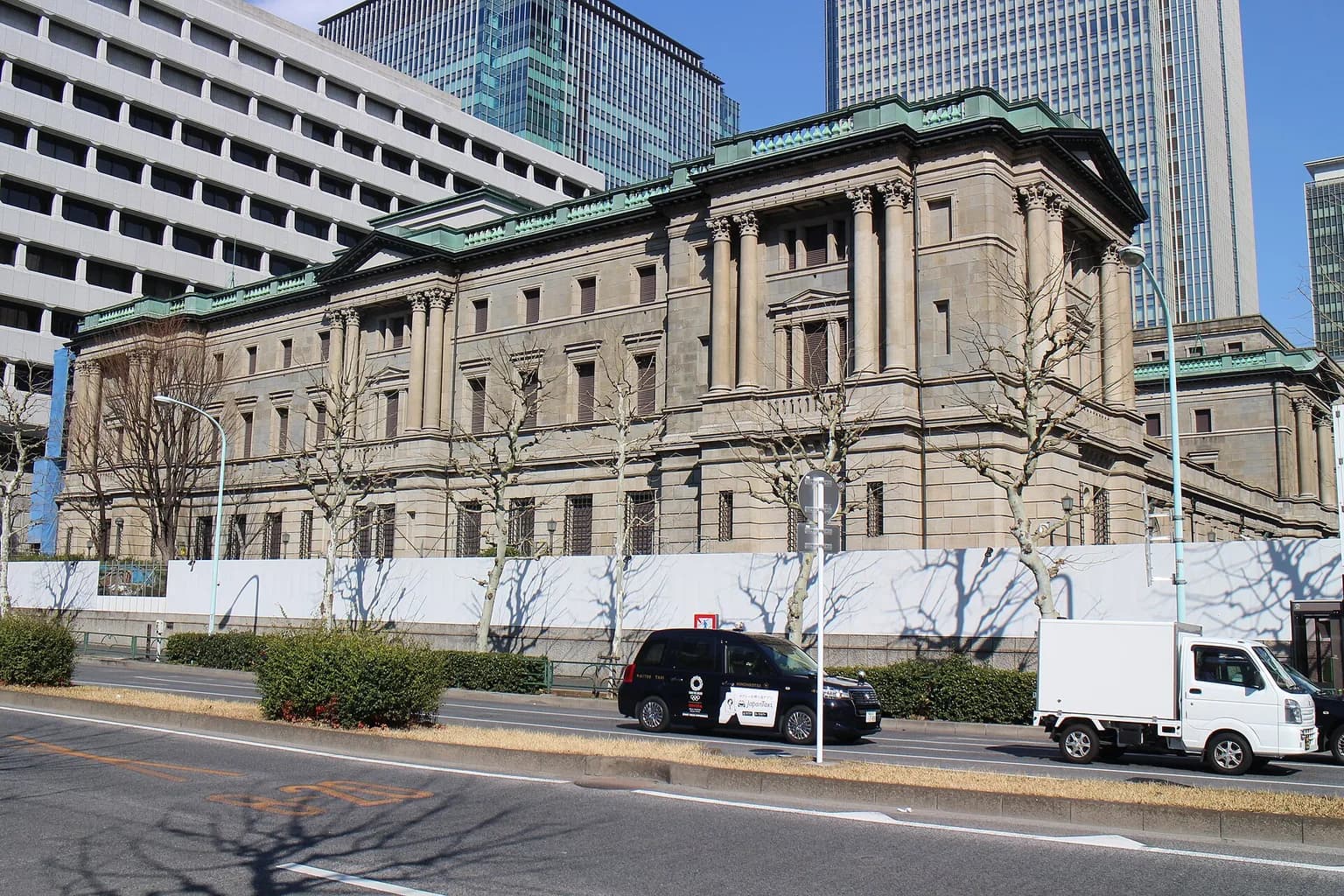
Japan’s Nikkei 225 fell 1.62% on Friday after inflation data pointed towards another possible Bank of Japan rate rise, even as the central bank is expected to leave policy unchanged at its meeting ending 30 October. The yen strengthened to 156.15 against the dollar.
On Friday, 23 October, the Ministry of Internal Affairs and Communications reported that core consumer inflation had risen to 2.1% in September from 1.7% in August. It was the first time this year that the gauge had moved above the Bank of Japan’s 2% target.
The stronger reading extended beyond the headline measure. Core-core inflation, the Bank of Japan’s preferred gauge excluding fresh food and fuel, rose to 2.4% in September from 1.9% in August. Goods inflation increased to 2.8% from 2.6%, while services inflation rose to 1.5% from 1.2%. Inflation in “other industrial products” reached a 13-month high of 3.9%.
Energy and currency costs are bearing down on prices. Higher fuel costs stem from the prolonged Middle East conflict, while a weak yen has kept import prices elevated. Oil remains above $110 a barrel.
Masato Koike, a senior economist at Sompo Institute Plus, said core inflation was expected to accelerate as rising energy costs from the Middle East conflict produced subsequent second-round effects. He projected that the Bank of Japan’s next increase would come in December.
The central bank raised its policy rate by 25 basis points in September, taking it to a 31-year high of 1.25% in its second increase in three months. It is expected to hold that rate at its two-day meeting ending 30 October.
Expectations are concentrated on December. Many analysts polled by Reuters expect the policy rate to reach 1.50% then, while more than 80% of economists surveyed by Bloomberg also anticipate a December increase. Many analysts expect the terminal rate to be around 1.75% to 2%.
Governor Kazuo Ueda has said the Bank of Japan would not tolerate an inflation overshoot. Finance Minister Satsuki Katayama told parliament on Wednesday that Japan was “on the cusp of shifting to a period of sustained inflation driven by rising wages”.
Price movements remain uneven. Rice prices fell 20.6% year on year in September, the steepest decline in records dating back to 1971. At the same time, major food and beverage companies planned price increases for 3,153 products in October, taking the monthly total above 3,000 for a second consecutive month for the first time since July 2023.
A flash business survey released on Friday added a constraint to the case for faster tightening. Job creation slowed to a 14-month low, and services firms cut staff for the first time in more than a year. The Bank of Japan must weigh those labour-market signals against the renewed inflation pressure as borrowers, businesses and savers face the prospect of higher rates.

Comments (0)