

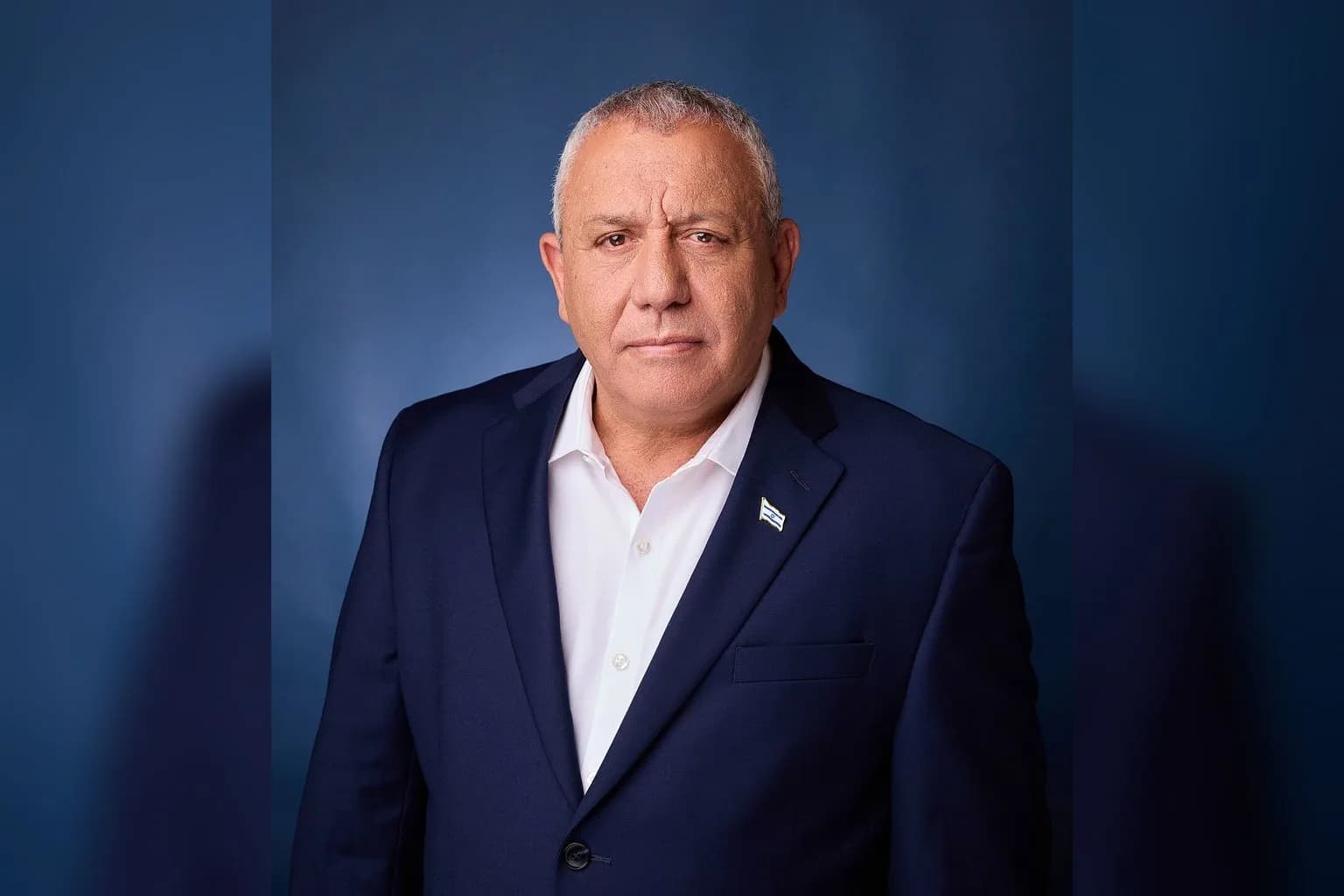
Israeli President Isaac Herzog appointed former army chief Gadi Eisenkot on Sunday to try to form Israel’s next government.
Herzog made the appointment during an official ceremony at the president’s residence in Jerusalem. Eisenkot, 66, leads the Yashar party, his political party, and was Israel’s army chief from 2015 to 2019.
The task follows the 27 October election, which left no bloc with a majority in Israel’s 120-seat parliament. Prime Minister Benjamin Netanyahu’s religious-nationalist coalition won 53 seats, while Eisenkot’s opposition bloc took 48.
The effort to replace Netanyahu comes as he faces corruption charges and could face jail if he leaves office. He also faces an International Criminal Court arrest warrant over the Gaza war.
Herzog told Eisenkot on Saturday night that he intended to ask him to form a government. Eisenkot wrote on X: 'Now is the time to form a national emergency government. I will do everything to ensure we are worthy.'
He has 28 days to secure the 61 votes required for a government. Herzog can grant a 14-day extension before offering the task to someone else.
Eisenkot received endorsements during Herzog’s consultations from Arab-majority political lists, whose support could be decisive in close Israeli elections. His possible routes include a minority government supported from outside by those lists, a coalition with ultra-Orthodox parties, or a unity government with Netanyahu. Analysts say none of the three options is likely to take shape.
Netanyahu called a possible coalition between opposition parties and Arab lists 'Islamists' and said it would 'dismantle the State of Israel from within'. Neither Netanyahu nor Eisenkot had a clear route to a majority after the election.
Netanyahu’s party won 27 seats, the highest total for a single party, while Yashar won 21 seats to become the second-largest party. An International Crisis Group expert told Le Monde that both Eisenkot and Netanyahu reflect the 'monolithically anti-Palestinian stance that dominates Israeli politics'.

Comments (0)