
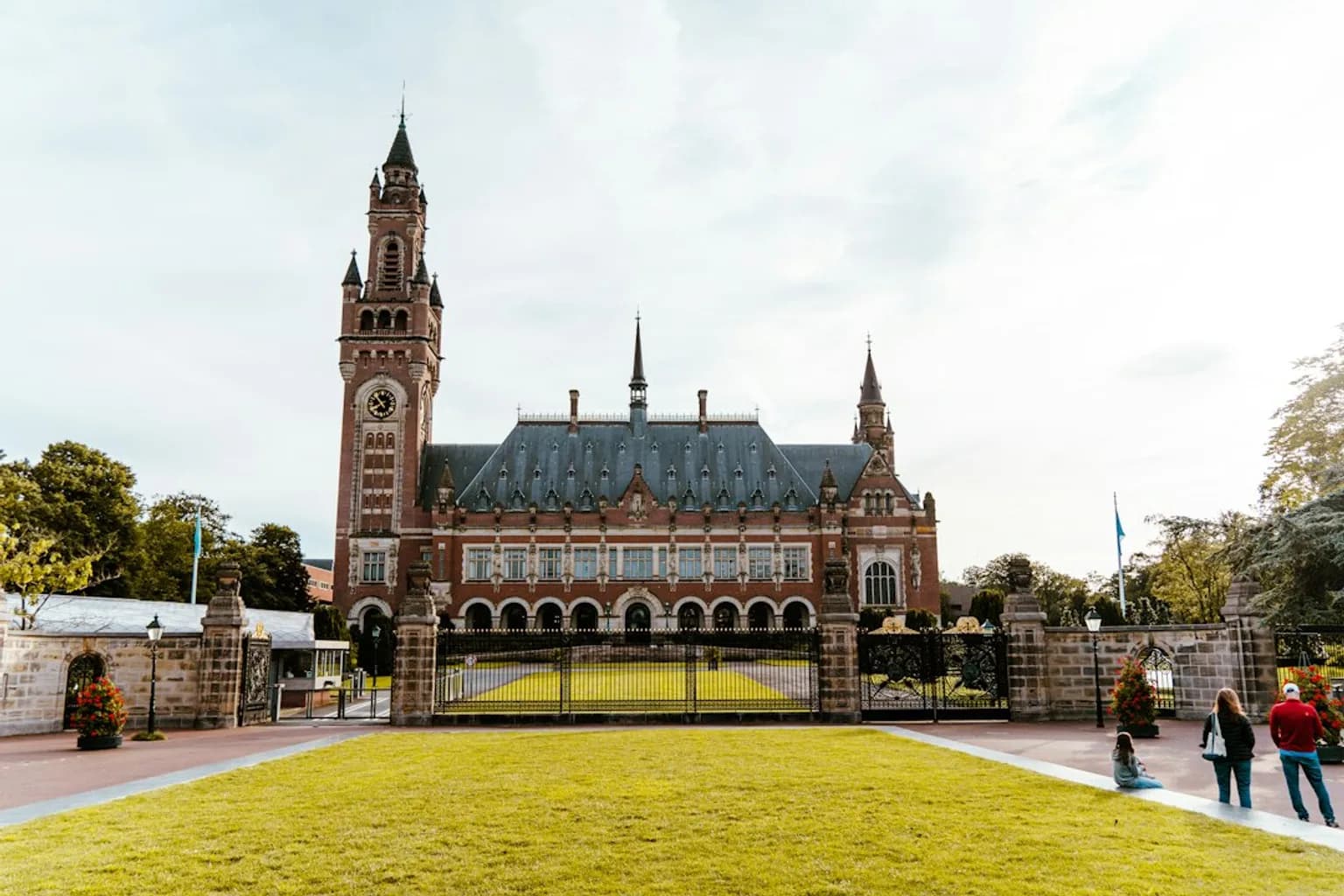
Roberta Metsola, the president of the European Parliament, announced in Strasbourg that the International Criminal Court had won the 2026 Sakharov Prize for Freedom of Thought. Metsola said the award recognised the court’s important work in upholding international law and justice.
The prize is awarded by the European Union to individuals and organisations that support human rights and democracy. It is worth €50,000.
The court was established in 2002 in the Hague to prosecute the most serious crimes, including genocide, crimes against humanity and war crimes.
It later issued an arrest warrant for Israeli Prime Minister Benjamin Netanyahu over alleged war crimes in Gaza.
On October 9, US President Donald Trump announced sanctions against the court. The measures cut it off from US-based financial services, technology companies and using US dollars.
The US government said it was acting in response to what Washington called political bias. The Trump administration has also threatened to dismantle the court “brick by brick”.
Hours before the sanctions were announced, former ICC judge Navi Pillay was awarded the Nobel Peace Prize.
The Socialists and Democrats group nominated the court for the Sakharov Prize after the sanctions. In the final vote, the Socialists, Renew, Greens and The Left won a relative majority for the ICC over the European People’s Party nomination of jailed Tanzanian lawyer and human-rights defender Tundu Lissu, and the Patriots’ nomination of imprisoned Iranian twin sisters Taraneh and Romina Rahimi.
Hana Jalloul, a Spanish lawmaker from the Socialists and Democrats group, said: “It is a great achievement for the European Socialists that we led this proposal despite the EPP's opposition. We are on the right side of history. This vote shows that the majority of this Parliament, together with our group, stands with international law.”
Chloé Ridel, a French member of the European Parliament, said: “This is a message of hope and resistance sent to Donald Trump. No, we will not abandon the rule of law and international justice. We will stand with the ICC for as long as it takes.”
Tomoko Akane, the ICC president and its top judge, said the prize had arrived while the court and its officials faced unprecedented challenges, including sanctions intended to disrupt its judicial mandate.
The Sakharov Prize was established in 1988 and named for Soviet dissident and Nobel Peace Prize laureate Andrei Sakharov. Previous recipients include Nelson Mandela in 1988, Aung San Suu Kyi in 1990, and Mahsa Jina Amini and the Woman, Life, Freedom movement in Iran in 2023.
The award ceremony will be held during the December plenary session in Strasbourg. Parliament plans to raise the prize money from €50,000 to €100,000 in the coming months.




Comments (0)