

Germany’s youth protests brought demands over affordable living, education and military policy into the streets of 34 cities, while clashes in Cologne, Hamburg and Frankfurt put public order at the centre of the day.
Gen Z regelt, a loose alliance of high school and university students, organised the demonstrations on 31 October 2026 after a wider wave of youth activism in Europe. Demonstrators cited rising living expenses, proposals to revive mandatory military conscription, declining education and government spending cuts, and called for more education funding.
By Saturday morning, nearly 180,000 people had signed up for events in 34 cities and more than 182,100 had registered interest online. Organisers had expected more than 160,000 participants in cities including Berlin, Frankfurt, Cologne, Munich and Hamburg.
Veronika Dinter, a 23-year-old political science student from Hannover and spokeswoman for Gen Z regelt, travelled to Berlin on Friday night to take part. “We're taking to the streets for a life that everyone can afford. Hardly anyone still believes in a better future if everything just continues as it is,” she said.
The main Berlin rally was due to start at 2pm (13:00 GMT) at Platz des 18 Maerz, on the western side of the Brandenburg Gate.
Sean Baker, a student at Technical University of Berlin, joined to highlight the condition of university buildings. He told Reuters: “When you go inside and enter the rooms, it looks like an abandoned building. Yet this is where we're expected to study on a regular basis.”
Phil Tziartzianis travelled eight hours from Kassel to attend the demonstration. Kaja Schwab, a speaker at the Berlin protest, addressed what she described as a gap between expectations and reality for young people in Germany.
In Munich, Steve, an 18-year-old rally speaker, said: “The government has offered no response to our concerns other than to continue making cuts and piling further burdens upon us”.
Attendance estimates in Berlin differed sharply. Organisers said 10,000 people gathered at the Brandenburg Gate, while police put the number at around 5,000.
Police initially reported around 500 people throwing eggs and bottles in Berlin. They later said the crowd had grown to around 3,000 participants and reported illegal burning of pyrotechnics.
The Berlin rally lasted a few hours and ended largely calmly, despite those isolated incidents.
Elsewhere, confrontations became more serious. In Cologne, scuffles broke out between police and protesters after a march was halted when demonstrators began setting off fireworks. Police cancelled the planned procession after some participants covered their faces and used pyrotechnics.
Police used a water cannon in Cologne after protesters targeted officers with fireworks. They also deployed a water cannon at Steintor square in Hamburg after demonstrators pelted officers with fireworks. Police used pepper spray on protesters in some places.
In Hamburg, protesters set barricades ablaze and carried signs reading ‘Time for resistance’ and ‘Merz must go’, referring to the conservative Chancellor Friedrich Merz. Police estimated that 6,700 people took part in the city’s demonstration.
Several police officers were injured in a confrontation with protesters in Frankfurt. Roman Poseck, the interior minister for Hesse, said: “We assume there were about 100 attackers motivated by extreme leftist ideology”.
Before the protests, Poseck had warned that extremists could exploit them. “We all have those images from France in our minds - looting, burning houses, burning police vehicles, and attacks on police officers,” he said.
German authorities had also warned that extremist groups could seek to exploit the movement. The federal interior ministry said parts of Germany’s far-left extremist scene and groups linked to foreign extremist movements had joined efforts to mobilise support.
Andreas Rosskopf, a senior representative of the police union for Germany’s federal police, offered a broader assessment: “The Gen Z protests have turned out to be very peaceful”.
Some businesses on Berlin’s luxury Kurfuerstendamm shopping boulevard boarded up their windows and planned early closures before the demonstrations.
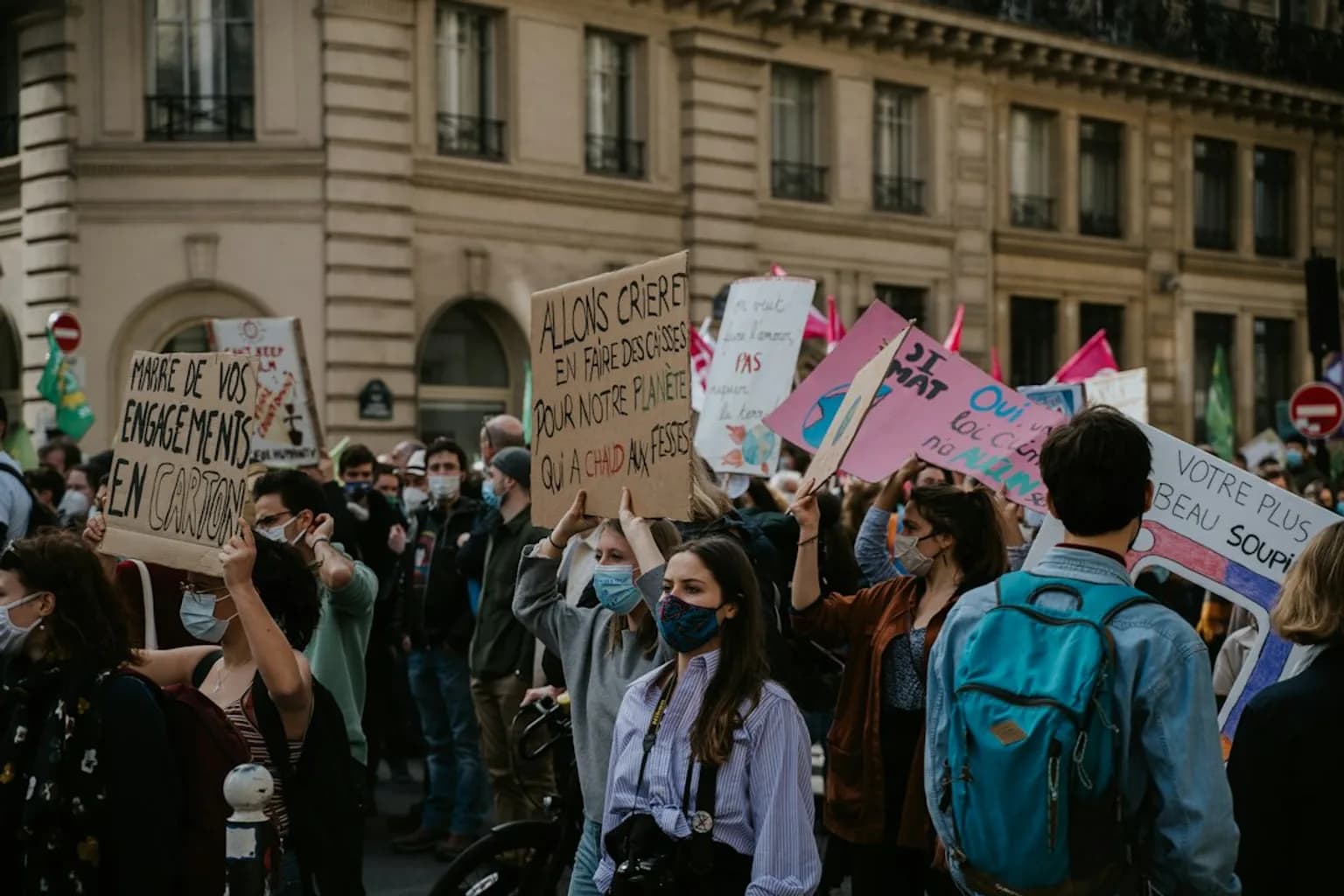
The protest wave was triggered by students in France seeking education reform, where a standoff had erupted into violence and looting two weeks earlier.
Organisers said more than 100,000 people protested nationwide. The total attendance across all 34 cities remains unclear, given the differing organiser and police figures.




Comments (0)