

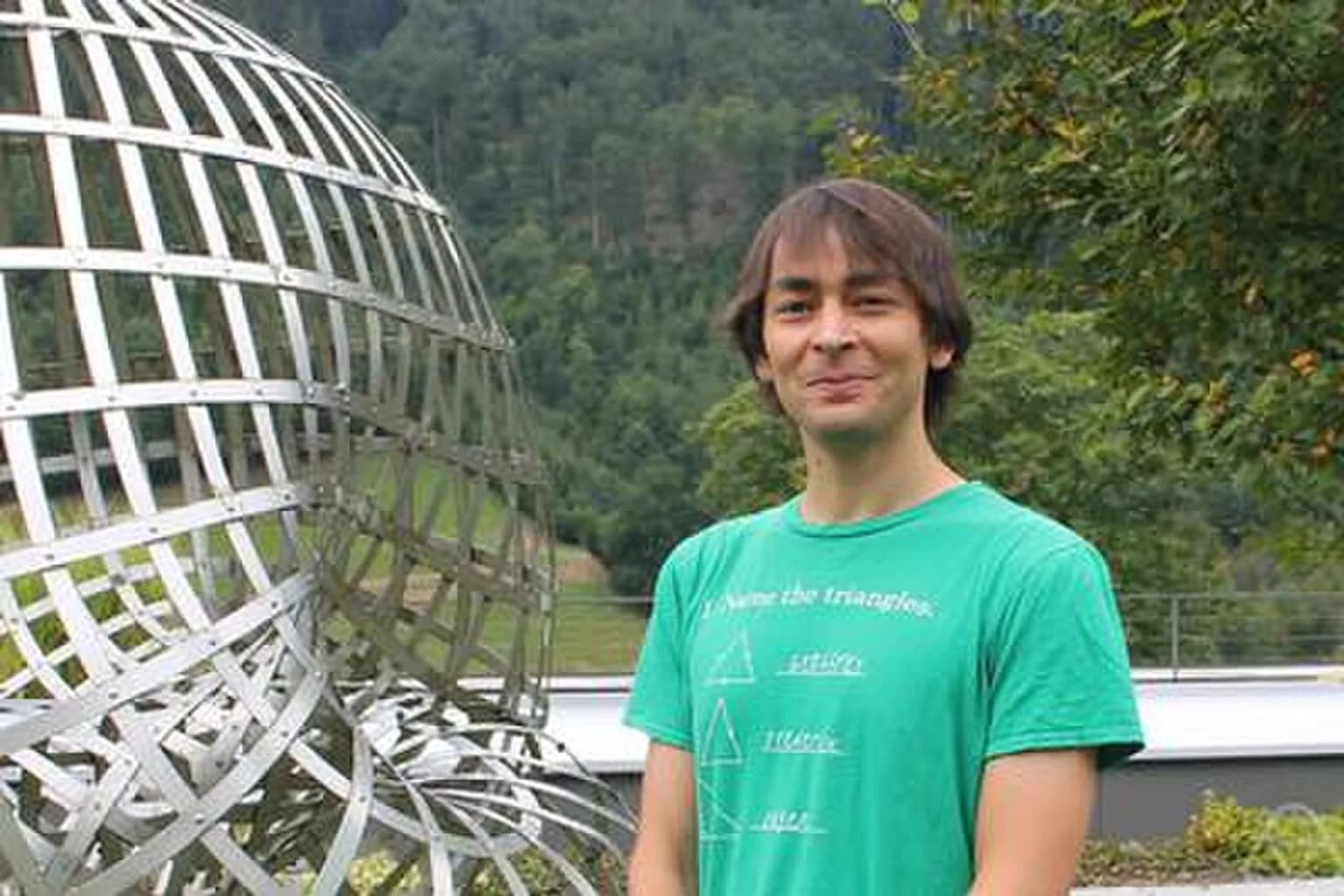
Levent Alpöge, a mathematician at Anthropic, said on Friday that Claude, an Anthropic AI model, had helped him solve the Riemann Hypothesis. The hypothesis predicts how often prime numbers appear alongside other numbers. By Friday afternoon, neither his work nor a separate solution from Alessandro Masullo, a Stanford postdoctoral researcher, had been formally proven.
Alpöge said he spent weeks working with Claude to produce the claimed proof, which he said consists of 17.4 million lines of Lean code. He also said Anthropic models had proved the Generalized Riemann Hypothesis.
The work required human direction. A person still had to steer the AI towards the right approaches and ask intermediate questions on the way to the claimed proof.
Hours after Alpöge's announcement, Masullo announced his own solution. Masullo said he had spent 12 years on the problem and had expected to publish his findings in about a year when Alpöge's report caught him by surprise.
Masullo's solution is far shorter than Alpöge's. In a paper posted online, he said his rushed release may contain errors.
He wrote: 'If any message at all this work is meant to send to the mathematician who feels discouraged by the pace and tone of the current climate, it is this: we are still here. We are very much alive. We are not going anywhere.'
The Riemann Hypothesis is a Millennium Prize Problem, with a $1 million reward for a successful solution. Sergei Gukov, a maths professor at Caltech, called the claim that it had been solved a 'HUGE deal'. Steven Strogatz, a maths professor at Cornell, called it the 'White Whale' of mathematics.
Formal verification would be only one part of the test for Alpöge's work. Mathematicians will want to explain, distil and reconstruct the ideas in the 17 million lines of Lean before accepting the proof.
Lean, the formal verification system used for the code, also has limitations. Its kernel has previously contained bugs that permitted proofs of 0=1, and the soundness of its underlying type theory remains uncertain.
Even so, no AI result carrying a Lean certificate has needed retraction, while several AI results without such certificates have been retracted. The competing announcements have put the problem at the centre of a test of AI's role in mathematical discovery.
Bernhard Riemann proposed the hypothesis in 1859. He wrote: 'it is very probable that all roots are real. Of course one would wish for a rigorous proof here; I have for the time being, after some fleeting vain attempts, provisionally put aside the search for this, as it appears dispensable for the immediate objective of my investigation.'


Comments (0)