

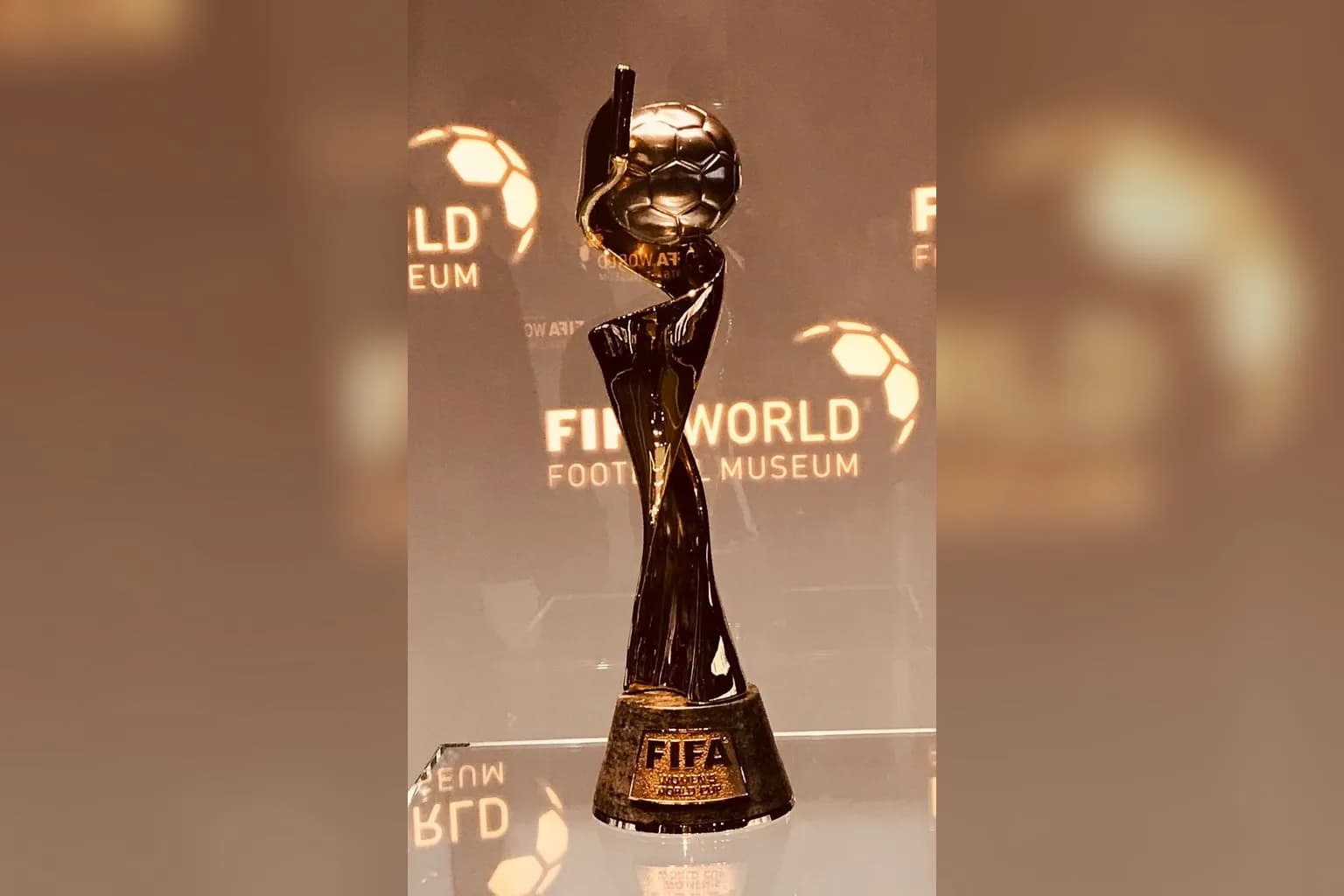
Before FIFA: a world stage existed without official recognition
In 1971, women’s football filled stadiums in Mexico while FIFA tried to block the tournament. The unofficial World Cup attracted crowds of more than 100,000, and Mexican television carried the matches live. England captain Carol Wilson described arriving in Mexico as being like being “launched into a parallel universe.” The tournament gave women’s football an audience of extraordinary size, even though football’s central governing body had no tournament of its own for the players.
Wilson recalled the attention that greeted England’s team after the flight. “We went from nothing to flashlights that blinded you once we got off the plane,” she said. “And it didn’t stop for the whole five weeks that we were there.” The welcome offered a vivid measure of the distance between public enthusiasm in Mexico and the limited formal opportunities available to women elsewhere.
In England, the Football Association had enforced a five-decade ban on women’s football before ending it at the start of the 1970s. The end of that ban opened a path back into the English game. In Germany, women could legally play football only from 30 October 1970, when the German Football Association lifted its ban at a meeting in Travemünde. The rules around the sport were beginning to change across Europe.
Mexico showed what those restrictions had failed to suppress. Wilson said, “The public took us straight to their hearts. They just followed us everywhere. We were so welcomed by everybody.” Official recognition remained the missing piece.
That missing recognition carried consequences after the tournament. England manager Harry Batt was blacklisted by the Women’s Football Association, and some players received bans. The event had created a world stage outside football’s main institutions. Its survival depended on organizers who lacked FIFA’s authority, resources and control over national associations.
The first world cups came from the independent game
The Mexico tournament grew from an international circuit that had already answered a basic question: could women’s national teams play meaningful football against one another? Independent organizers had been creating those opportunities for years. Their work gave players competitive fixtures, gave supporters an event to follow and gave advocates evidence that a wider game already existed.
In 1970, the Turin-based Federation of Independent European Female Football, known as FIEFF, staged an unofficial women’s World Cup in Italy. Seven teams participated after Czechoslovakia withdrew because of visa issues. Denmark became champion. FIEFF returned with another tournament in Mexico in 1971, bringing six finalists together for a final in which Denmark beat the host country.
The organizers used the language of a World Cup because they had assembled national sides for an international title. Their independence from FIFA defined the limitation. A tournament outside FIFA could demonstrate demand and create sporting history. A tournament within FIFA could draw national associations into a common system and give the competition an official place in international football.
The independent circuit continued after FIEFF folded in 1972. Italy hosted four Mundialitos, or little world cups, in the early and middle years of the 1980s. Asia held an official continental women’s tournament in 1975, and Europe followed in 1984. Women’s international football had developed competitive routes before FIFA created a global championship.
National associations also began to offer stronger platforms. Ellen Wille joined the Norwegian Football Federation, or NFF, in 1976, the year the federation approved women’s football in Norway. Wille brought experience as an amateur footballer into the federation’s executive committee. In Germany, the national women’s team played its first international in 1982 and beat Switzerland 5-1 in Koblenz.
That German match pointed toward the scale a national program could reach. Silvia Neid entered as a substitute at 18 and scored twice. Later, Germany’s team won the European Championship seven times in succession. The progress came through national structures, coaching and regular international competition, the same ingredients a FIFA world championship could gather in one place.
Ellen Wille reaches the microphone
FIFA’s reluctance became especially clear at its congress in Mexico in 1986, the year the country hosted the men’s World Cup. Wille attended as Norway’s delegate. She was a science teacher from Oslo, an amateur player and an NFF executive committee member. Before the congress, she read a FIFA report that made no reference to women’s football. The omission came from the organization that governed the international game.
Wille chose to raise the issue on the congress floor. At 4ft 10in, she could not reach the microphone when she arrived on stage. “So someone had to come and help me with it, and then I started to talk,” she recalled. She became the first woman ever to speak at a FIFA congress.
Her anger came from the report’s silence. “I got very angry and I said we have to do something about it,” Wille said. She also recalled telling the congress: “We must have a World Championship for women and we have to be a participant in the Olympic Games.” Her appeal gave the issue a direct voice in the room where FIFA’s senior figures met.
The congress minutes preserved the practical form of her request. Wille asked FIFA general secretary Sepp Blatter to “draw more attention to women’s football, particularly in terms of refereeing and the form of international tournaments.” Those words identified the work required for a lasting competition. Players needed qualified officials, national teams needed regular international events, and a world tournament needed FIFA’s support.
João Havelange, FIFA’s president, responded by telling the congress that FIFA was working toward a first world tournament for women in 1988. Wille’s intervention formed part of a broader push rather than a solitary act. Per Ravn Omdal, a former footballer, became NFF president in 1987 and carried Norway’s advocacy into the next phase.
Wille later called her speech “just a little step along the way.” The modest phrase captures how institutional change usually works. A delegate speaks, officials make a commitment, and the commitment must then be tested through venues, teams, referees and crowds. China would provide that test.
China turns an argument into a working tournament
FIFA staged a women’s invitational tournament in China in 1988. Twelve national teams took part. The event served as a practical test for a global championship, bringing together teams from several regions and placing them in a FIFA-run competition.
The test measured more than results. It showed whether host venues could receive international teams, whether spectators would attend and whether a tournament could sustain interest through to its final. China and Canada drew 45,000 people for the opening match. The tournament’s average crowd reached 20,000. Norway beat Sweden 1-0 in the final.
Those crowds gave FIFA evidence that the championship had a public. They also connected the new event to the earlier tournaments in Italy and Mexico, where organizers had already demonstrated a large appetite for women’s international football. The difference in China lay in FIFA’s direct involvement and its ability to turn the experiment into a regular competition.
The 1991 championship arrives with an awkward name
The first official FIFA tournament took place across four venues in China’s Guangdong region in 1991. Its cumbersome title captured a competition still establishing its identity: the “1st FIFA World Championship for Women’s Football for the M&Ms Cup.” The name put FIFA’s authority and its sponsor side by side.
Twelve teams joined hosts China. The games lasted 80 minutes rather than 90. That rule made the tournament feel experimental, even after the 1988 invitational had established its feasibility. The championship nevertheless delivered something the earlier events could not supply: a formal world title within FIFA’s system.
The United States won the final 2-1 against Norway. Norway’s place in that match linked the competition to the federation that had pressed FIFA into action. Four years later, Norway won the 1995 World Cup in Sweden with a 2-0 victory over Germany. The country whose officials had demanded a championship became world champion.
In 1999, the audience outgrew the plan
The next great shift came in the United States in 1999. FIFA’s original plan called for games in 10,000-seat stadiums. Marla Messing, chief executive and president of the organizing committee, enlisted the U.S. women’s national team to help market the tournament. The organizers built their campaign around the players who would give the event a public face.
The final quickly made the small-stadium plan look obsolete. More than 90,000 fans packed the Rose Bowl to watch the United States play China. The match ended 0-0 after 90 minutes and remained level through extra time. A penalty shootout would decide the championship.
China scored first through Xie Huilin. U.S. co-captain Carla Overbeck took her team’s first penalty. Goalkeeper Briana Scurry saved China’s third kick, giving the United States an opening. The sequence brought Brandi Chastain to the decisive moment.
Coach Tony DiCicco had told Chastain to use her left foot for the penalty, something she had never done in a game. Gao Hong, China’s goalkeeper, had blocked one of Chastain’s penalties earlier that year in the Algarve Cup. Chastain scored, and the United States won the shootout 5-4. The Rose Bowl crowd showed that the World Cup could occupy the scale of football’s biggest occasions.
The moment did not settle the contest over who held power in the game. During the 2015 FIFA corruption scandals, women from football and other sports demanded a place at FIFA’s decision-making table for the first time in more than a century. Their demands were largely incorporated into FIFA’s revised constitution by 2016, including reserved seats for women on executive committees. FIFA appointed its first female secretary general after those changes. Representation became part of the World Cup’s larger history.
A global tournament, and a continuing claim on football
FIFA created a Women’s Football Division in 2019 with an investment of USD 1 billion to build the women’s game. The 2023 Women’s World Cup attracted nearly two million spectators. The competition had reached a scale that early organizers could see only in fragments.
The 2023 tournament also carried messages beyond the scoreline. Captains wore armbands carrying messages including “unite for gender equality” and “unite to end violence against women,” with the UN Women logo. Stadium LED displays carried the same messages. Players used the tournament’s visibility to press wider claims about equality.
Lise Klaveness, the NFF’s first female president and a former Norway international, addressed FIFA’s congress in Doha in 2022. She later placed the growth of the tournament alongside the effort behind it. “We have come a long, long way since Ellen took the stage in 1986,” Klaveness said, “but we also have to be very realistic that nothing has come by itself for women’s football.”
The tournament now gives women’s national teams a world championship every four years. Its history also explains why players and administrators continue to press for equality and a stronger place in football’s decisions. The World Cup exists because earlier generations turned a demand for recognition into a competition that the whole game had to acknowledge.


Comments (0)