

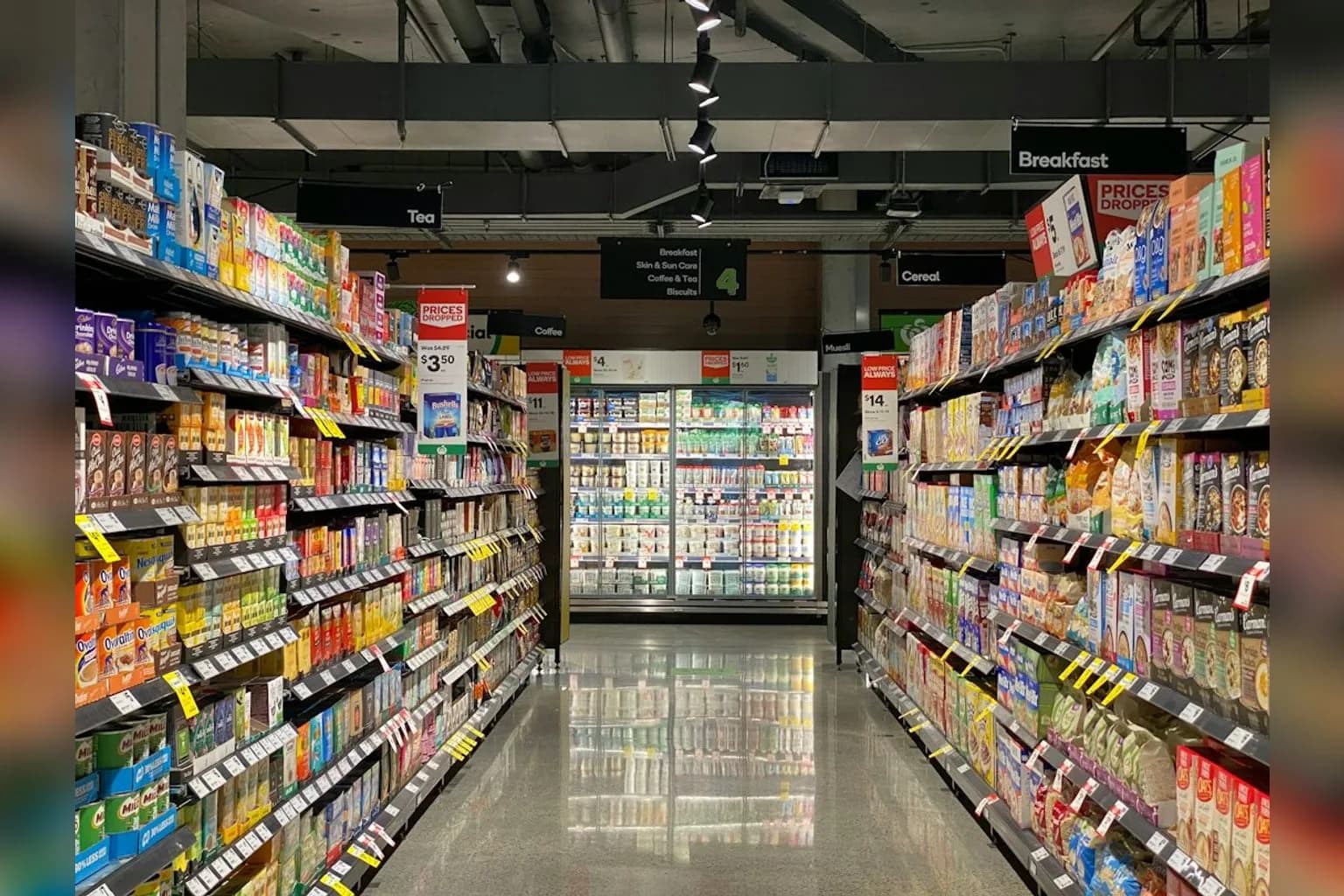
Shoppers found refrigerated and freezer shelves empty in affected stores, while a Delhaize branch in Belgium lost €100,000 worth of produce.
Sabcobel, a Belgian maker of some of the affected refrigerators, said a cyber-attack had switched the units’ evaporators to defrost mode, causing them to warm up. No one has claimed responsibility for the attack.
Dozens of supermarkets in Belgium, Luxembourg, Sweden, Ireland, the Netherlands, Estonia and Finland reported that their freezers had been targeted overnight on Monday. Temperatures in several shops rose to as high as 50°C (122°F).
An ICA branch in Sjöbo, southern Sweden, told customers on social media: 'Our refrigerators and freezers have been hacked overnight and they have set the temperature to 50 degrees.' Another ICA shop, in Stockholm, said its freezers were broken 'due to a 2am cyberattack' and that 'everything was destroyed'.
At a shop north-east of Brussels, a notice read: 'Due to cyberattacks, there will be no products on the refrigerated or freezer shelves. We offer our sincere apologies.' In Hoeilaart in Flanders, northern Belgium, the Delhaize branch’s losses were put at €100,000 (£83,500).
Around 40 Delhaize supermarkets in Belgium and Luxembourg were affected. Carrefour said 15 of its Belgian stores were hit, while Colruyt Group said five Spar shops in Belgium had their fridge systems attacked. Seven out of the 800 Coop stores in Sweden were affected, along with 13 SuperValu supermarkets in Ireland and cooling and freezing systems at at least 17 companies in the Netherlands. Smaller numbers of shops were hit in Sweden, Ireland, the Netherlands, Estonia and Finland.
Mich Vergauwen, a Carrefour spokesperson, said: 'It's a cyber-attack, there is no other reason', describing disruption at about 15 of the retailer’s 700 shops in Belgium.
In Estonia, Jann Mutso, chief executive of the technology supplier Kitman Coldtech, said attackers had accessed a computer controlling a refrigeration system and raised its temperature to 50°C. 'This is very fresh, it happened this morning,' he said.
Stephan Moelans, Sabcobel’s chief executive, said the company began mobilising technicians at 1am. It had been 'working all night and morning to disconnect the affected units from the network', he said.
The method was used in an early October attack in France, when hackers remotely overrode settings on thousands of freezers, fridges and chiller cabinets at Intermarché, Coopérative U, Carrefour, Leclerc and Monoprix. Temperatures rose to 50°C and food losses ran to millions of euros. The same technique was used in last month’s French incident.
After that attack, Sabcobel had been working to 'protect our customers fridges against this vulnerability', Moelans said. He said physical modifications were required, rather than software updates alone.
Patrick Lamplmair of Tributech said: 'Thousands of these controllers were still reachable from the internet after the French attack'. Tom Hegel of SentinelOne said the lack of financial demands pointed to sabotage.
Belgium and Sweden’s national cyber-security agencies said they were monitoring the incident. John Billow, head of Sweden’s national cybersecurity centre, told Reuters it was responding to multiple incidents affecting store cooling systems. Sweden had 'quite a lot of exposed operational technology devices' that needed updating or patching, he said.
Christophe Hansen, the EU food and agriculture commissioner, called the repeated cyber-attacks 'a deliberate attempt to disrupt our food supply chain and undermine consumers' confidence in it'.




Comments (0)