

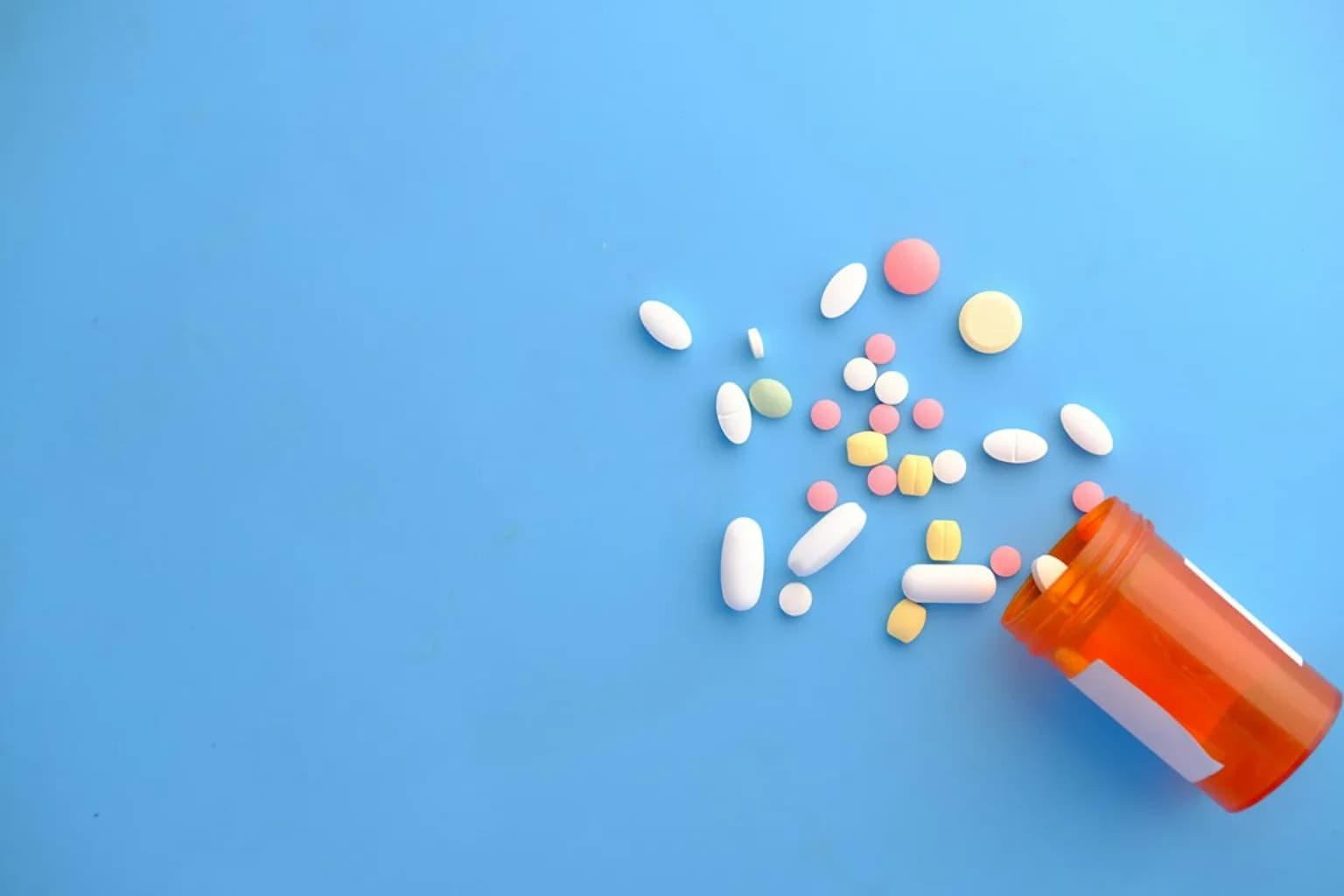
The lower-price bottle at the counter
A pharmacist fills a prescription, and the bottle may carry a generic name rather than the name used in the original advertising. The change can bring a striking difference in cost. In 2019, generic medicines accounted for 90% of prescriptions filled in the United States while representing 20% of drug spending, according to FDA material.
That imbalance explains why generic drugs matter so much to household budgets and public spending. The same FDA material found that 92% of generic prescriptions in 2019 were filled for $20 or less. The average generic copay was $6.97, while the average brand-name copay was $56.32.
The lower price rests on a long chain of decisions that begins years before a patient reaches the pharmacy. One company develops a brand-name medicine and establishes its safety and effectiveness for the FDA. Later companies can make competing versions through a separate approval route built around a simple question: does this medicine perform like the approved one?
The answer carries a precise meaning. FDA-approved generic medicines provide the same clinical benefit and risks as their brand-name counterparts, according to the FDA. They must match the brand medicine in dosage, safety, effectiveness, strength, stability, quality and the way they are taken.
Some visible features can change along the way. Generic products can differ in shape, packaging, labeling, inactive ingredients, release mechanisms and device components. A familiar prescription can therefore look different after a pharmacy changes suppliers, even though the new version has met the FDA’s requirements.
The bottle also leaves out much of the system behind it. Pill-bottle labels often omit the location where a drug was manufactured, ProPublica reports. That missing information matters because the bottle in a patient’s hand depends on scientific testing, legal protections, factory oversight and supply networks that often extend well beyond the United States.
Its reliability depends on the details of the approval process and on what happens after the FDA grants approval.
Why the United States created a different path for generic drugs
The system begins with a principle established in 1962. The Kefauver-Harris Amendments required drugs to be proven effective as well as safe for their intended uses. The amendments also addressed advertising abuses, tightened labeling requirements and broadened FDA inspection powers, marking the largest alteration to the Food and Drug Act since the 1930s, according to an FDA history.
Congress acted amid concern about drug safety, and the thalidomide tragedy helped spur the legislation. The law also emerged from an argument over drug prices. Senator Estes Kefauver sought greater competition in a market he saw as dominated by a relatively small group of large manufacturers.
Most of Kefauver’s proposed pricing amendments fell away before the law passed. His hearings nevertheless assembled extensive comparative and analytical material on the pharmaceutical industry. The pricing question returned with force as spending on drugs more than doubled between 1970 and 1980, according to Tradeoffs.
At that time, generic makers faced a costly hurdle. Before 1984, an applicant seeking FDA approval for a generic generally had to submit a full application package. The package often required the company to conduct its own clinical trials to establish safety and effectiveness.
Congress changed the arrangement in 1984 through the Drug Price Competition and Patent Term Restoration Act, widely known as Hatch-Waxman. The law was named for Republican Senator Orrin Hatch of Utah and Democratic Representative Henry Waxman of California. It created an abbreviated approval route for generic drugs under section 505(j) of the Federal Food, Drug, and Cosmetic Act, as the FDA explains.
Hatch-Waxman sought to increase pharmaceutical competition while balancing the interests of brand-name companies and generic manufacturers. Brand companies retained a period of legal protection, while generic companies gained a way to apply for approval without recreating the costly animal and clinical studies that had already established the reference drug’s safety and effectiveness.
Only 19% of prescription-drug purchases were generics when the law took effect. The new pathway opened a route toward the market that depended on showing equivalence to the medicine the FDA had already evaluated.
How a generic application works
A generic manufacturer selects an approved brand-name medicine as its reference drug. The manufacturer then submits an abbreviated new drug application to the FDA. The word “abbreviated” describes the evidence required for the later version, rather than a lower standard for the medicine itself.
The generic applicant can rely on the FDA’s earlier finding that the reference drug is safe and effective. Its central task is to show that its own product is bioequivalent to that reference drug. FDA approval for a generic includes safety, effectiveness and bioequivalence, which supports interchangeability with the brand and other available versions, according to a Journal of Managed Care & Specialty Pharmacy interview with Katherine Eban.
Bioequivalence concerns what happens after a medicine enters the body. Researchers compare drug concentrations in the blood and compare drug exposure over time. Those measures show whether the generic version delivers the medicine in a way that matches the approved reference product.
The ideal pharmacokinetic ratio of a generic drug to its reference drug is 1.00, or one-to-one. That ratio represents perfect bioequivalence in the measurements used for blood concentration and exposure over time, according to an FDA presentation on generic-drug science.
A widely repeated figure can make this process sound looser than it is. The 80% to 125% range associated with generic drugs is a statistical confidence range used for blood concentrations and exposure over time. It does not describe a permitted range in the amount of active ingredient in a generic pill.
Once the FDA approves a generic product, oversight continues. The FDA Generic Drugs Program conducts rigorous pre-approval reviews. FDA also inspects manufacturing plants for compliance with good manufacturing practices, and agency staff monitor approved medicines across the supply chain, the agency says.
When a competing version can reach the pharmacy
Scientific approval is one part of the route to market. Patent rights and exclusivity periods shape the other part. In the United States, patent life lasts 20 years from the date a patent application is filed. By the time a drug reaches the market, it usually has seven to 10 years of patent life remaining, according to a District of Columbia health department guide.
Hatch-Waxman adjusted that timetable for new molecular entities. The law can extend a patent term by up to five years, subject to a maximum of 14 years. New combinations, dosage forms and uses can also receive three additional years of exclusivity, during which the FDA cannot approve a generic.
Patent disputes can prolong the wait. A generic manufacturer can be blocked from marketing a medicine for up to two and one-half years while a patent dispute is settled. A generic therefore needs more than a successful scientific application before it can compete at the pharmacy.
The law also rewards companies that move quickly when entry becomes possible. Hatch-Waxman’s first-to-file rule gave the first company to submit an FDA application six months of exclusive rights to sell its generic version before competitors could enter, NPR reported. During that period, the first seller could charge prices close to the brand price.
Later entry changes the economics. Greater competition among generic manufacturers is associated with lower generic prices, according to the FDA. That is the sequence behind the low-cost bottle: a brand company carries the original clinical-development burden, a generic manufacturer shows equivalence, legal barriers clear, and competing products reach the market.
Different parties pay at different points in that sequence. The original developer pays for the clinical studies that establish safety and effectiveness. Generic applicants avoid duplicating those studies while paying to develop their own products and meet FDA requirements. Patients pay copays, while insurers and public programs bear other prescription costs.
Generic medicines saved Americans $313 billion in 2019, according to FDA material. Those savings depend on a system that can sustain both competition and consistent quality.
The factories behind the label
The case of Ranbaxy shows how failures can emerge. Ranbaxy was the first overseas manufacturer to sell generic drugs in the United States. Dinesh Thakur, a former Ranbaxy chemical engineer who had spent about a decade at Bristol-Myers Squibb, contacted the FDA in 2005 about practices at the company.
The FDA issued an import alert in 2008 against two Ranbaxy plants in India. The action barred the import of 30 drugs made there. In 2012, the agency issued a consent decree that prevented Ranbaxy from manufacturing drugs for the U.S. market at certain facilities until those facilities complied with U.S. manufacturing quality standards.
In 2013, Ranbaxy USA pleaded guilty and paid $500 million in fines on counts related to selling adulterated drugs and lying to the FDA, according to NPR. Details cited in the Department of Justice case said the company used lower-quality ingredients to save money, manipulated quality-control data and made up numbers. Those findings concern Ranbaxy’s conduct and cannot stand in for every generic manufacturer.
Inspection practices add another challenge. Overseas FDA inspections are planned well ahead of time, while domestic visits can be unannounced, according to Katherine Eban’s account for the Carnegie Corporation. Advance notice gives facilities time to prepare, making reliable records and effective testing especially important.
Eban spent a decade investigating generic-drug quality for Bottle of Lies. Her work drew on whistleblowers, regulators and thousands of pages of confidential FDA documents. The Ranbaxy case gives the larger concern a clear form: approval establishes what a product must be, while continuing oversight tests whether manufacturing remains worthy of that approval.
What shortages can, and cannot, tell us
The system also operates under visible pressure. At the time of one report, the FDA listed more than 130 drugs in short supply, Tradeoffs reported.
A shortage can make the hidden supply chain suddenly relevant to patients and clinicians. Yet the supplied record does not establish a general causal chain from generic price competition or thin margins to any particular shortage. It offers no margin data, and it does not assign a universal cause to shortages across the market.
Patients may still struggle to see which facts apply to a prescription in their own medicine cabinet. The FDA redacts the names of medications made at factories cited for unsafe conditions. ProPublica created Rx Inspector, a tool that identifies the facility behind a generic prescription drug and collects related FDA inspection reports, warning letters and import bans.
The bottle at the counter thus contains the visible result of a carefully structured bargain. The brand drug’s original research supports the clinical foundation. The generic applicant proves bioequivalence. Patent and exclusivity rules govern entry. Manufacturers produce the medicine, and the FDA’s review, inspections and monitoring are meant to hold that product to the required standard.



Comments (0)