

1783: The British Prepare to Leave New York
On 25 November 1783, the final British troops prepared to leave New York City after years of occupation. Britannica records the preparation as an event in the closing chapter of the American Revolution. A city that had lived under British occupation now stood at the edge of a transfer of authority.
The moment in New York made a political outcome visible, yet that outcome had taken shape over years of war. General George Washington’s forces had bested the British at Yorktown in October 1781. The same account places Yorktown before the Peace of Paris, which brought British recognition of American independence.
Those events gave the 1783 departure its meaning. Yorktown supplied a decisive battlefield victory. The Peace of Paris gave American independence diplomatic recognition. The troops preparing to leave New York showed residents the practical consequence of those earlier developments.
This is why the date holds such force in the history of the revolution. A military withdrawal crystallized an outcome that had already been won through fighting and then confirmed through diplomacy. The change could now be seen in the city where British troops had remained for years.
Public history often gathers this way around a single act that people can witness. A treaty may settle a question between governments, while a departing army reveals the settlement in everyday space. New York on 25 November 1783 became a clear marker of American independence taking physical form.
Another 25 November would show a different relationship between place and power. In 1942, one choice of location gave a vast wartime project its centre of operations.
1942: Los Alamos and Project Y
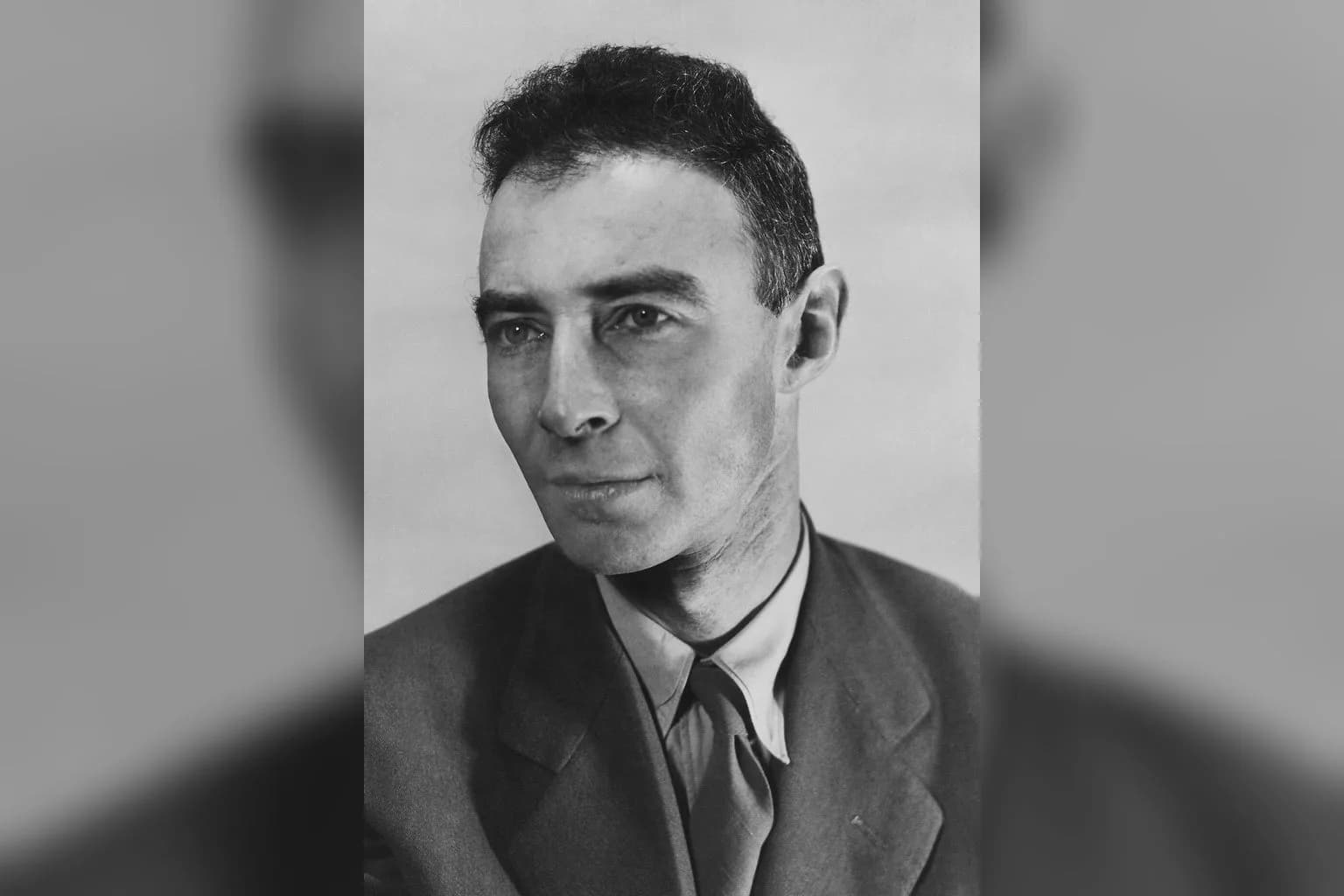
On 25 November 1942, Leslie Groves and J. Robert Oppenheimer chose Los Alamos, New Mexico, as the site of Project Y. Britannica identifies Project Y as the effort that developed the first atomic bomb.
Groves and Oppenheimer selected a site before Project Y developed the bomb. That sequence matters because large scientific and military undertakings depend upon practical choices as well as ideas and objectives.
The event also offers a sharp contrast with New York in 1783. The British withdrawal represented the visible result of a revolution. The selection of Los Alamos marked the organization of work whose result still lay ahead.
Both dates, however, make power easier to understand. Troops preparing to leave New York showed a political order changing in public. Groves and Oppenheimer choosing Los Alamos showed wartime power being assembled through science, planning and a named project.
A later event on the date followed a quieter path into public memory. It began with a murder mystery on a London stage and accumulated meaning through an extraordinary number of returns.
1952: The Long Life of The Mousetrap
Agatha Christie’s The Mousetrap opened in London’s West End on 25 November 1952. Timeanddate.com notes that the play began as a radio drama called Three Blind Mice. Its first theatrical performance started a run that would make the play a lasting part of London theatre.
The work also had a real-world source in the death of Dennis O’Neill, who died while in foster care. The source describes O’Neill’s death as the basis for Christie’s play. That origin gives the familiar form of a murder mystery a serious point of reference.
The play is described as the longest-running show in history. Its significance therefore comes from continuity as much as from its opening night. Each performance renewed the relationship between the work and its audience, turning a date in the 1952 theatre calendar into the beginning of a durable institution.
Fifty years after the opening, The Mousetrap marked its anniversary with a royal gala performance. That gala was its 20,807th performance, according to Britannica. The figure gives a useful scale to the phrase “longest-running.”
On 25 November 1960, the date carried a far graver event. Three sisters who opposed a dictatorship were killed, and their names would later sit beside an annual international observance held on the same day.
1960 and 1999: The Mirabal Sisters and a Global Observance
On 25 November 1960, Patria, Minerva and Antonia Mirabal were killed in the Dominican Republic. The sisters were activists opposed to the dictatorship of Rafael Trujillo. Timeanddate.com reports that their deaths were staged to look like accidents.
The staging is part of what gives the record its disturbing clarity. It sought to present deliberate killings through the appearance of accidents. The source preserves the sisters’ individual names, which keeps the event anchored in the lives at its centre.
Thirty-nine years later, the United Nations General Assembly declared 25 November the International Day for the Elimination of Violence against Women. The declaration is dated to 1999. The designation gave the date a recurring place in international public life.
The two events require care in how they are connected. The 1960 killings concerned political opponents of Rafael Trujillo in the Dominican Republic. The 1999 declaration established a global observance on the same date. Together, they give 25 November an institutional resonance with a human history behind it.
That shared date creates a bridge between a documented act of violence and an annual focus on violence against women. The bridge rests on calendar association in the supplied record. Its meaning still feels direct: the day now holds both the names of the Mirabal sisters and a continuing international purpose.
Memory can also attach itself to a far smaller public arena. In 1980, one decision during a boxing championship rematch gave a contest a name that endured.
1980: Roberto Durán and the “No Mas” Fight
On 25 November 1980, Sugar Ray Leonard regained the WBC welterweight boxing crown when Roberto Durán quit in the eighth round at the Superdome in New Orleans. On This Day identifies the contest as the “no mas” fight.
The result transformed a championship rematch into a permanent piece of boxing shorthand. Leonard regained the crown. Durán’s eighth-round retirement supplied the decision that audiences and later accounts would remember through those two words.
Sport gives public memory a compact structure. A contest has competitors, rules, a title and a result. When a decisive moment arrives within that structure, the memory can remain vivid without requiring a long account of everything that came before it.
The “no mas” fight has a different scale from the withdrawal from New York, the work at Los Alamos or the murder of the Mirabal sisters. Its place in this chronology comes from the way one visible choice fixed the meaning of a title fight. The eighth round became the point at which a rematch acquired its enduring name.
Across these five dates, 25 November reveals how history becomes memorable. In 1783, troops preparing to leave New York made the outcome of revolution visible. In 1942, Los Alamos became the chosen site for work that developed the first atomic bomb. In 1952, a London play began a run measured fifty years later by its 20,807th performance. In 1960 and 1999, the date joined the Mirabal sisters’ deaths to an international observance. In 1980, a championship retirement gave boxing its “no mas” fight. Each event shows a larger story becoming clear through one place, one performance, one public designation or one decision.




Comments (0)