

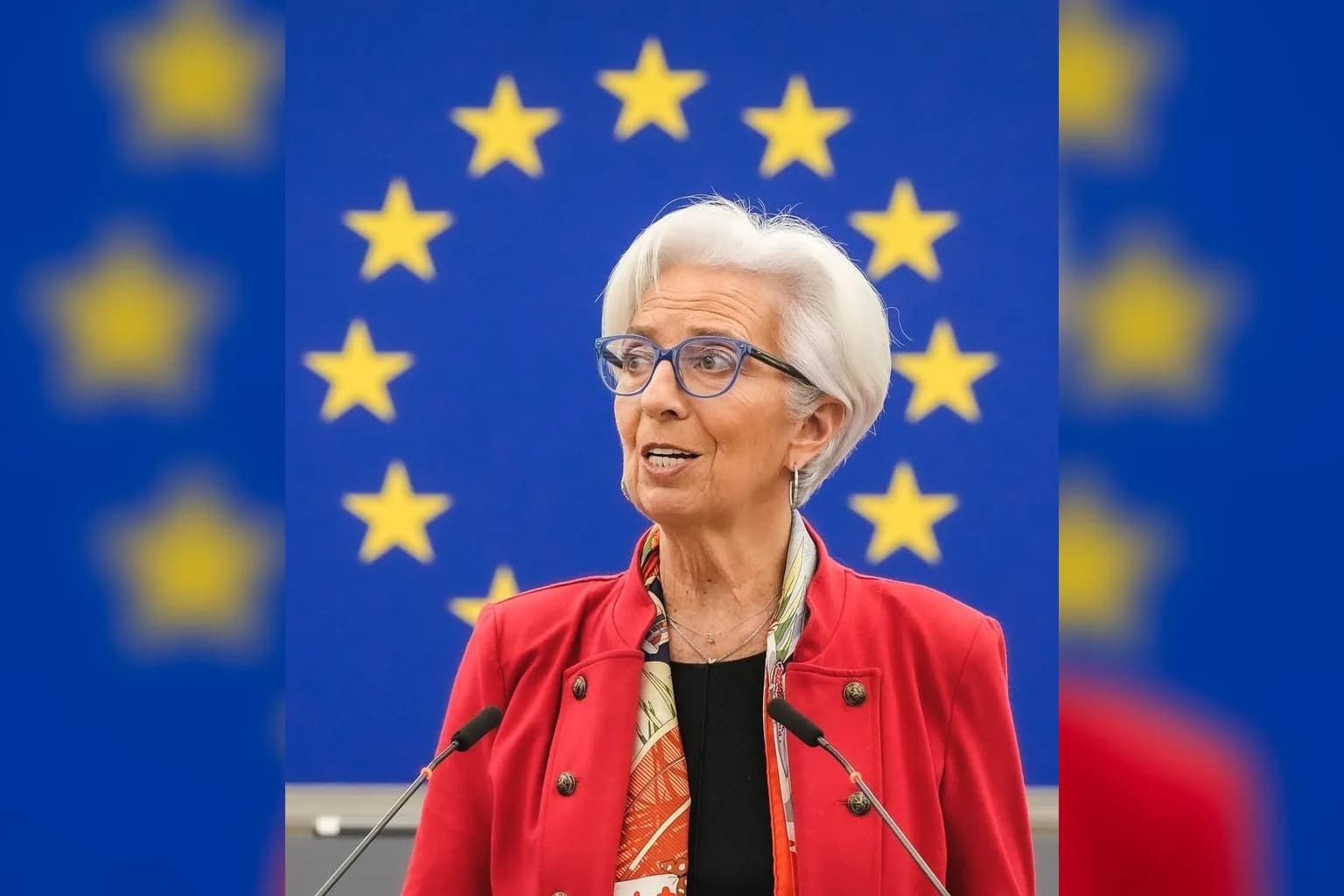
Christine Lagarde’s departure will hand a new president the task of setting monetary policy for the 21-nation eurozone, while European governments also prepare to fill two other European Central Bank executive board seats.
Lagarde said she wanted “greater freedom to express her views” on subjects beyond monetary policy.
The ECB announced her resignation on Thursday, starting a compressed selection process among the eurozone’s 21 member states. Kyriakos Pierrakakis, the Eurogroup president and Greek finance minister, asked governments to submit nominations by Friday 6 November 2026.
Lagarde, 70, has led the ECB since 2019, when French President Emmanuel Macron nominated her at the last minute to succeed Mario Draghi. She had previously headed the International Monetary Fund. She will leave by 7 February 2027, nine months before her eight-year term had been due to end on 31 October 2027.
She has also held talks with the World Economic Forum about becoming its next chair. The announcement comes as Lagarde seeks more freedom to speak outside monetary policy and pursues discussions over possible roles at the forum and potentially France’s presidential election expected in April-May 2027.
The early contest has two leading candidates. Pablo Hernández de Cos, Spain’s former central bank governor, is now general manager of the Bank for International Settlements and is seen as the more dovish economist. Klaas Knot, the former Dutch central bank governor, has a hawkish reputation.
The distinction matters because the presidency will shape monetary policy across the euro area. The immediate question is whether governments will turn that broad divide into a formal contest, or settle behind one candidate before the final decision.
Philip Lane, the ECB’s chief economist, has also been mentioned as a possible candidate. His mandate expires on 31 May, though Gabriel Makhlouf, governor of the Central Bank of Ireland, said Lane would be a “great” candidate while questioning whether legal rules would allow him another executive board term.
Germany has signalled that it will not seek the presidency. That leaves governments to decide which countries, and which alliances, will support the candidates put forward by the deadline.
Finance ministers discussed the nominations at their gathering on 9 November. European leaders were scheduled to meet in Brussels on 26-27 November, with an agreement on all three posts expected to be sought before a summit on 17-18 December.
Isabel Schnabel will resign on 3 January to join the International Monetary Fund. Lane’s departure at the end of May creates the second additional vacancy. The ECB executive board consists of the president and five other members, making the succession exercise wider than a contest for Lagarde’s job alone.
The European Council, made up of heads of state and government, will take the final decision on the presidency. A successful candidate needs support from at least 16 countries representing 65 per cent of the euro area’s population. The process also involves consultation with the European Parliament and the ECB.




Comments (0)