

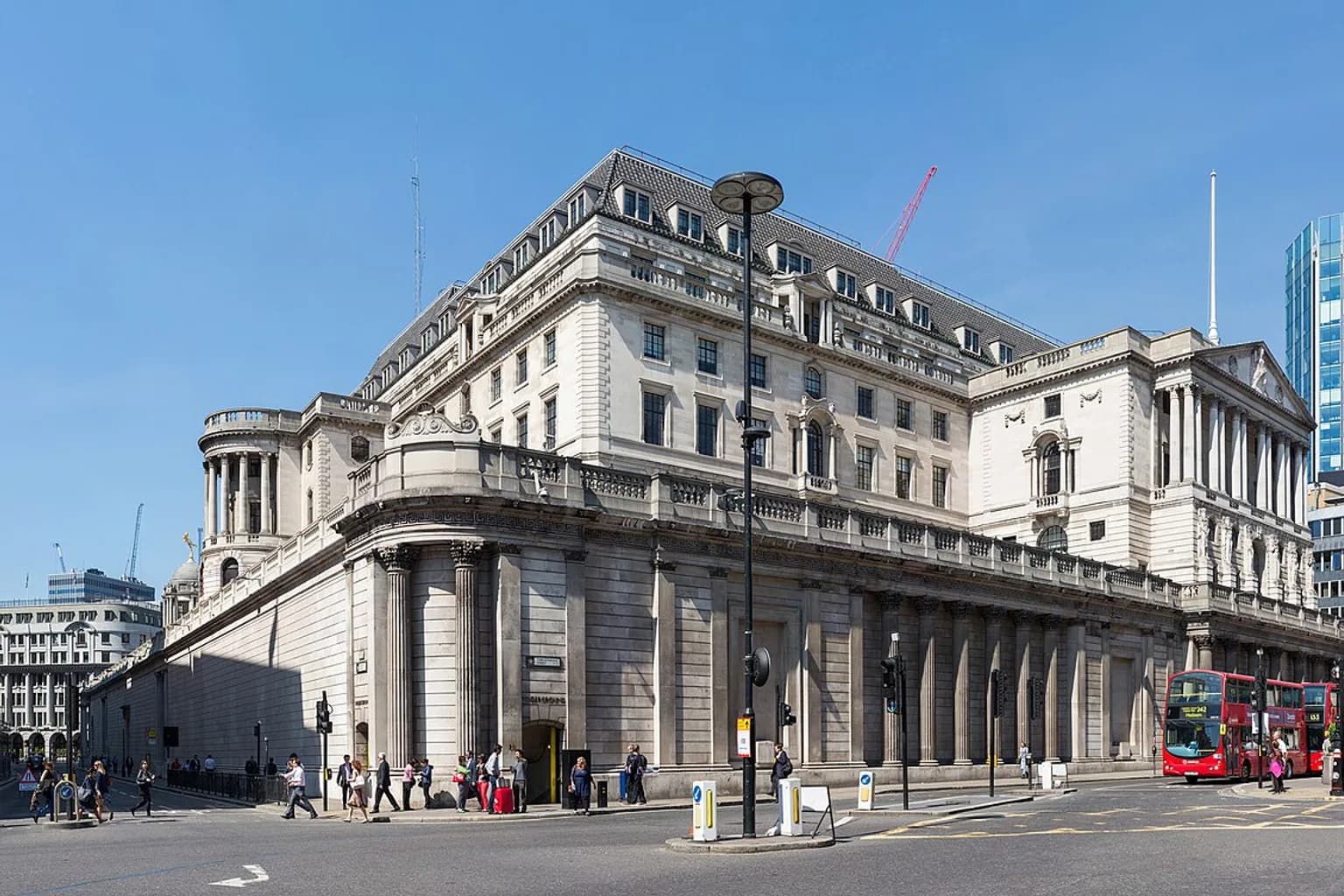
Borrowers, savers and businesses face uncertainty over the cost of loans and the return on deposits because market pricing points to further Bank Rate increases while an earlier Bank of England snapshot recorded its benchmark unchanged.
The Bank’s task is to return inflation to the Government-set target of 2% over the medium term. UK inflation was unchanged at 4.0% in January, while core inflation stood at 5.1%. Chancellor John Healey has said conflicts in the Middle East and Europe were to blame for rising prices.
The Bank held Bank Rate at a 16-year high of 5.25% for a fourth consecutive meeting at its first meeting of 2024. A source from that period said rates were expected to remain steady that week.
A later source gives the base rate as 3.75 per cent. Financial markets had priced in four base rate rises over the next year, up to 4.75%.
Those figures describe different periods rather than a single Bank Rate at one moment. The gap matters because Bank Rate is the Bank’s main policy instrument. It is the overnight interest rate paid on deposits held at the Bank by eligible firms, including commercial banks.
Interest rates have mostly held steady across the major world economies. Investors and borrowers are watching to see which central bank first cuts rates.
The Monetary Policy Committee, or MPC, has nine members. They make monetary policy decisions eight times a year, roughly every six weeks. The Governor recommends the policy he believes can command a majority, and members then vote.
The committee generally meets on a Wednesday. Its decision is usually published at 12 noon the following day, usually a Thursday. The Bank’s next interest rate decision is due on 5 November.
There is also a delay between a decision and its full effect. Monetary policy can take around 18–24 months to work through the economy.
Savers are weighing a related choice. The highest fixed savings accounts offer returns of up to 5.4 per cent, while some easy-access accounts pay up to five per cent.
Fixed-rate products lock in an agreed rate for a set period and usually require customers to leave their money untouched until the account matures. Martin Lewis has said a rise in the base rate is likely to lift easy-access rates by more than fixed rates.
The Bank also has another tool. It can buy bonds through quantitative easing, reducing long-term interest rates on savings and loans.
Whether the Bank raises rates at its next meeting, holds again, or ultimately delivers the increases implied by market pricing remains unclear.

Comments (0)