
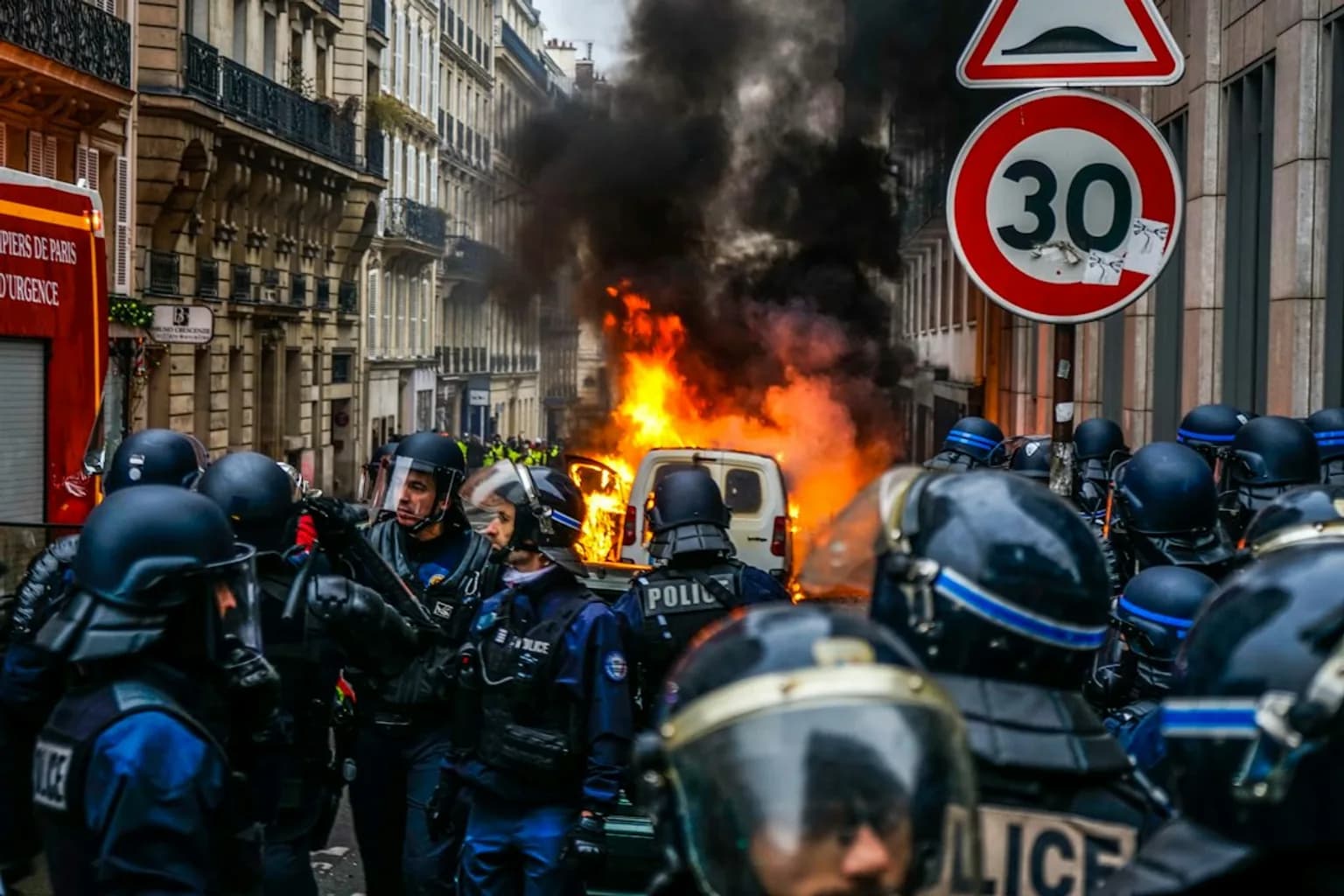
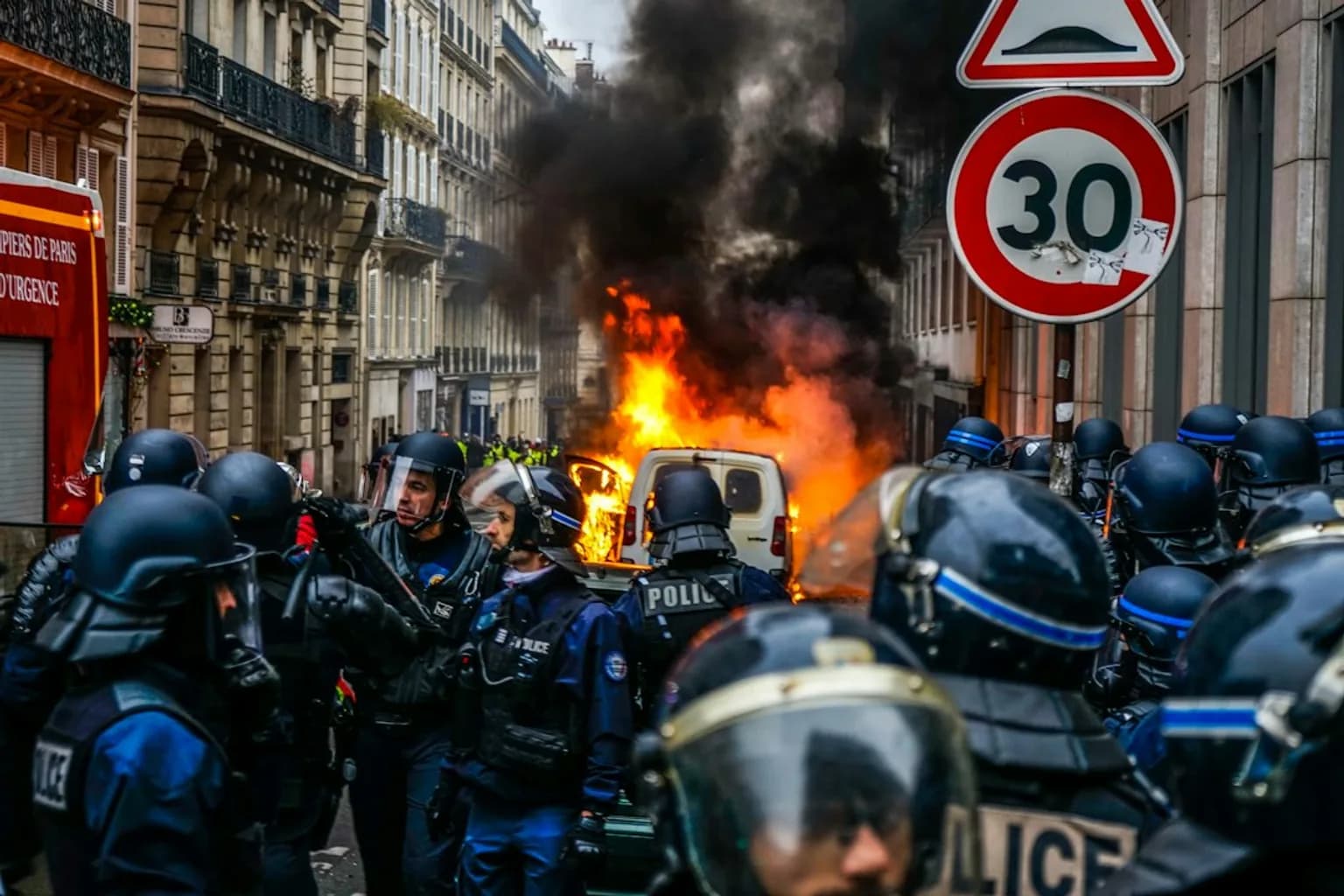
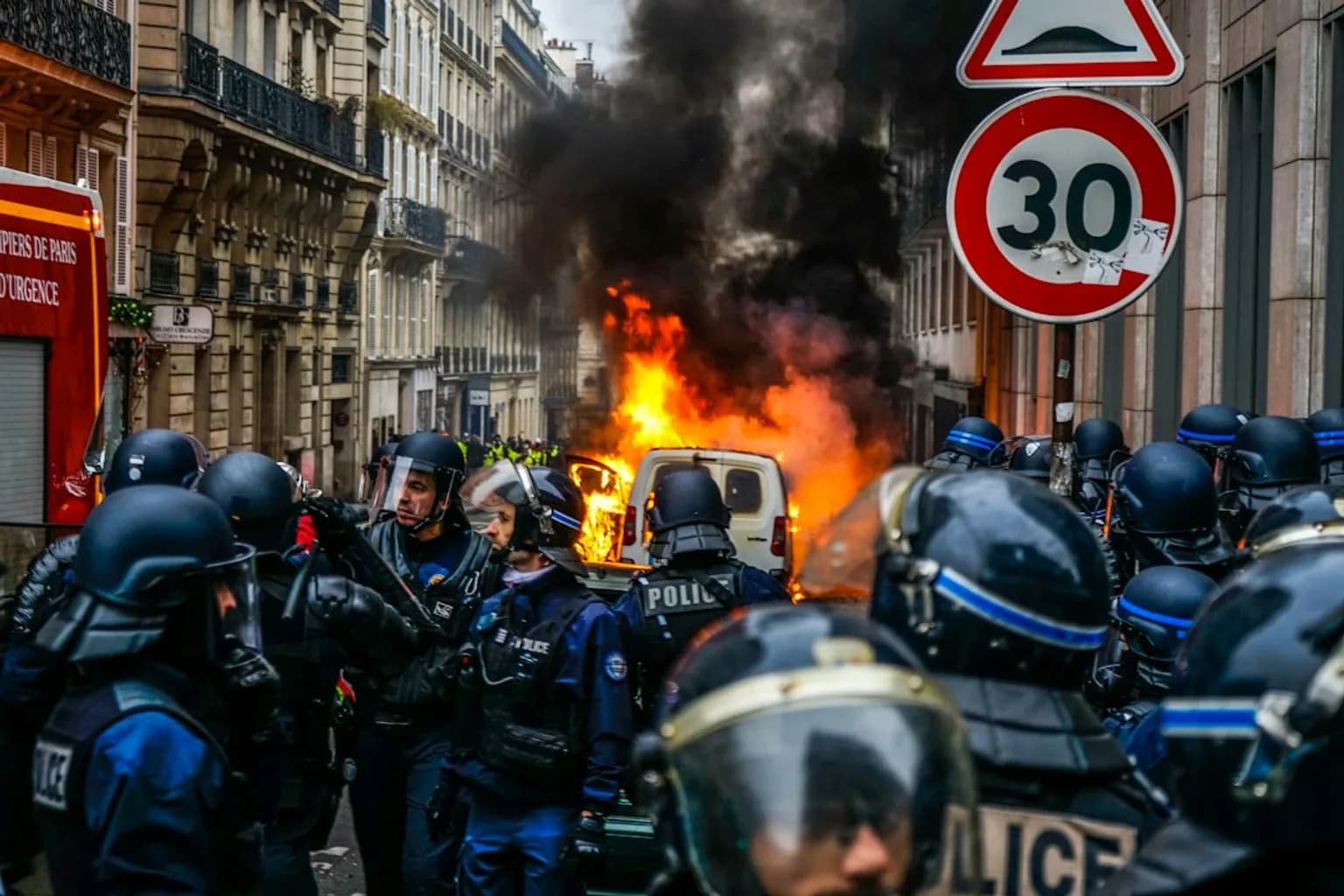
Police in riot gear stood near a burning fire in Paris on 18 October 2026, after a weekend in which rioting and looting broke out alongside mass demonstrations.
The protests brought together teachers and students who have been blockading schools for weeks in pursuit of more funding, and people protesting the rapidly rising cost of living. Disorder unfolded in particular urban areas rather than across the country, with businesses among those affected.
On Monday evening, the prime minister, Sébastien Lecornu, instructed local authorities to impose partial curfews intended to prevent a repeat of the unrest. “I'm absolutely determined to restore public order,” he said.
Lecornu said the restrictions should be limited to the places where destruction had occurred, rather than applied nationwide. Lyon, Nice and Lille issued curfews on Monday evening. Paris brought in a partial curfew and a ban on protests, while Coulaine imposed a curfew for minors only.
Jean-Didier Berger, a junior minister, said the measures could involve limiting night-time access to particular streets or districts with a high concentration of businesses.
Serge Papin, France's minister for small business, said an estimated 3,000 local businesses had been affected by the weekend unrest. The government will set up a special support fund to provide them with financial assistance.
The political argument over who was responsible remains unresolved. Lecornu's government has blamed so-called ultra-left movements, citing analysis by French intelligence services. Lecornu and right-wing politicians have also accused the far-left presidential candidate Jean-Luc Mélenchon of playing an important role in a far-left network they say was driving the unrest.
Laure Beccuau, the Paris prosecutor, said on TF1 on Monday that she absolutely could not confirm the government's assessment from the profiles of people arrested and placed under investigation in the French capital so far.
Interior Minister Laurent Nuñez submitted his resignation after the weekend unrest, though Macron refused to accept it.
Lecornu said he would meet party leaders and presidential candidates to discuss how campaign events, including rallies and visits across the country, could be held safely. The meeting comes before strikes and protests planned by the country's main unions on 5 November against the government's proposed budget, which includes €43 billion in savings.
Comments (0)