

A National Asset in Court
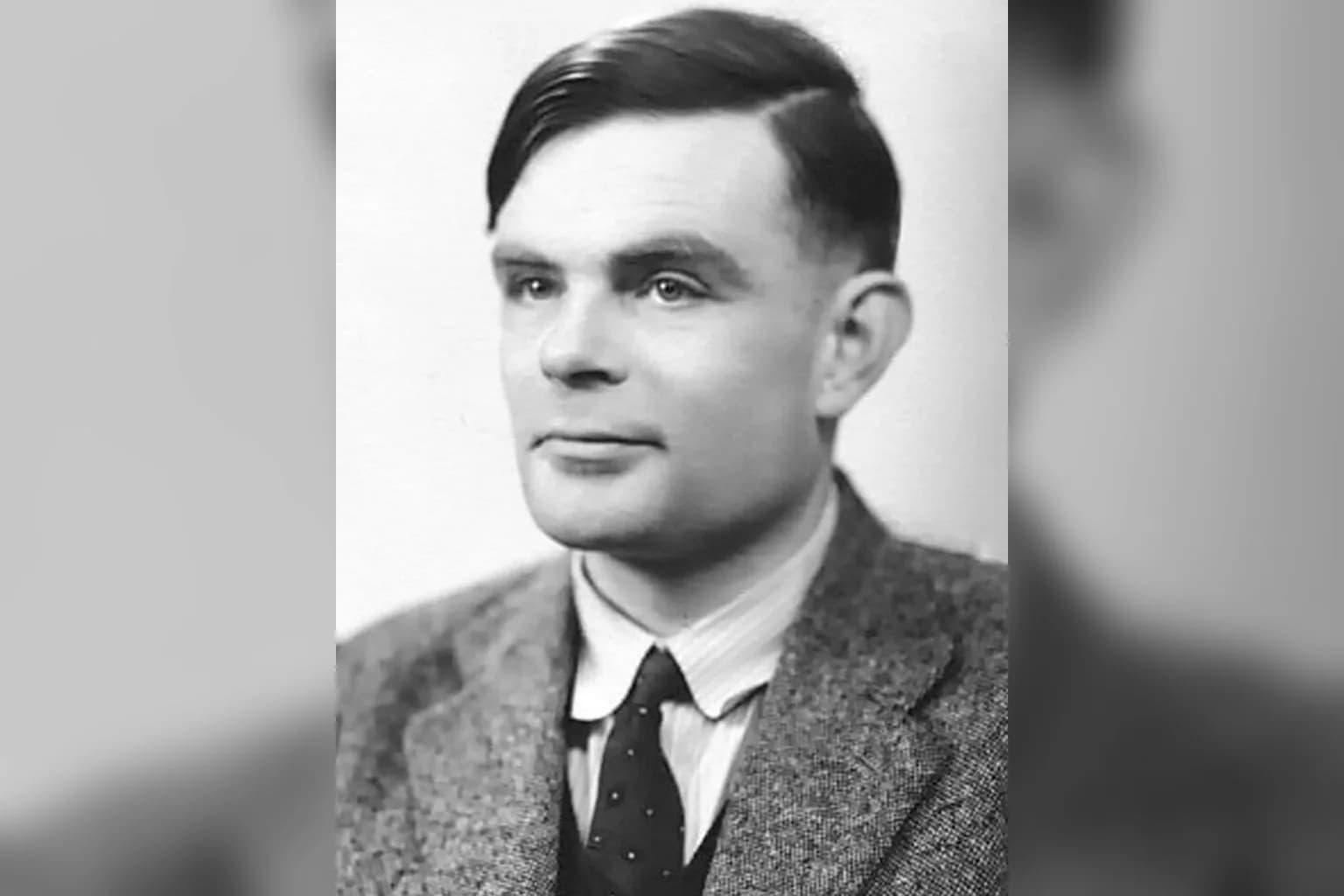
Alan Turing stood in court at Knutsford, Cheshire, on 31 March 1952, facing charges over three occasions of consenting sex with another man at his house in Wilmslow. He pleaded guilty. The court offered prison or probation conditional on a year of oestrogen injections, a treatment described at the time as “organo-therapic treatment”, and Turing chose probation.
The prosecution grew from Turing’s meeting with a nineteen-year-old man at a spot on Oxford Street in Manchester. Police arrested both men, and the charge concerned the encounters at Turing’s home in Wilmslow.
Hugh Alexander appeared for him. Alexander, the head of cryptanalysis at GCHQ, had official approval to serve as a character witness, and he told the court that Turing was “a national asset”.
The conviction carried an immediate professional cost. Turing lost his security clearance, severing his formal access to the secret work that had occupied much of the war.
How did Britain call Alan Turing a national asset, then take away his clearance?
An Instruction Table
Turing reached that courtroom after a life spent asking what instructions could accomplish. He arrived at King’s College, Cambridge, as an undergraduate in 1931, graduated with distinction in 1934, and won a fellowship in 1935 for work in probability theory. M. H. A. Newman’s lectures that year introduced him to mathematical logic, giving Turing a field where a question could be made exact: which tasks can a procedure actually carry out?
In 1936, at twenty-three, Turing answered through a machine that existed first on paper. He defined a universal machine capable of reading the instruction table of any other machine. One machine could read a description of another machine’s instructions and then carry out those instructions itself.
That abstract device gave computation a general form. Turing’s paper, “On Computable Numbers, with an Application to the Entscheidungsproblem,” appeared at the turn of 1936 and 1937, setting out a definition of computability equivalent to one developed by the American logician Alonzo Church. Church had recommended the paper for publication, and Turing went to Princeton late in 1936 to join Church’s group.
His mathematical definition of computability was equivalent to Turing’s, while Turing’s universal machine expressed the same problem through an instruction table that a machine could read. Turing spent his second Princeton year as a Procter Fellow, working with Church on logic, algebra and number theory before completing his doctorate.
Princeton gave him a wider mathematical world and a doctorate in 1938. John von Neumann offered him a post to continue mathematical research, yet Turing returned to England in the summer of that year. He returned carrying a theory of machines that could follow any instruction table, just as Europe moved toward a war in which secret messages depended on machines of another kind.
The Polish Insight
Turing joined the Government Code and Cypher School in September 1939. When war began with Germany that month, the organisation moved to Bletchley Park in Buckinghamshire, its wartime headquarters. German Enigma traffic posed a daily problem there, and naval messages mattered with particular force because U-boats threatened the Battle of the Atlantic.
Polish cryptanalysts had already made crucial progress against Enigma. In January 1940, Turing met Polish counterparts who gave him the insights he needed to design the Bombe.
The Bombe was an electromechanical device designed to work through possibilities inside Enigma-encrypted traffic. Turing had proposed a way to test a “probable word” in an enciphered message during 1939, partly through the Polish contribution, and his logical scheme took physical form in the Bombes. From 1940, they worked as central engines of wartime decipherment.
His central scientific contribution at Bletchley Park was a statistical theory for measuring the weight of evidence, a way to judge the force of clues emerging from encrypted traffic. The Bombe gave that reasoning a practical setting, where an apparent answer had to earn its place among the possibilities.
Enigma work relied on a large operation rather than a lone mathematical performance. Turing worked closely with Joan Clarke in Hut 8 on German Naval Enigma, and he worked alongside Gordon Welchman at Bletchley Park. A large number of women held senior code-breaking and intelligence-analysis roles, joining the women recruited from colleges and elsewhere for the work of handling, analysing and decoding wartime information.
Clarke shared the pressure of the naval problem with Turing inside Hut 8, where the German messages connected directly to the U-boat campaign.
Turing concentrated on U-boat Enigma from 1939 to 1942, contributing to the effort that helped save the Battle of the Atlantic. By 1942, the Enigma-breaking process was largely mechanized. The machines embodied a method Turing had first developed for a mathematical question: instructions, logical possibilities and a procedure for working through them.
Secrets Across the Atlantic
Bletchley Park gave Turing a central place in the Allied intelligence effort, and the work soon took him beyond Britain. He served as chief Anglo-American crypto consultant from 1943 to 1945. In November 1942 he prepared a report on the U.S. Navy cryptographic section in Washington, and the following month he visited the National Cash Register Corporation in Dayton, Ohio, producing another report.
America’s Navy was developing its own bombe machine in Dayton, and Turing was sent there to advise on its development. He also inspected secret encryption devices being built at Bell Labs in New York.
After returning to Britain in 1943, Turing developed Delilah, a portable secure voice scrambler. Robin Addie met him in 1944, after the Hanslope Park station became operational, in connection with Turing’s ideas on speech encryption.
That wartime world had made Turing’s abilities valuable to the British government. It also trained him in the practical demands of machinery, signals and stored procedures. When the war ended, he headed toward a machine built for a broader purpose than codebreaking.
Running Toward the Machine
In 1945, Turing moved to the National Physical Laboratory in London to work on the ACE, the Automatic Computing Engine. He led design work on the project, carrying the universal-machine idea toward a stored-program computer. A 1946 explanation set out how “every known process” could be turned into computer software.
His working life also included a strikingly physical routine. Turing ran approximately nine miles from Teddington to a technical conference at the Post Office Research Station in North London. He placed fifth in the Amateur Athletic Association Marathon in 1947, and he won the Walton Athletic Club’s three-mile and 10-mile championships in record time.
In 1948, Turing joined the Mathematics Department at Manchester University, where F. C. Williams and T. Kilburn were constructing a computing machine. Manchester had the world’s first working computer that year. Turing worked with Max Newman and led a team that produced the Manchester Mark 1 and then the Ferranti Mark 1.
The Ferranti Mark 1 entered operation in February 1951. It used cathode ray tubes as its fast storage system, and Turing became the first person to use computer graphics, watching calculations develop on a screen.
Questions on Mottram Road
Alan Garner met Turing through running in Cheshire. Garner was seventeen in 1951, a sixth-former at Manchester Grammar School studying classics, and he became Turing’s training partner. They ran six or seven miles at a time through Cheshire lanes, and together they covered perhaps a thousand miles during 1951 and 1952.
One run on Mottram Road at Alderley Edge began with ten minutes of silence. Garner then said that he did not think intelligent machinery was possible. Turing answered with a question: “Why learn classical languages?” Garner replied, “You have to learn to use your brain in a different way.”
Turing had given that question its best-known form in 1950, when he proposed an experiment for deciding whether a machine could be called intelligent. The proposal became known as the Turing Test. The universal machine had begun with instruction tables; this later experiment asked how people might respond to a machine’s answers.
Garner also remembered Turing talking about Snow White, probably late in 1951. Garner’s first cinema visit at five had been Snow White and the Seven Dwarfs, and the poisoned apple had frightened him. Turing dwelt on the apple’s ambiguity, red on one side and green on the other, with one side giving death. Their training continued into 1952, through the period of Turing’s trial.
He wanted to know how mathematical rules could account for the shapes and patterns found in living organisms, and the Manchester computer gave him a tool for watching those rules work.
Patterns on the Screen
Turing developed a mathematical theory of morphogenesis during the opening years of the second half of the twentieth century. His theory proposed that non-linear partial differential equations could describe an initially homogeneous chemical mixture developing into asymmetrical biological forms.
The Manchester machine allowed him to make the calculations visible. He used the screen to watch their progress, putting computer graphics in the service of a biological question. His first paper on morphogenesis was published in 1952, after he had submitted it to the Royal Society on 9 November 1951.
He worked on the Fibonacci sequence through the same theory, asking how its familiar progression could arise from processes of growth and form. Turing drew on D’Arcy Thompson’s On Growth and Form as he pursued that question.
The work continued during the period of hormonal treatment imposed through his probation. The treatment involved oestrogen injections and was set to continue for a year. Turing’s calculations on chemical mixtures, biological form and Fibonacci patterns went forward while the court’s sentence reached into his body.
He also kept company with friends and students. Robin Gandy had been his research student in logic and an intimate friend after 1948. On 23 November 1952, Turing wrote to Gandy: “Have decided to have another, and rather more co-operative go at a psychiatrist.” During 1953, he underwent Jungian analysis with Dr Franz Greenbaum, a pre-war German refugee.
Garner heard of the trial late in 1952, when police warned him against associating with Turing. Turing had worked in wartime alongside Clarke, Welchman and a huge codebreaking workforce; now the police were telling a young runner to keep his distance from him.
The Clearance and the Postcard
The court had accepted Alexander’s description of Turing as a national asset, while the same state removed his security clearance after his arrest as a homosexual. Turing’s wartime work had involved Enigma, Allied cryptographic cooperation and speech encryption, all fields governed by official secrecy.
Alexander’s statement carried particular weight because he led cryptanalysis at GCHQ and had received official approval to speak for Turing. He gave the court a concise account of the value Turing represented to the country. The sentence left that value acknowledged in public while placing Turing outside the secret world where it had been established.
His research carried on at Manchester. His last year was prolific, including manuscripts and renewed interest in physics, and his interests still ranged across computation, mathematical biology and questions about the physical world. In a 1951 radio talk, he had said that quantum mechanics might mean the brain’s behaviour was not computable.
Garner last saw Turing in 1953, when they were fellow passengers on the bus from Wilmslow to Manchester. Turing had once run with him along Cheshire roads and asked him about classical languages. The last sight was a shared bus journey between the town where the court case had centred on Turing’s home and the city where he continued his university work.
In March 1954, Turing sent Gandy a postcard “from the unseen world.” It carried four words: “Hyperboloids of wondrous light.”
Turing died by cyanide poisoning on 7 June 1954, aged forty-one. Britain had called him a national asset in court because his work had helped it confront Enigma and build the machinery of decipherment. It then prosecuted his consensual relationship with another man, imposed hormonal treatment and removed his clearance. The last message left for Gandy was still a mathematical image: “Hyperboloids of wondrous light.”



Comments (0)