

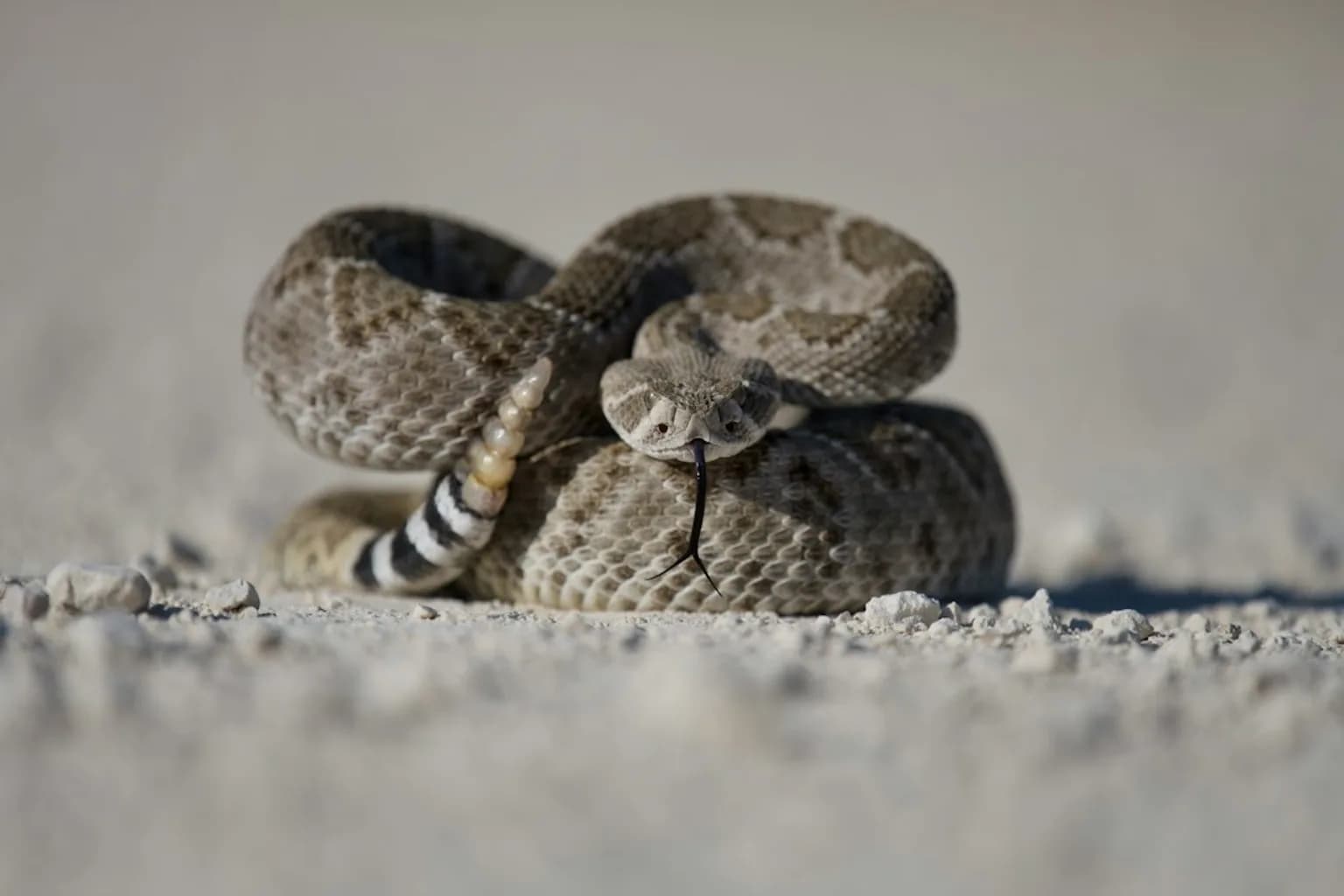
In 2019, a colleague in Sarawak, Malaysia watched dwarf reedsnakes cartwheel away from danger, an observation that set scientists investigating an escape move unlike their usual travel.
Snapshots of a dwarf reed snake, Pseudorabdion longiceps, performing the movement were first shared in 2023. Yosuke Kojima, an ecologist and lead researcher at Toho University in Chiba, Japan, said: “I was amazed by the dynamic movement and immediately wanted to learn more about it.”
Dwarf reedsnakes are Pseudorabdion snakes found in Southeast Asia. The researchers collected 11 P. saravacense, one P. collaris and one P. longiceps from Malaysia’s Kubah National Park, alongside six Calamaria reed snakes for comparison. The snakes were about 11 to 28 centimetres long.
In the laboratory, the team put the snakes on a 2.2-metre-long racetrack, with cameras above and beside it to record the action from several angles. Researchers gave the snakes a nudge on a narrow track, a little thinner than a sheet of printer paper. Videos of three Pseudorabdion species captured the cartwheeling behaviour in the lab.
Each roll begins with a snake curled into a C shape, its head lifted from the ground and pointed in its direction of travel. It swings its tail forward and down past its head. When the tail lands ahead of it, the next roll starts.
The researchers found that the motion is more controlled than a snake simply turning as one wheel. One side of the trunk meets the ground, then the snake repeatedly carries its bow-shaped trunk over beside its head and puts it down again. The team called each of these movements a “stroke”.
Those strokes allow the snake’s body to rotate while its head remains stable and faces forward. At higher speeds, the snakes lifted their heads farther from the ground and reduced their vertical movement. Even while rolling quickly, they held to a 20 cm-wide path without straying.
At full tilt, the snakes moved at 1.7 to 3.7 metres per second, or about six to 13 kilometres per hour. That was four times faster than traditional wriggling. Cartwheeling is an escape behaviour rather than the dwarf reedsnake’s ordinary way of moving around.
All the Pseudorabdion snakes tested cartwheeled. None of the Calamaria snakes did. After rolling, the snakes tended to dive under nearby objects for further cover.
Evan Seng Huat Quah, a herpetologist at the University of Malaysia of Sabah who saw dwarf reedsnakes in their natural habitat, wrote: “I was completely blown away. It really caught me by surprise at how much ground a small snake like that could cover through cartwheeling.”
Jake Socha, a biomechanics researcher at Virginia Tech who analysed the movement, said: “In today’s day and age, my first question was, is this real or is this AI? It’s definitely real, and that’s kind of why it’s jaw-dropping. You don’t expect that the animal can do that.”
Kojima said the video analysis revealed greater complexity than he had expected. “I was even more amazed by how complex the movement actually was,” he said. The findings, reported on October 19 in Current Biology, describe a body divided functionally between regions that rotate extensively and a head that stays stable.
The discovery also gives new context to older accounts of “hoop snakes”. Jessica Tingle, a biologist at Brown University in Providence, Rhode Island, noted that authors in the 19th century described such snakes as moving by rolling.




Comments (0)