

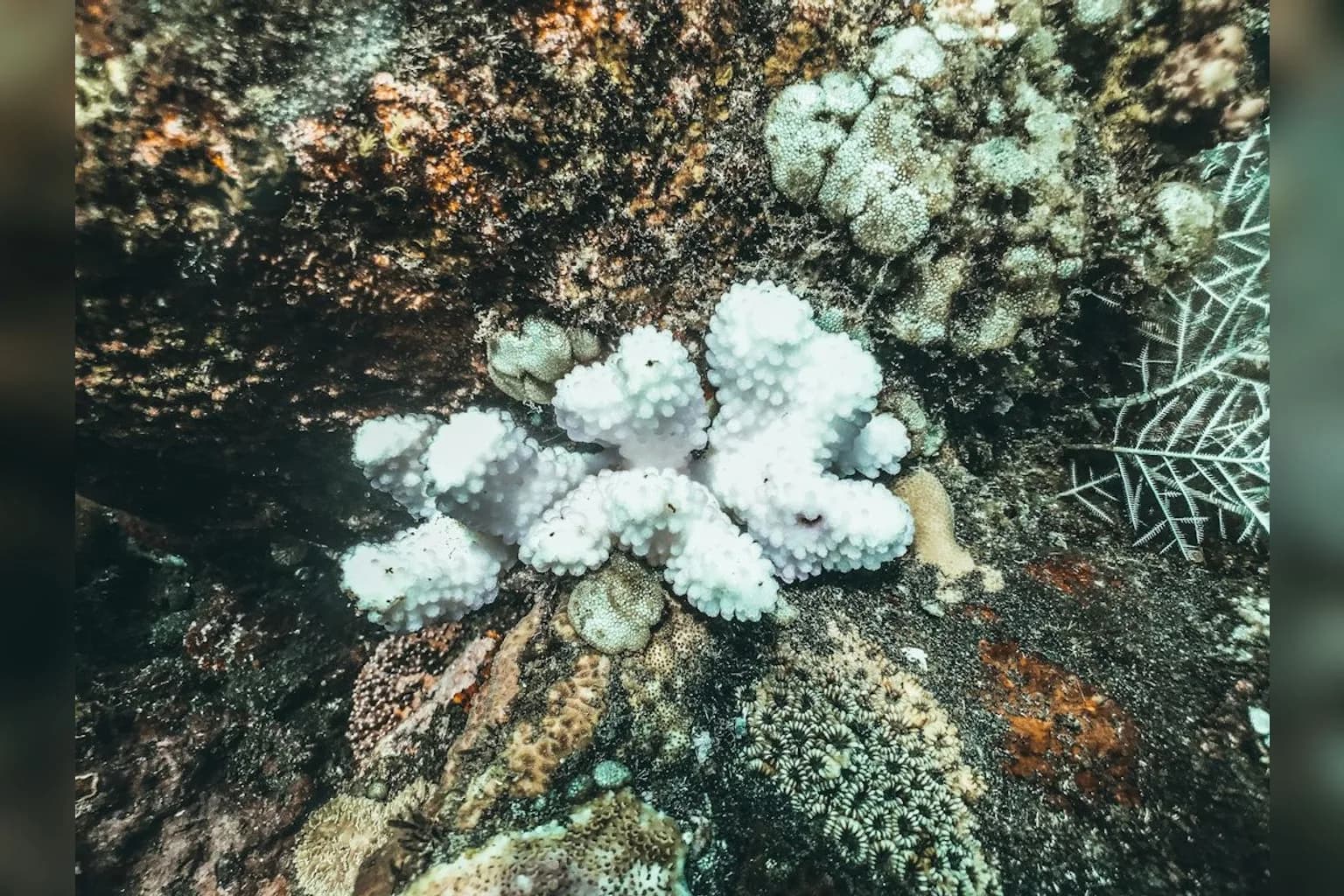
At COP17, the UN’s biodiversity summit in Yerevan, Armenia, Mishal Gudka warned that the future threat from climate change was looming and severe for coral reefs. Gudka is the scientific lead of the International Union for Conservation of Nature’s Red List of Coral Reef Ecosystems assessment and research director at Coastal Oceans Research and Development in the Indian Ocean (CORDIO) East Africa.
The International Union for Conservation of Nature (IUCN) has classified 96 percent of the world’s 127 shallow-water coral reef systems as critically endangered, its highest risk category. That designation signals an extremely high risk that these ecosystems will collapse by 2075.
Shallow-water reefs are colourful coral ecosystems found at depths of up to around 40 meters and cover approximately 188,000 square kilometers worldwide. The IUCN examined 127 tropical and subtropical coral systems covering 188,362 square kilometres.
Its assessment used the middle-of-the-road scenario from the UN’s panel of climate experts, which projects global temperatures rising 2.7°C above pre-industrial levels by 2100. Without those future climate projections, and using changes over the past 50 years alone, 24 percent of reef ecosystems would qualify as critically endangered.
Heat stress caused by climate change is the most consistently identified threat behind reef decline worldwide, the IUCN said. Overexploitation of parrotfish and groupers threatens 63 percent of coral reef ecosystems. Coastal development, pollution, tourism and increasingly severe storms also degrade reefs.
The pressure has been visible in recent bleaching events. The fourth global mass bleaching event, from early 2023 to mid-2025, was the most widespread on record, according to the US government’s Coral Reef Watch. A heatwave also killed corals across 1,500 km in Western Australia, in what was described as the worst mass bleaching event on record for reefs there.
A reef ecosystem is considered to have collapsed when hard corals largely disappear and algae, rubble and sponges take their place. The IUCN’s list includes the Great Barrier Reef, the Coral Triangle in southeast Asia and the western Pacific, the Mesoamerican Barrier Reef System and the Red Sea coral reefs.
Ben Fitzpatrick, a research scientist at the University of Western Australia Oceans Institute, led the Australian assessment. It found that all 17 of Australia’s reef regions, including the Great Barrier Reef, are critically endangered when expected climate effects are included, compared with 4 regions without climate projections.
Current climate policies and targets adopted by countries around the world are likely to cause about 2.6°C of global heating. In a separate IUCN study published in the journal Nature, nearly 44 percent of reef-building coral species were found to face an elevated risk of extinction because of climate change.
The stakes extend beyond the reefs themselves. A quarter of all known marine species are found in and around coral reefs. Reefs are important sources of seafood and tourism, and often protect coasts from erosion and storms. Their loss would decimate fisheries and speed up coastal erosion, while species including elkhorn and pillar corals and the clownfish could disappear.
Marcos Valderrábano, an IUCN researcher, said ecosystems left out of the assessment had been excluded because of a lack of data and were probably as vulnerable as those evaluated.
The IUCN said coral reefs in most parts of the world have yet to be lost and stressed that recovery remains possible. Grethel Aguilar, the IUCN’s director general, said: “it is not too late to give coral reefs a chance to recover.” She said that would require ambitious emissions reductions, stronger protection and restoration, and sustained investment in resilient coastal ecosystems and the communities that depend on them.
Gudka said the decisions made soon would shape the reefs’ future. “The actions taken over the next few years will determine whether these ecosystems persist as they have been known or transform into a different ecosystem worth less to both nature and people.”





Comments (0)