

The Well at Cannon
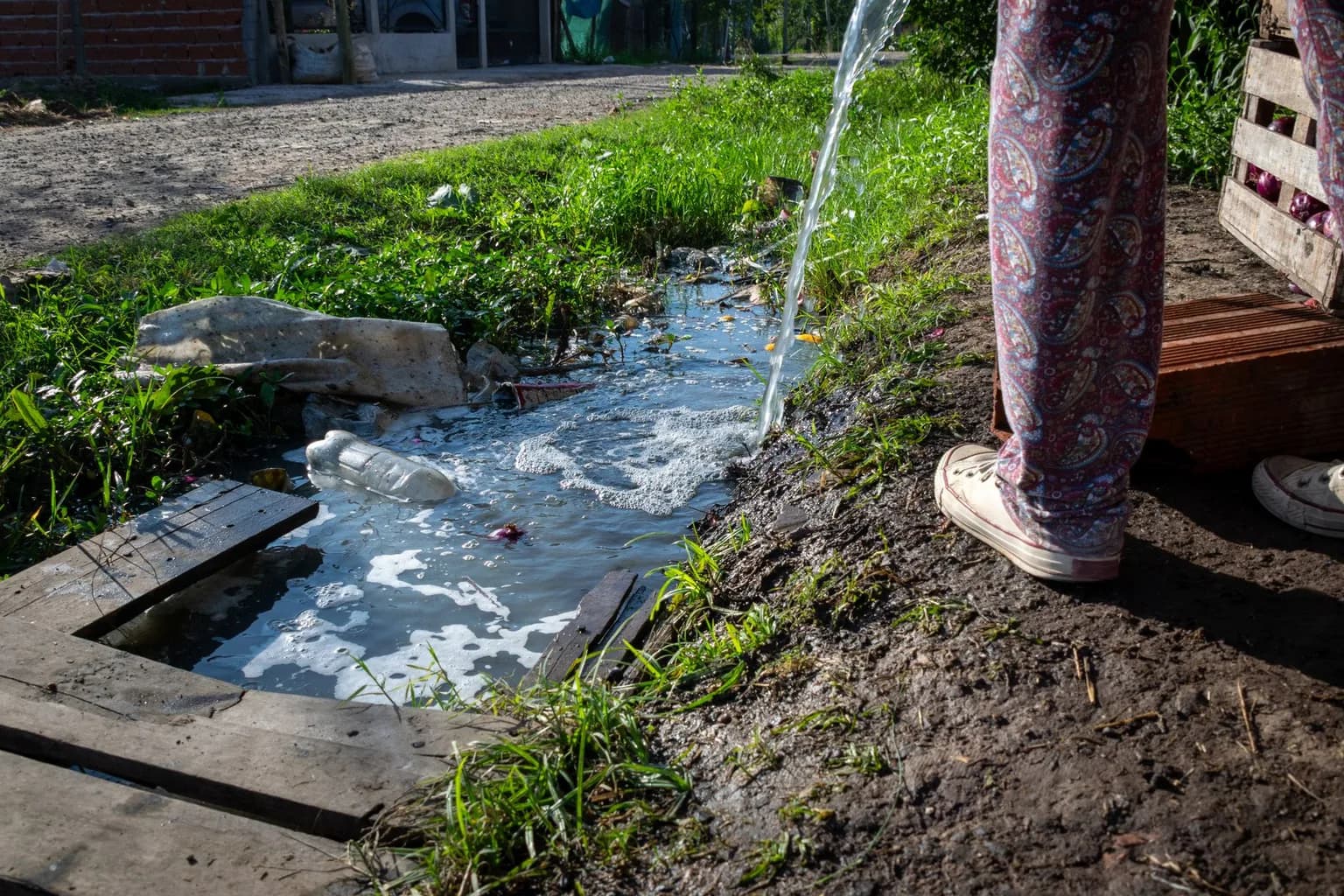
In August 2018, Art Schaap learned from the Air Force that PFOA and PFOS pollution from Cannon Air Force Base had reached his dairy farm in Clovis, New Mexico. The chemicals had contaminated his wells, his land, his cows and their milk. The Air Force’s findings tied a military installation to the water beneath a working farm, where every part of the operation depended on the same ground.
Schaap’s contamination involved two members of the larger family called per- and polyfluoroalkyl substances, or PFAS. PFAS offered manufacturers a rare set of qualities: they resisted heat, oil, water and friction, which made them useful in products from non-stick cookware to fire suppressants. Those qualities also gave PFOA and PFOS an unusually long life after they left a factory or a fire-training ground.
More than 1,000 studies across four decades, including studies by the U.S. military, have found that PFOA and PFOS endanger public health and the planet. The chemicals persist in the environment forever and bioaccumulate in animals, while human exposure has been linked to cancer, thyroid disease, reduced immunity, high cholesterol and birth defects.
Schaap had received the result of a long industrial journey, one that began with a frozen cylinder in a DuPont laboratory and a spill on a 3M chemist’s shoe. How did chemicals made for durability end up in Art Schaap’s dairy well?
A White, Waxy Solid
Roy J. Plunkett was working with tetrafluoroethylene at DuPont in 1938 when he and his assistant, Jack Rebok, found that a frozen, compressed sample had spontaneously formed a white, waxy solid. The solid was polytetrafluoroethylene, or PTFE, the material that DuPont later sold under the Teflon name. A laboratory surprise had produced a substance built to perform under punishing conditions.
Plunkett had joined E. I. du Pont de Nemours & Co. after graduating from Ohio State University, and the solid he found with Rebok had properties that gave it value far beyond the experiment that produced it. PTFE could resist the forces that degraded many other materials. DuPont trademarked Teflon in 1945, turning that discovery into a name that would eventually appear on non-stick cookware in homes.
DuPont found an early use for PTFE during World War II, when it used Teflon components in the Manhattan Project’s uranium plant in Oak Ridge, Tennessee. The components went into gaskets and valves that held toxic uranium hexafluoride in pipes. At Oak Ridge, the value of the material rested on its ability to hold against a harsh chemical environment.
PTFE later became familiar as the coating on many non-stick pans, though its industrial role came first. The material could resist heat, water, oil, chemicals and friction, attributes that answered urgent engineering problems and invited a growing range of commercial uses. Making Teflon at scale required another chemical, and that requirement created a supply line from 3M to DuPont.
The Chemical Supply Line
Joseph A. Simons worked at Pennsylvania State College on making “more complex fluorocarbons.” His work created a production method that 3M could use to turn fluorinated chemistry into a commercial material. In 1945, 3M, then called the Minnesota Mining and Manufacturing Co., purchased the Simons Process and used it to produce perfluorooctanoic acid, PFOA.
The deal gave 3M a route to make a chemical that would become central to DuPont’s Teflon production. 3M started mass-manufacturing PFOA in 1947. DuPont began using PFOA to make Teflon in 1951, linking the company that produced the chemical to the company that used it for a brand built around a durable surface.
Commercial PFAS production was well underway by the 1940s, and products made with or from PFAS spread through consumer and industrial markets from the 1950s onward. Two major manufacturing processes, electrochemical fluorination and fluorotelomerization, supplied PFAS substances, while more than 600 intermediate processes helped produce particular chemicals and their final products. The category eventually grew into more than 9,000 human-made chemicals.
PFOA was a fully synthetic chemical. Robert Bilott, the environmental lawyer who later investigated DuPont’s West Virginia operations, described 3M as having invented it right after World War II and sold it to DuPont. The chemistry moved rapidly from specialized industrial work toward products that promised cleaner surfaces, dry fabrics and protection from harsh materials.
Each application drew on the same basic appeal. A surface that resisted oil could stay clean; a fabric that repelled water could stay dry; a material that held its shape under chemical pressure could serve inside a uranium plant. In 1953, a small accident at 3M made the consumer promise visible on a tennis shoe.
The Shoe Becomes Scotchgard
A 3M chemist spilled PFOS on a tennis shoe in 1953. The spill left a coating that repelled oil and water, and the effect led to Scotchgard. The episode gave a commercial shape to an industrial property: fluorinated chemistry could alter an ordinary surface so that stains and moisture slid away.
Scotchgard carried PFAS into a broader world of treated fabrics and household goods. PFAS compounds and their derivatives became widely used in products ranging from water-resistant textiles to firefighting foam. Their ability to repel oil and water made them useful wherever manufacturers wanted a surface to resist daily wear.
3M and the U.S. Navy developed aqueous film-forming foam, known as AFFF, during the 1960s. The foam contained PFOS and PFOA, and it was developed for military use before becoming common at airports and military sites throughout the 1970s. The military had gained a powerful firefighting tool, while soil and groundwater around those sites gained a route for exposure.
The foam’s use connected a chemical designed for surfaces to large volumes of water, soil and training grounds. It also carried the same compounds that had entered industrial production for Teflon and household treatments. By the time the military studied AFFF’s effects, its use had already extended through airports and bases.
A U.S. Navy study in the 1980s found that AFFF had “adverse effects environmentally” and killed aquatic life. The warning arrived as the chemicals were also moving through factories, landfills, homes and public water systems. Inside the companies that made them, research had already raised deeper concerns.
The Numbers Inside the Companies
DuPont scientists found in 1961 that PFAS could increase liver size in rats and rabbits. Twenty years later, 3M found that PFOA ingested by rats caused birth defects. Two of seven employees in DuPont’s Teflon division gave birth to children with eye defects, while early animal studies had already shown potential toxicity and health risks from PFAS.
Workers provided another early sign of how widely the chemicals could travel through the body. Occupational studies in the 1970s detected some PFAS in the blood of exposed workers, and studies in the 1990s detected them in the blood of the general population. The chemical had moved from the people who made it to people far from a production line.
3M had also begun setting its own numerical boundary for public water. In 1988, its scientists set a community drinking-water safety limit of 1,000 parts per trillion for PFOA. Water sources nearby contained three to five times that concentration. The company had a limit on paper while the water around it already exceeded that limit by a large margin.
DuPont tested public water supplies near its West Virginia plant and found PFOA in several communities in West Virginia and Ohio. The affected communities drew water from the Ohio River or faced air emissions from the plant. PFOA had moved beyond the production line and into the water used by people living nearby.
By the early 1990s, two internal 3M cancer studies had found cancer in the liver, pancreas and testicles of rats exposed to PFOA. An analysis of 39 internal industry documents later found that companies had evidence by the 1970s that some PFAS were toxic to humans. Those documents came from the lawyer who led a class action against DuPont for people in West Virginia and Ohio, then entered the University of California’s Chemical Industry Documents Library.
Until around 2000, however, the public-health community generally considered PFAS inert and outside the group of chemicals expected to cause health problems. DuPont’s disposal practices in West Virginia gave the concerns within the companies a physical destination. During the 1980s, the company sent PFOA-containing material toward a landfill beside a creek near its Parkersburg-area manufacturing facility.
The Farm Beside the Landfill
During the 1980s, DuPont dumped more than 7,000 tons of PFOA-containing sludge into an unlined landfill next to a creek in West Virginia. The landfill stood near the company’s manufacturing facility and the Ohio River. Its contents sat in the landscape that supplied water to nearby farms and communities.
Wilbur Tennant’s farm lay near Parkersburg, West Virginia. In 1998, half of his herd of 300 cows began to languish and die. Tennant ultimately lost more than 100 cattle, and other animals suffered stillborn births, birth defects, tumors and black teeth. He also saw dying deer, fish and birds in local wildlife.
Tennant reached Robert Bilott through Bilott’s grandmother. Bilott worked as an environmental lawyer at Taft Stettinius & Hollister in Cincinnati, where he had started in the environmental department in 1990. The farmer brought him a crisis involving dead cattle, contaminated water and a nearby DuPont landfill along the Ohio River.
Bilott filed a lawsuit on Tennant’s behalf in 1999, the first lawsuit seeking damages from PFAS. The case revealed that the nearby DuPont plant had dumped tons of PFOA into a local landfill, poisoning the cattle’s water supply and the Ohio River while polluting the drinking water of some 80,000 people. Bilott also uncovered internal documents showing that DuPont had monitored PFOA’s health risks for decades through studies of laboratory animals and its own workers.
Tennant and DuPont settled in 2001 for an undisclosed amount. Bilott then pursued a class action on behalf of tens of thousands of people whose drinking water had been contaminated by DuPont’s West Virginia Teflon plant. DuPont settled that class action in 2004 and agreed to pay $300 million in settlement benefits, including the design, installation and maintenance of water filtration systems.
Bilott later described the span of that fight in testimony before the House Oversight and Reform Committee: “I first warned EPA 18 years ago, and we are still here.” His warning had grown from a farmer’s cattle into claims over drinking water used by tens of thousands of people.
The research around PFOA kept moving into public view. In 2012, an independent science panel confirmed probable links between PFOA exposure in drinking water and kidney cancer, testicular cancer, thyroid disease, high cholesterol, ulcerative colitis and preeclampsia. The chemicals that had entered a landfill beside a creek now had a set of diseases formally associated with exposure.
Carla Bartlett brought one of those illnesses into a courtroom. A West Virginia secretary and mother of two, she was 41 when she received a kidney-cancer diagnosis almost two decades earlier, and her surgeon called it a “garden variety” type of kidney cancer. Bartlett later testified during fall hearings in the first of more than 3,500 personal-injury and wrongful-death suits brought by West Virginia and Ohio residents against the chemical company. Her testimony put an ordinary medical label beside the history Bilott had uncovered in DuPont’s files.
A Lower Number for Water
The EPA issued a lifetime drinking-water health advisory of 70 parts per trillion for PFOA and PFOS in 2016. The new figure stood far below the 1,000-ppt limit that 3M scientists had set for PFOA in community water in 1988. Communities had a federal benchmark for chemicals that had been circulating through water long before widespread testing made them easier to find.
Testing around military facilities brought AFFF into sharper focus. By March 2018, PFAS contamination had been detected at 121 military sites and suspected at hundreds more. At least 564 drinking-water supplies in nearby communities exceeded the EPA health advisory. The foam developed for military firefighting had left a pattern in groundwater around the places where it was used.
Schaap’s farm stood within that pattern. The Air Force contacted him in August 2018, after contamination from Cannon Air Force Base had reached his wells, land, cows and milk. The result gave one dairy farmer the same problem that testing had identified around military sites across the country.
The contamination reached the working parts of Schaap’s farm together. Water supplied the land; the land supported the cows; the cows produced milk. The Air Force’s finding brought the long history of PFOA, PFOS and AFFF into that single connected system.
The Rain and the Well
PFOA and PFOS remain in the environment and build up in animals, which gives every release a long reach through soil, water and food. PFAS have also appeared in places far from any factory, landfill or base: a 2022 study detected PFAS in raindrops. The chemicals’ defining durability keeps linking their uses to the places where they eventually turn up.
The answer to Schaap’s question sits in the properties that first made the chemistry attractive. PTFE held toxic uranium hexafluoride inside Oak Ridge pipes. PFOS made a tennis shoe repel oil and water. PFOA helped make Teflon, while PFOS and PFOA entered firefighting foam used at military sites. The same resistance that served each job also let the chemicals persist after they escaped their intended setting.
When the Air Force tested Schaap’s water, one well contained 12,000 parts per trillion of PFOA and PFOS, nearly 171 times the EPA’s health-advisory level. The number sat beneath a dairy farm, in water connected to the land, the cows and their milk.






Comments (0)